But where exactly should the EU put its money?
40% off TNW Conference!
Given the need for rapid decarbonisation, it is crucial to focus on technologies with near-to-mid-term deployment potential.
The report highlights four emerging technologies that could help Europe in its bid for energy security.
Next-generation geothermal
Harnessing heat from the Earths core is an increasingly enticing opportunity for Europe.
Contrary to popular belief, you dont need massive volcanoes or steaming hot pools to generate geothermal energy.
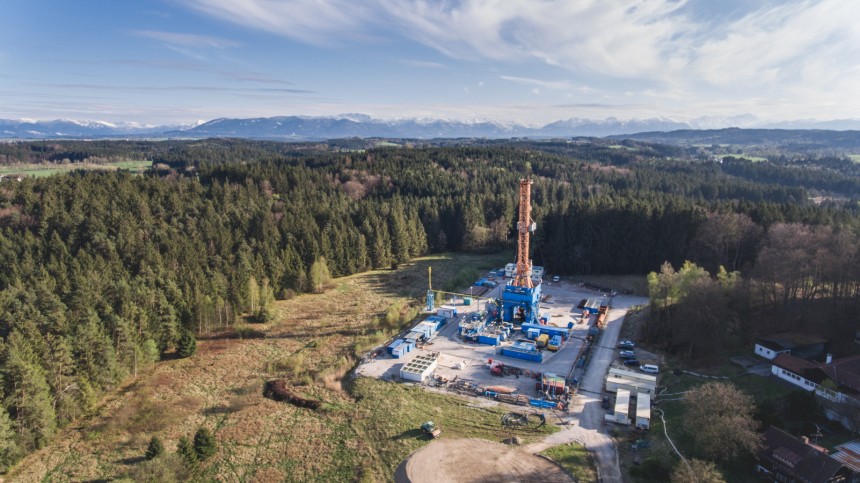
Next-gen technologies are emerging that can extract energy from kilometres below the surface.
The benefits of geothermal energy are numerous.
Geothermal could also boost energy security.

Unlike solar panels or wind turbines, geothermal plants dont rely on rare or critical materials from foreign powers.
Most can be built using off-the-shelf components from the oil and gas industry.
Nevertheless, geothermalgeneratedonly 0.2% of the EUs electricity in 2022.
Most next-gen geothermal technologies are still in their infancy, but that looks to be changing.
The startup has raised over 1bn infundingto build another five geothermal projects in North America and Europe.
Europe would benefit from having its own geothermal unicorn company.
Sodium-ion batteries hold promise as acheaper, safer, andmore sustainableoption.
Sodium-ion batteries also dont requirecobalt, graphite or nickel, elements that are largely sourced from outside the bloc.
The catch is that sodium-ion batteries arent as dense as lithium-ion.
For some technologies, theyre simply not suitable.
Perovskite solar cells
Solar power produced 10% of theEUs total electricityin 2023.
Most of this energy was captured using silicon solar panels.
Over 90% of these areimported from China.
But theres a new alternative on the block that could give Europe a competitive edge:perovskite.
This mineral boasts several advantages over its silicon counterpart.
Perovskites unique material properties mean its better at absorbing solar energy.
The average solar panel is about 15-20% efficient while perovskite can achieve 25% margins or higher.
Its also potentially more sustainable.
A startup from Oxford recentlybuilt theworlds most efficient solar panelusing a tandem perovskite-silicon cell.
Advanced biofuels
Youve probably heard about trucks, cars, and evenplanesrunning on old cooking oil.
This is biofuel in its most crude form.
These days, advanced biofuels are emerging as a new class of renewable fuels to replace diesel.
Biofuels do emit greenhouse gases, albeit in much smaller quantities than fossil fuels.
To some, doubling down on biofuels might seem like a step backward, said Trakimavicius.
However, these are but a few of the many technologies that will be required.
The EU is well-positioned to be a clean tech powerhouse, he said.
Story bySion Geschwindt
Sion is a freelance science and technology reporter, specialising in climate and energy.
