Machine learningsystems calledDALL-E,GPTandPaLMare making a splash with their incredible ability to generate creative work.
These systems are known as foundation models and are not all hype and party tricks.
So how does this new approach to AI work?

And will it be the end of human creativity and the start of a deep-fake nightmare?
What are foundation models?
Earlier models tended to start from scratch for each new problem.
Once trained, this model knows what cats (and other things) look like in pictures.
How do they work?
Foundation models run on deep neural networks, which are loosely inspired by how the brain works.

However, they exhibit un-programmed or emergent behaviors that can be both surprising and novel.
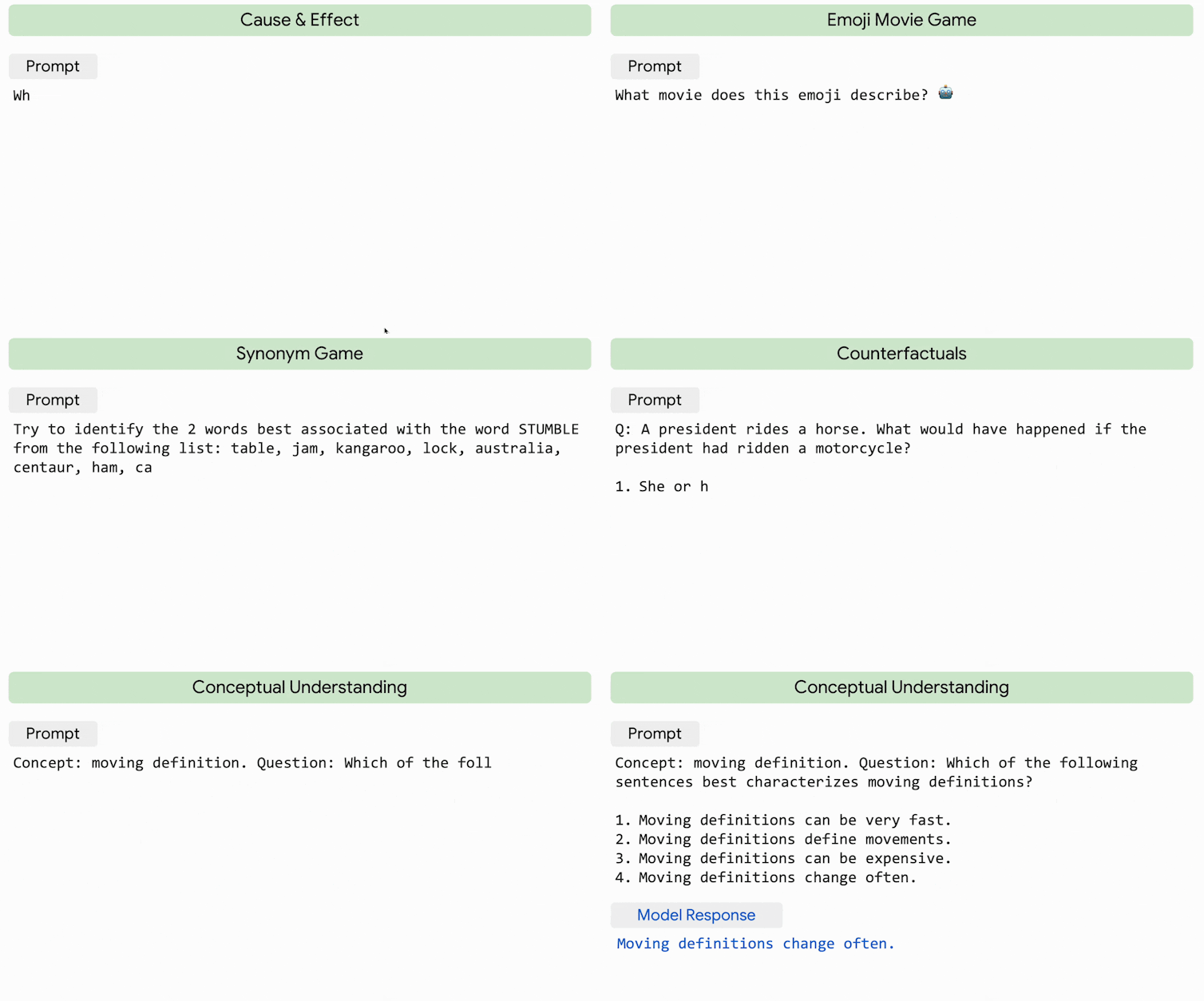
For example, Googles PaLM language model seems to be able to produce explanations for complicated metaphors and jokes.
This goes beyond simplyimitating the types of data it was originally trained to process.
The PaLM language model can answer complicated questions.
Image: Google AI
3.
Access is limited for now
The sheer scale of these AI systems is difficult to think about.
The models are so enormous that training them requires massive amounts of computational and other resources.
One estimate put the cost of training OpenAIs language modelGPT-3ataround US$5 million.
These companies limit who can reach the systems, which makes economic sense.
So we dont yet know the full implications of their use.
What will these models mean for creative industries?
More foundation models will be produced in coming years.
Traditional wisdom always said robots would displace blue collar jobs first.
White collar work was meant to be relatively safe from automation especially professional work that required creativity and training.
Deep learning AI models already exhibit super-human accuracy in tasks likereviewing x-raysanddetecting the eye condition macular degeneration.
The future of professional and creative work could look a little different than we expected.
We will also have to confront the challenge of disinformation and misinformation generated by these systems.
This article is republished fromThe Conversationunder a Creative Commons license.
