Data-intensivevideo streaming,gaming, andlive streamingfor business, university, and school classes ischewing up energy.
[Read:This startup is fighting air pollution with AI]
40% off TNW Conference!
Where does the data come from?

Video requires huge amounts of data and accounts for around80% of the datatransmitted on the internet.
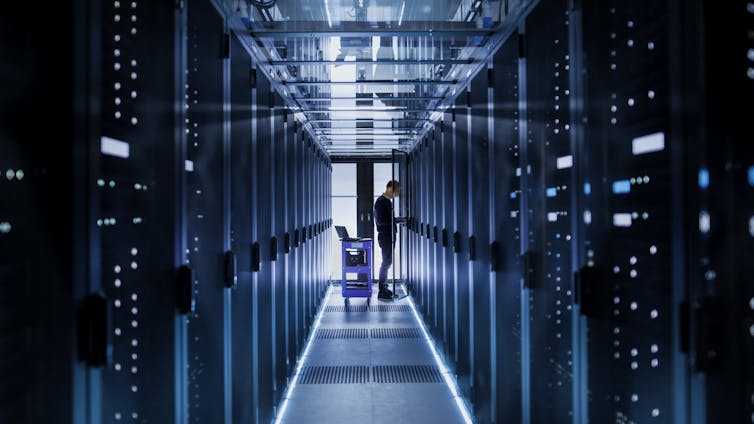
Increasingly housed in vast factory-sized buildings, these servers store, process, and distribute internet traffic.
Data centers, in factory-sized buildings, send data to your unit.
Imagine what those figures will look like at the end of this year of homebound internet use.
Meeting demands with Moores law
The growth in IT is often taken for granted.
We want phones that can take video like a pro.
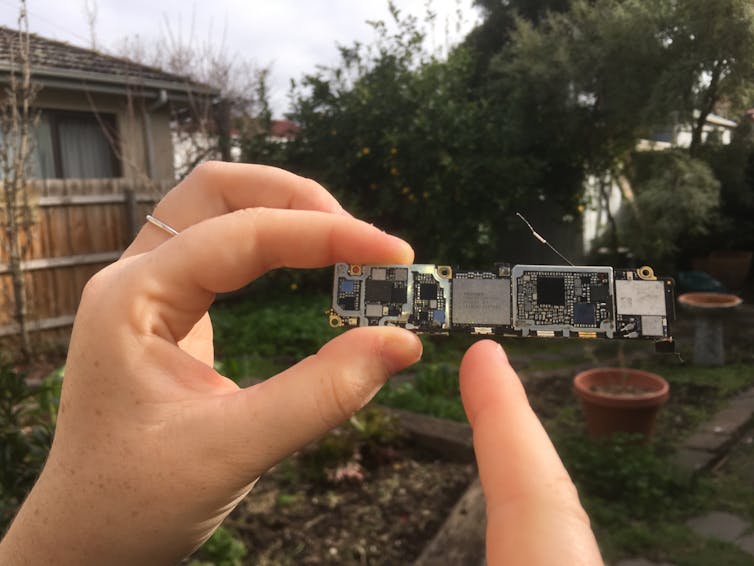
None of this is free.
Nor is it sustainable.
All this computation uses transistors.

These are tiny switches that amplify electrical signals and are made using silicon-based technology.
We refer to this constant shrinking of silicon components as Moores law.
This can add up to a vast amount of energy.
Global Foundries dropped out of this race altogether in2018, and Intel experienced enormousproblemswith manufacturing at 10 nm.
That leaves only two companies (Samsung and TSMC) making 7 nm transistors today.
So the answer isnt to switch off Netflix.
The answer is to createbetter computer chips.
But weve got everything we can out of silicon, so we need to use something else.
If we want computing to continue to grow, we need new, energy-efficient computers.
This discovery is a first step towards the development of a low-energy replacement for conventional silicon-based electronics.
Other top research centers in Australia are addressing different parts of this challenge.
For example,one centeris working to reduce the energy used in the ubiquitous communication of digital data.
