AI is accelerating advances ingene hunting,medicine,drug designandthe creation of organic compounds.
It is very different from traditional computing with its step-by-step instructions.
Rather, it learns from data.
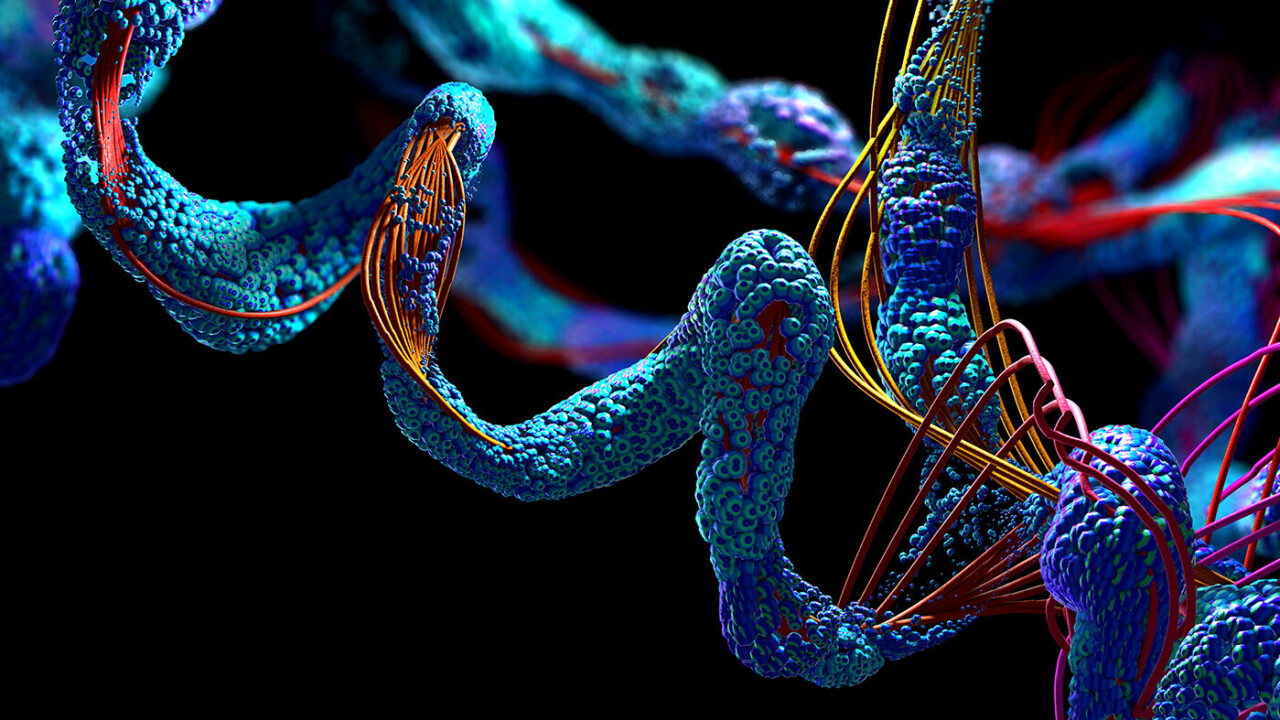
Protein folding
Proteins are present in all living organisms.
They are made up of long chains of amino acids like beads on a string.
Misfolded proteins can lead to disease.
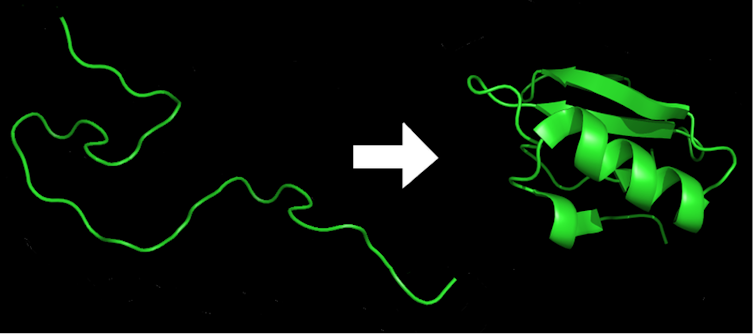
This is a massive number, more than thenumber of atoms in the universe.
AlphaFold
For 50 years computer scientists have tried to solve the protein-folding problem with little success.
Then in 2016DeepMind, an AI subsidiary of Google parent Alphabet, initiated itsAlphaFoldprogram.
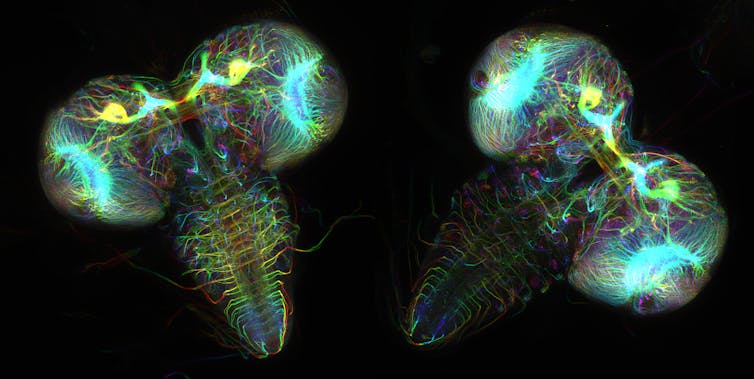
It used theprotein databankas its training set, which contains the experimentally determined structures of over 150,000 proteins.
AlphaFold does not explain how the proteins fold so quickly and accurately.
Knowledge of proteins has skyrocketed.
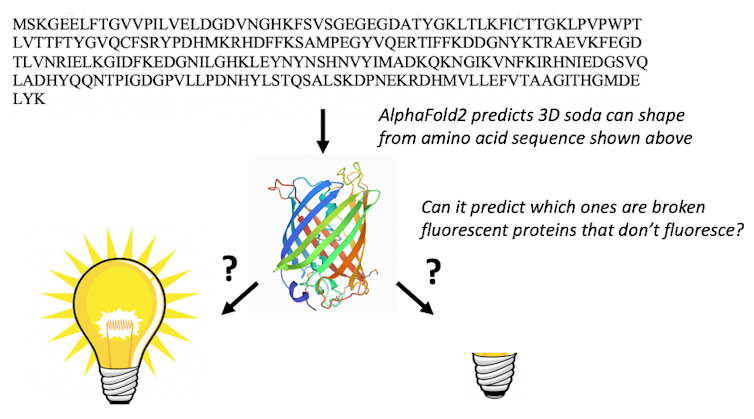
We had a challenging question for AlphaFold had its structural training set taught it some chemistry?
Could it tell whether amino acids would react with one another a rare yet important occurrence?
I am a computational chemist interested influorescent proteins.

These are proteins found in hundreds of marine organisms like jellyfish and coral.
Their glow can be usedto illuminateandstudy diseases.
There are 578 fluorescent proteins in theprotein databank, of which 10 are broken and dont fluoresce.
The result stunned us: AlphaFold2 had learned some chemistry.
It had figured out which amino acids in fluorescent proteins do the chemistry that makes them glow.
A folding program learning some chemistry from its training set also has wider implications.
By asking the right questions, what else can be gained from other deep learning algorithms?
Could facial recognition algorithms find hidden markers for diseases?
Could algorithms designed to predict spending patterns among consumers also find a propensity for minor theft or deception?
And most important, is this capability andsimilar leaps in abilityin other AI systems desirable?
