DNA evidence often isnt as watertight as many people think.
And this problem has led to people beingwrongly convicted.
It’s free, every week, in your inbox.
Similar challenges emerged when DNA analysis software was first developed a decade ago.
How accurate were the results, and what was the known error rate?
How exactly did the software work and could it accommodate defense hypotheses?

Were the results really so dependable that a jury could safely convict?
It is a fundamental tenet of the law that evidence must beopen to scrutiny.
Abattle ensuedthat involved the use ofnovel court proceduresto allow defense teams to privately examine how the software worked.
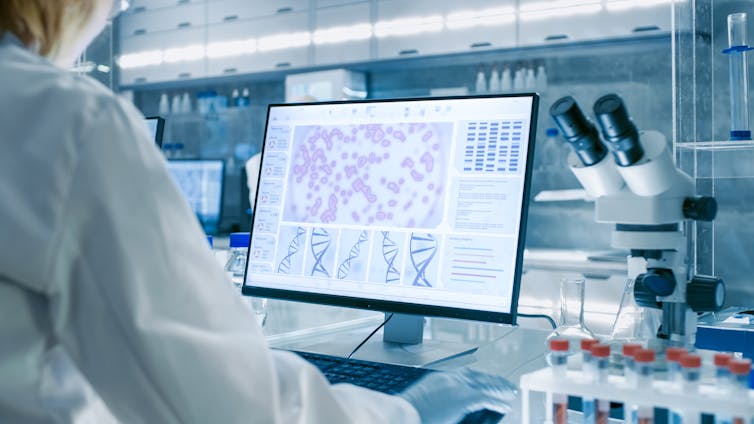
AI can predict whether someone was actually at the site of a DNA sample.
Gorodenkoff/Shutterstock
But the software hasnt completely solved the issues of DNA mixtures and small, degraded samples.
People havebeen charged with serious offensesbecause of this.

This problem of transfer and persistence threatens to seriously undermine forensic DNA.
As a result,experiments are underwayto find ways of more accurately quantifying DNA transfer in different circumstances.
The exact way the software works isnt just a commercial secret its unclear even to the software developers.
It can derive fantastically efficient results but we cant say how it did so.
It acts like a black box that takes inputs and gives outputs, but whose inner workings are invisible.
Programmers can go through a clearer development process but it is slower and less efficient.
This transparency issue affects many broader applications of AI.
And the advent of AI-driven DNA analysis will add a further dimension to the problems already encountered.
How might we go about tackling these challenges?
One option may be to opt for the less efficient, constrained forms of AI.
At stake is the right to a fair, open and transparent trial.
This article is republished fromThe ConversationbyKaren Richmond, Postdoctoral research fellow,University of Strathclydeunder a Creative Commons license.
