The world watched as Cape Towns water crisis approached Day Zero.
Questions are being asked aboutwhich other cities could be at riskandwhat can they do to avoid running dry.
Drinking recycled sewage is a very confronting topic.

But what many people dont realize is that we already rely on recycled sewage in many Australian water supplies.
Even in Australias biggest city, Sydney, it is an important part of the water supply.
This is because many large towns discharge their treated sewage into the catchment rivers that supply the city.

But Perth is now looking to recycle all of its treated sewage.
At the time of writing, the citys water storages were at a low35.3%.
Perth has been progressively drought-proofing itself by diversifying the city water supply.
River flow and storage in dams accounts for only 10% of this supply.
It’s free, every week, in your inbox.
Desalination and groundwater extraction provide about 90% of the citys supply.
Only about 10% of Perths sewage is recycled, through advanced treatment andreplenishment into its groundwater supplies.
Justifiably, many people haveconcerns about drinking recycled sewage.
This reflects long-standing concern about hazards of contaminated water.
Cholera is rare in many countries, but is endemic in watersacross Africa and much of Southeast Asia.
So how is treated sewage being indirectly reused?
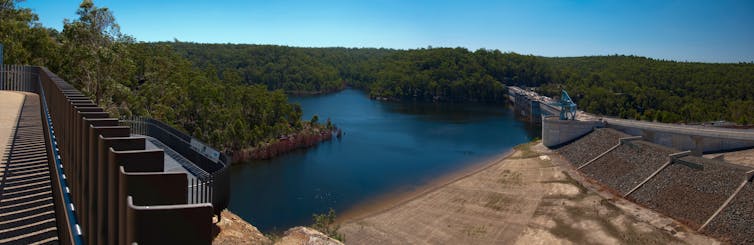
For instance, the catchment of Sydneys giant Warragamba Dam has a population of about 116,000 people.
This includes the large settlements of Goulburn, Lithgow, Moss Vale, Mittagong and Bowral.
These communitiesdischarge their treated sewage into the catchment rivers.
TheNorth Richmond Water Filtration Plantextracts and treats water drawn directly from the Hawkesbury-Nepean River.
A major contributor to the river flow is treated sewage discharged from upstream treatment plants.
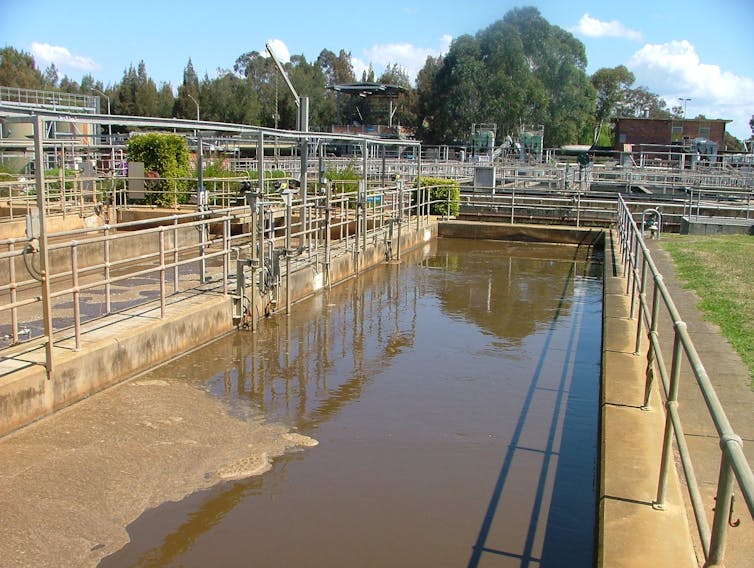
This plant uses advanced membrane technology to produce highly treated effluent before it is discharged into the river.
The water is highly treated at the Sydney Water-owned North Richmond plant to ensure it meetsAustralian drinking water guidelines.
Every year the river receives more and more treated sewage as a result of population growth.
Much of this growth will be in Western Sydney, one of the mostrapidly growing urban centres in Australia.
This will result in more treated sewage, and urban runoff, contributing to the Hawkesbury-Nepean River flow.
Three massive coastal treatment plants (atNorth Head, Bondi and Malabar) serve the majority of Sydneys population.
These three plants dischargenearly 1,000 million litres(1,000ML) of primary treated sewage into the ocean every day.
That is roughly an Olympic pool of sewage dumped in the ocean every four minutes!
Sydneys desalination plant sits idle about 10 kilometers south of the Malabar treatment plant.
It has a capacity for supplying 250ML a day.
Even though it isnt supplying water now, it is very expensive.
In 2017, the privately owned plant, sitting on standby, charged Sydney WaterA$194 million.
Only when Sydneys storages fall below the trigger of 60% will the plant supply drinking water.
Withstorages at 76.5%, the plant will not operate for a while.
