The Australian Federal Police recentlyannouncedplans to use DNA samples collected at crime scenes to make predictions about potential suspects.
Queensland police have already used versions of this approach toidentify a suspectandidentify remains.
Forensic services inQueenslandandNew South Waleshave also investigated the use of predictive DNA.
This technology can reveal much more about a suspect than previous DNA forensics methods.
But how does it work?
What are the ethical issues?

And what approaches are other countries around the world taking?
How does it work?
It’s free, every week, in your inbox.
This creates new possibilities for DNA analysis.
This makes itusefulinmissing persons casesand the investigation ofunidentified remains.
This method can also be used in criminal cases, mostly to exclude persons of interest.

Are there any issues or ethical concerns?
DNA can reveal highly sensitive information about us.
Beyond ancestry and externally visible characteristics, we can predict many other things including aspects of bothphysicalandmentalhealth.
The highly sensitive nature of DNA data and the difficulty in ever making itanonymouscreates significant privacyconcerns.
Using DNA for forensics may alsoreduce public trustin the use of genomics for medical and other purposes.
The AFPs planned tests includebiogeographical ancestry prediction.
Even when not explicitly tested, DNA data is tightly linked to our ancestry.
One of the biggest risks with any DNA data is exacerbating or creating racial biases.
Concerns have been raised about other types ofpotential institutional racial profiling.
DNA data also has inherent risks around misinterpretation.
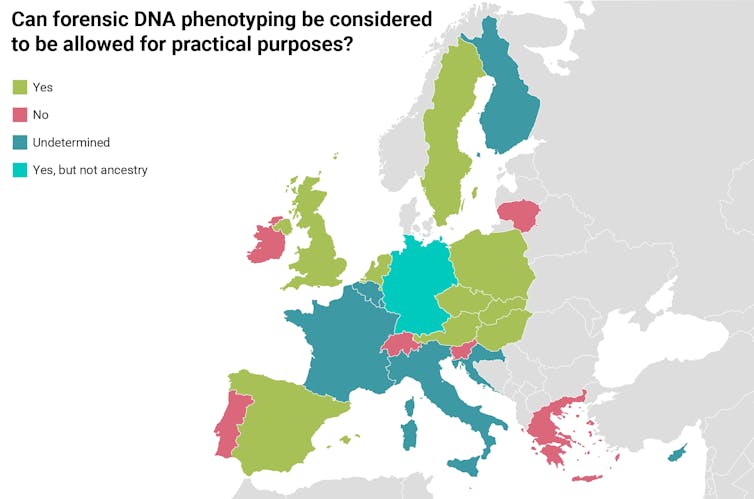
What are other countries doing?
A UK advisory panel made fourrecommendationslast year.
