It is critically important to find the next generation of antibiotics.
The incidence of bacterial infections resistant to current antibiotics continues to climb.
Deaths attributed to antimicrobial resistance (AMR) globally is predicted to rise in the coming decades.
![[Best of 2019] Slimy fish mucus can help chemists develop new antibiotics — here’s how](https://img-cdn.tnwcdn.com/image?fit=1280%2C720&url=https%3A%2F%2Fcdn0.tnwcdn.com%2Fwp-content%2Fblogs.dir%2F1%2Ffiles%2F2019%2F05%2F56-2.png&signature=d4196945485632bbcd85e72143cd8f3f)
Review on Antimicrobial Resistance, CC BY
But how do you find a new antibiotic?
Perhaps surprisingly, over 70 percent of currently used anti-infectives werederived from naturally occurring chemicals.
40% off TNW Conference!

In fact, theyre all over us and inside us.
These microbes may also bea source for new antibiotics.
For example, researchers recently identified a new antibioticfrom a bacterium found in the human nose.
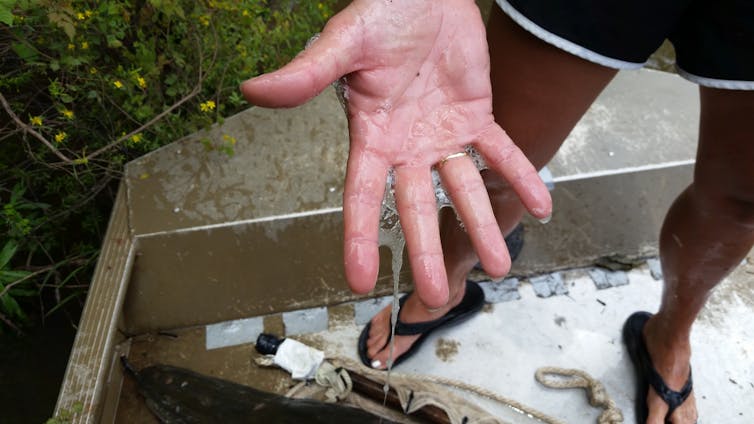
These animals often live in challenging environments, and are likely to support microbes that help them resist infections.
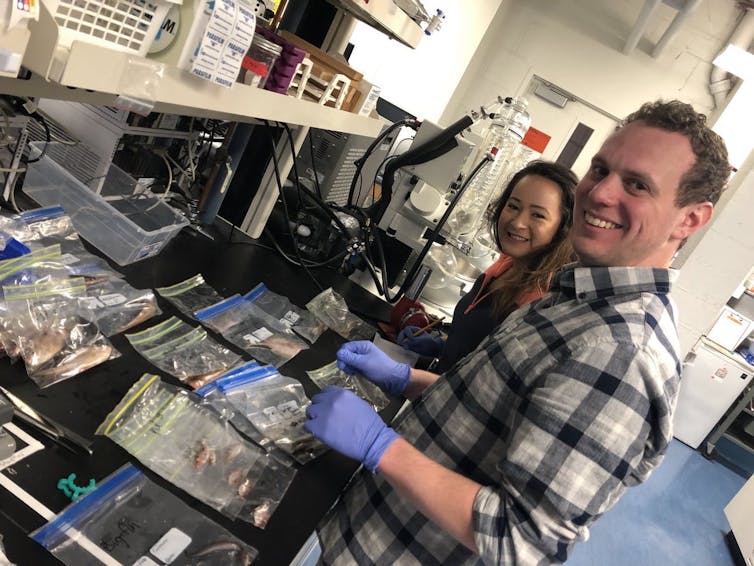
Gisela Gonzalez Montiel and Ross Overacker processing fish and slime swabs from collaborator Misty Paig-Tran.
Loesgen Lab, CC BY-ND
The slimy mucus that coats fishes acts as a protective coating.
Researchers speculate that there is also a chemical component produced by the fishs microbiome that helps ward off infection.
My collaborators and I were looking for interesting bacteria that we could isolate from the fish.
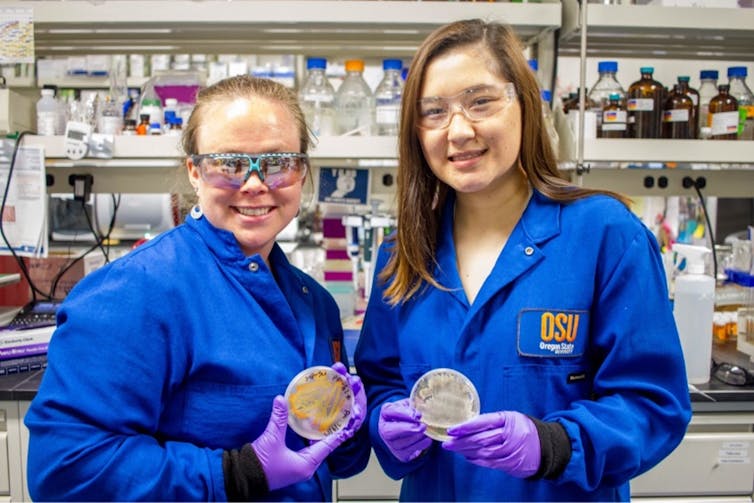
Paige Mandelare and Molly Austin with bacteria they derived from the fish microbiome.
What species are they?
MRSA is a drug-resistant human pathogen that is responsible for many difficult-to-treat infections in humans.
Microbes on marine fish produce various compounds that might be effective at fighting infections in people.
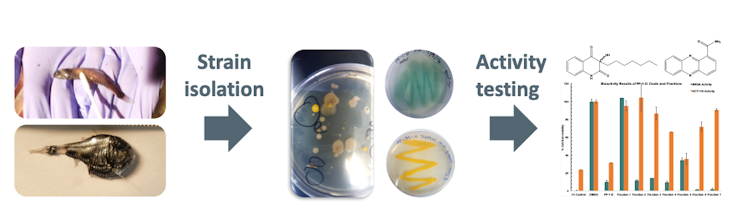
Motivated by these findings, we tested whether compounds in these extracts could also affect cancer cells.
Also tagged with

