Boxing is a whimsically old-fashioned sport.
Feuds are settled in fights, traditions are revered, and ageing faces spin up the show.
Fifty years since their heydays promoting Muhammad Ali, the 92-year-olds Don King and Bob Arum remain leading powerbrokers.
They work with overlords who operate in the shadows.
In this world, oversight is resisted and new tech greeted with suspicion.
At world title fights, judges still fill out scorecards on scraps of paper.
They follow four extremely subjective criteria: effective aggression, ring generalship, clean punches, and defence.
All these concepts are open to interpretation.
Inevitably, they frequently create controversial decisions.
The problem extends to the sports top analytics tool.
The potential for biases and errors is endless.
Fans and fighters alike have decried the results for decades.
One of them is Allan Svejstrup, a Danishmachine learningengineer.
But Svejstrup (pronounced Svar-strop) also had an idea for a solution: computer vision.
40% off TNW Conference!
I realised I could build a better system myself.
He began to train anAImodel on real boxing footage.
Svejstrup was impressed by the early tests.
In 2022, he turned the passion project into a startup:Jabbr.
Two years later, his brainchild had evolved into a fully-grown product.
But before arriving on that grand stage, the company had bouts to win outside the ring.
Hard knocks
Boxing presents big barriers to AI analysis.
I understood why nobody else had done it successfully, Svejstrup says.
Another problem is the visual phenomenon of occlusion.
In computer vision, occlusion takes place if one object conceals the view of another.
Its rarely an issue when evaluating a tennis shot or home workout (as Iknow from personal experience).
These applications can rely on off-the-shelf products that are fine-tuned on sports data.
For boxing, however, theyre ill-fitting tools.
Occlusion is particularly troublesome when fighters get close and trade body shots.
From one angle, a powerful body shot could be hidden and misclassified as missed.
Jabbrs solution combines multiple cameras with a novel approach to visualisation.
Svejstrup named the system DeepStrike.
To interpret human movements, computer vision software typically converts video of people into stick figures or mesh representations.
AI then learns the correlations between the physical movements and sporting actions.
Its an approach thats often effective.
But boxing requires a greater depth of perception.
Now, the downside of this is there are tonnes of technical problems to solve, he adds.
And when you train an AI on something so complicated, you need huge amounts of data.
For DeepStrike, that meant ingesting millions of punches.
Jabbr found them by harvesting footage from the internet.
Boxing performance analysts then watched the clips in slow motion and tagged the data with their evaluations.
As their workloads grew, Jabbr needed to add new experts to the team.
They arrived after a$750,000 seed funding roundlast year expanded the talent budget.
The team of analysts has now assessed over 250,000 punches.
Svejstrup reckons theyve spent 20,000 hours preparing training data for Jabbrs proprietary model.
By embedding their expertise, they teach the system to mimic their work.
After learning the ropes, the system heads to the ring.
Fight night
As soon as the bell sounds, DeepStrike gets to work.
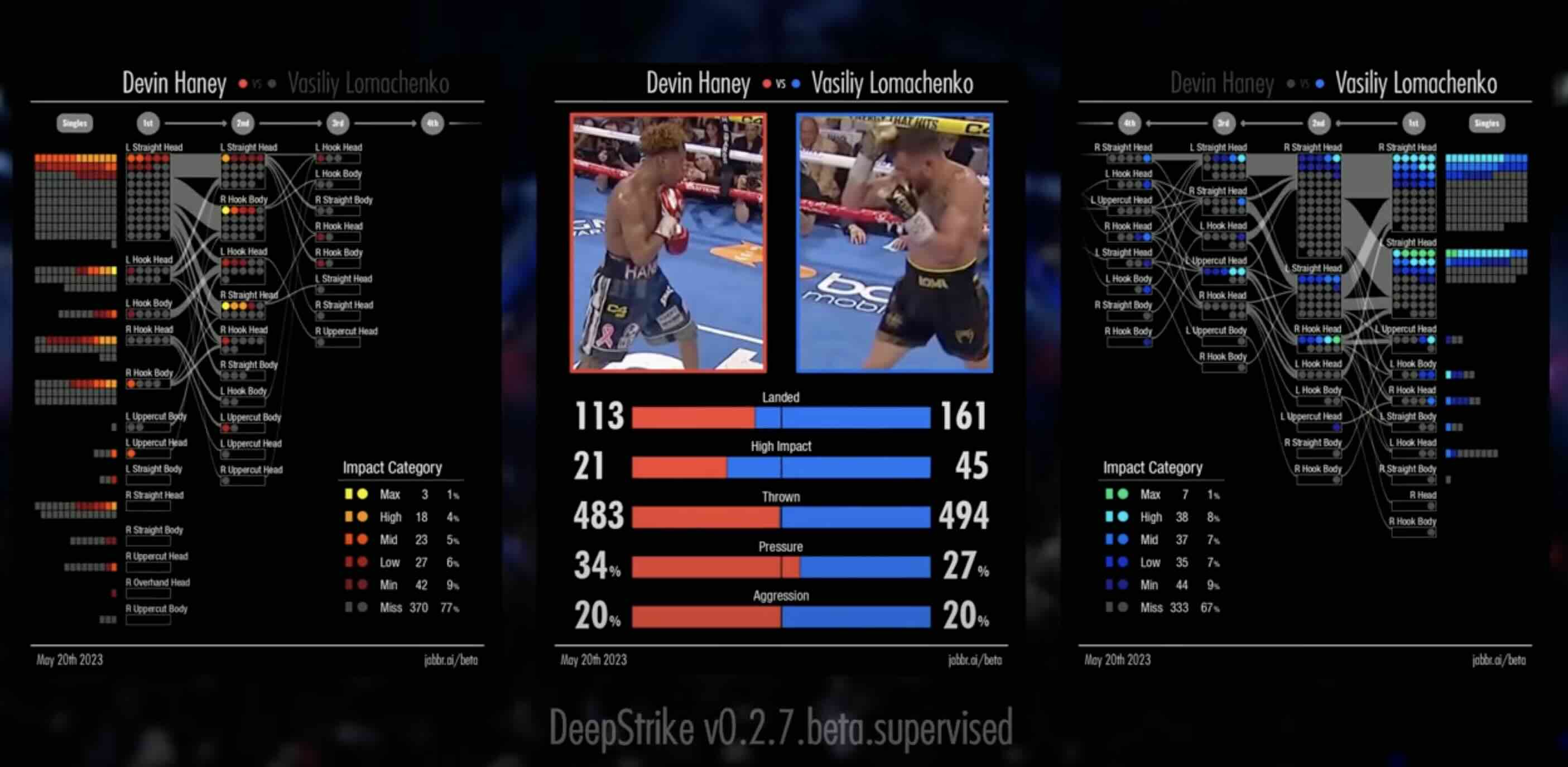
By the fights end, the system has measured millions of data points.
All this information is funnelled into 50 metrics for each boxer.
They cover the punch numbers, the types of strikes, and various fighter movements.
Intriguingly, they even quantifythose subjective judging criteria.
For effective aggression, Jabbr analyses efforts to hurt an opponent.
When a fighter triggers these indicators, they start a period of aggression.
The final metric is based on the duration of these periods.
Ring generalship, meanwhile, is linked to pressure.
All these actions trigger the pressure metric.
CompuBox has no comparable depth or accuracy.
Although the system is extolled on TV broadcasts, CompuBox only counts punches landed and missed.
Jabbr, by contrast, quantifies the power and quality of every individual blow.
The precise percentage depends on the quality of the film and the fight.
Rahim had built his career on digital platforms.
His first steps came as a teenager training at the iconic Wild Card boxing club.
Rahim would film the fabled sparring sessions on the LA gyms blood-stained ring.
One captured a brutal brawl between American championJames Toney and Australian challenger Danny Green.
The footage sparked a new craze for online gym war videos.
It also sparked Rahims broadcasting career.
He grew his brand on YouTube and later joined Jabbr in broadcasts from Saudi Arabia.
Long before those glitzy nights, Rahim had blasted boxings judging controversies and hostility to innovation.
Its still trying to embrace 20th-century tech, never mind the 21st.
Rahim was similarly unimpressed by CompuBoxs limitations.
Jabbr stood out as a promising alternative.
Rahim joined the Copenhagen-based startup as an advisor and public promoter.
It gives us not just a collection of numbers, but analytics that tell you whats inside the numbers.
Rahim wants Jabbr to shine a light on boxings shadier practices.
The most difficult problem in boxing is the idea that its corrupt.
MMA has also begun to embrace computer vision.
Driving the uptake is another Europeanstartup, the UK-headquarteredCombat IQ.
Malik got the idea while watching the Ultimate Fighting Championship (UFC) during the pandemic.
I would wake up every week without fail and watch those fights, he tells TNW.
I saw a major lack of data within combat.
Combat IQ extracts this data from cameras positioned around the octagon.
It also provides real-time fight predictions from the cloud.
The company has alreadyestablished partnershipswith MMA organisations, but Malik is also targeting boxing.
I like to say if somebody gets punched in the face were there to extract data, he says.
That approach could create a competitor to Jabbr.
But the two startups have very different business models.
Combat IQ focuses on delivering new experiences to viewers and odds to betting companies.
Im here to make money, to be frank, Malik admits.
That means focusing on the aspects of sports that are profitable.
And for me, thats fan engagement and betting.
Jabbr has taken a different stance to Combat IQ.Our primary target consumers are athletes and coaches, Svejstrup says.
Svejstrup has shown Jabbr to boxers at the gyms where he trains in Shenzhen.
All the jaws just drop down, he says.
That feels so different; its something millions of people care about.
These people and places have become the focus of Jabbrs plan.
The startup will soon launch a commercial product comprising three cameras and an integrated timer unit.
Users will not only access AI analytics.
The Jabbr Cam will also provide automated media production.
This feature offers private clubs a simple and affordable tool to stream fights online.
They can also generate highlights for each fighter in a social media-friendly format, alongside a full stats package.
He plans to launch the system in September.
Jabbr will sell the product at cost and then charge a subscription fee for the service.
The benefit of the system is the speed and automation, he says.
You get all these super detailed stats right away and you dont have to pay a tonne of money.
Last month, that speed was tested on the biggest fight in boxing.
From Shenzhen to Saudi
In the desert city of Riyadh, Jabbr debuted on the global stage.
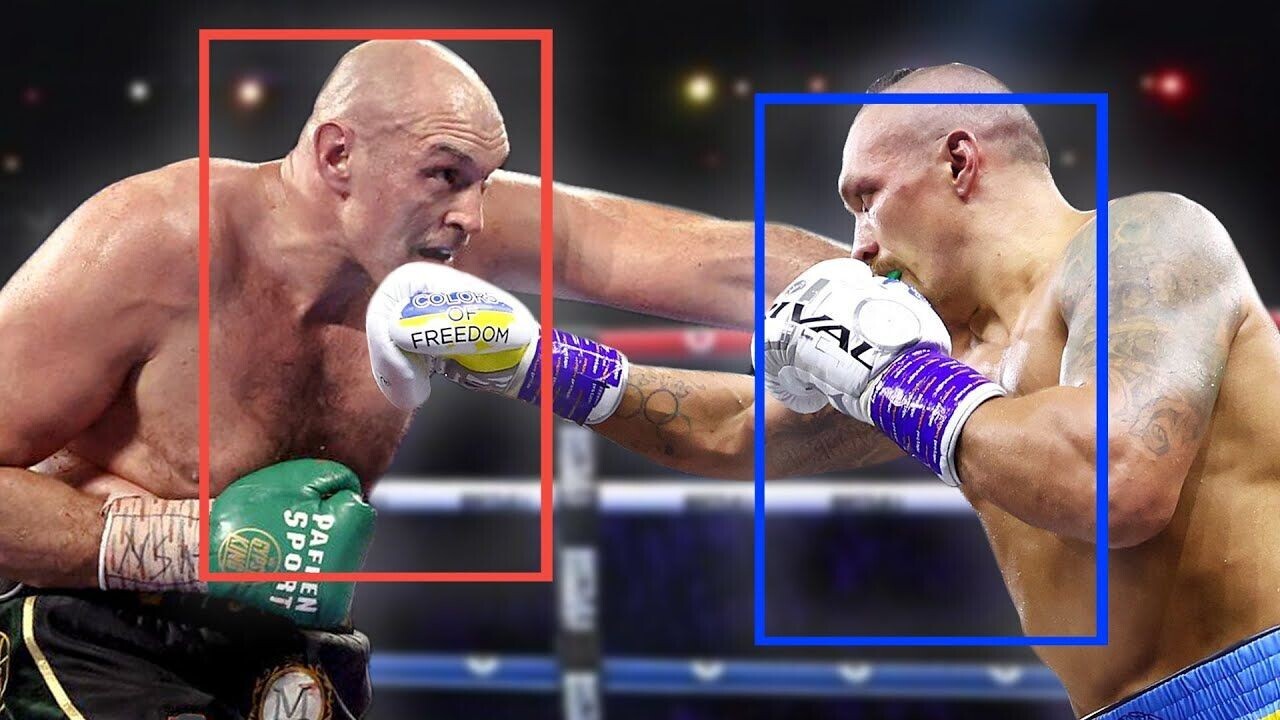
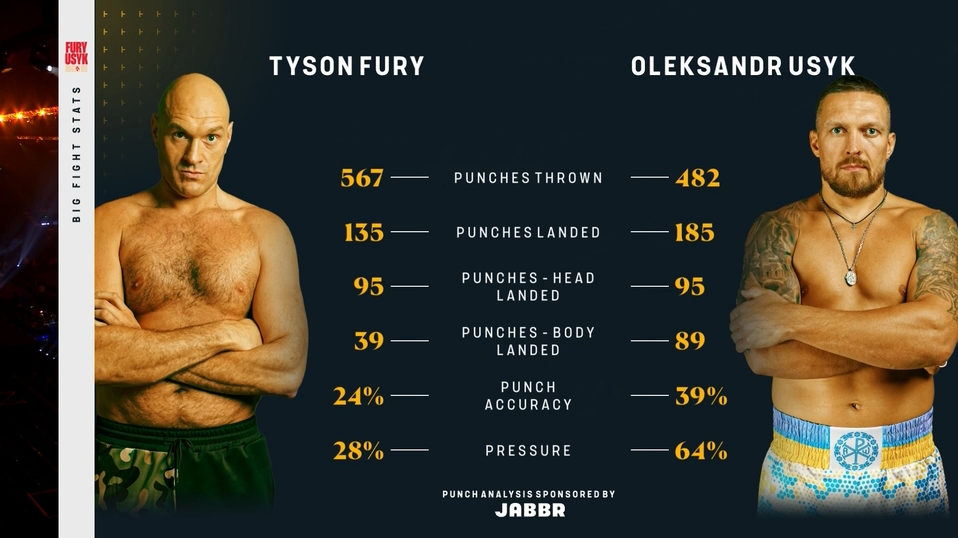
British broadcaster TNT Sports used DeepStrike during the historic bout between Tyson Fury and Oleksandr Usyk.
The showdown was the first undisputed heavyweight title fight for 24 years.
DeepStrike provided a user-friendly coverage enhancement.
Unlike private gyms, TNT Sports required no extra equipment to roll out the system.
The company simply sent its camera feeds to the cloud for AI analysis.
The system then immediately returned the data.
As the fight progressed, Jabbr added extra insight to the broadcast.
The startups experimental predictions have also attracted attention.
Before another heavyweight fight, DeepStrike indicated that Chinese colossus Zhilei Zhang would defeat the betting favourite Deontay Wilder.
When Wilder was dominated and knocked out, the AI forecast was vindicated.
Jabbrs Saudi adventures have put the startup in the limelight.
Fans are now requesting new applications for the system.
Judge me not
Jabbrs arrival has triggered calls for AI to replace judges.
Thats not the plan, Svejstrup says.
But the real goal is to make this available to everyone.
Broadcasters will nonetheless remain a target market for Jabbr.
They can also provide powerful exposure and not only for the startup.
Radio Rahim wants them to also expose bad judges.
Were now heading towards eradicating the subjectivity of what happened in the fight.
For all the judges still scribbling scores on scraps of paper, Jabbr promises to not replace them.
But their old-fashioned sport now faces ultra-modern scrutiny.
Just wait till Don King and Bob Arum find out.
Story byThomas Macaulay
Thomas is the managing editor of TNW.
He leads our coverage of European tech and oversees our talented team of writers.
Away from work, he e(show all)Thomas is the managing editor of TNW.
He leads our coverage of European tech and oversees our talented team of writers.
Away from work, he enjoys playing chess (badly) and the guitar (even worse).
