The EUs landmarkAIAct is moving closer to reality, as a rival rulebook forms across the English Channel.
As the EU legislation nears enactment, lawmakers in the UK are shaping a very different approach.
Their priorities are stimulating business, providing a competitive advantage, and supporting responsibleinnovation.
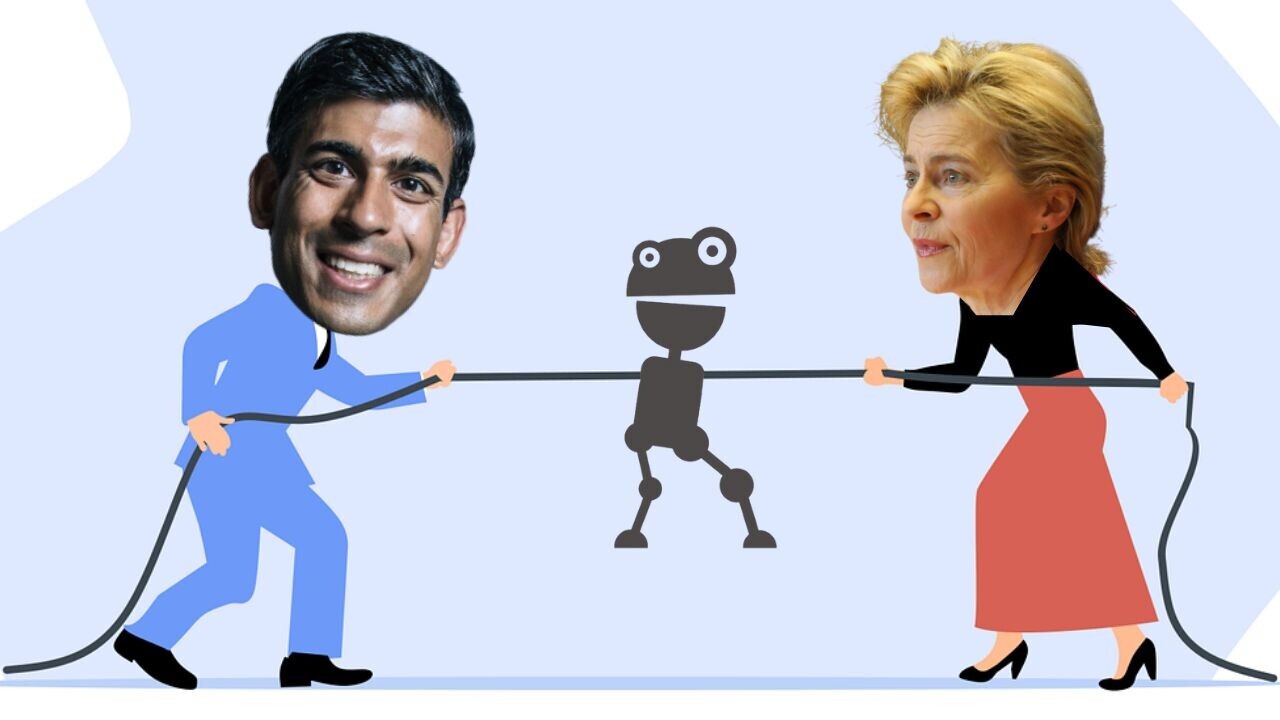
The vision was first laid out in a policy paper last July.
In the document, the government said it plans tobuild the most pro-innovation regulatory environment in the world.
It’s free, every week, in your inbox.

Regulation thats proportionate, light-touch, and forward-looking is essential.
Notably, the British government has publicly criticised the EUs AI regulation.
As a result, rules can be tailored to different sectors and amended over time.
But this flexibility entails certain risks.
Critics fear the sectoral focus will lead some areas to fall through the gaps.
There are also concerns about potentially conflicting rules, and existing regulators monitoring AI without sufficient expertise.
There are currently no plans to back the proposals with new laws.
Instead, regulators will be guided by core principles, such as safety, transparency, and fairness.
This could reduce arduous obligations, but detractors warn it will increase AI risks.
Its clear theyre looking for comparative strength.
The proposals for lighter touch options, meanwhile,include guidance, voluntary measures, and creating sandboxes.
The government hopes this lures businesses to the UK.
The EUs legislation takes a broader approach.
Uses of AI will be categorised into different risk levels.
Systems with the highest risks could be prohibited, while less risky ones would have minimal requirements.
As is the case withthe GDPR, rule-breakers could face heavy penalties.
Violations would be punishable by fines of up to 30 million or 6% of global turnover.
Further amendments are expected to come.
Their priorities, however, have diverged.
The EU has placed heavy weight on safety, while the UK has emphasised the business case.
Their choices could shape the continents AI landscape for years to come.
Story byThomas Macaulay
Thomas is the managing editor of TNW.
He leads our coverage of European tech and oversees our talented team of writers.
Away from work, he e(show all)Thomas is the managing editor of TNW.
He leads our coverage of European tech and oversees our talented team of writers.
Away from work, he enjoys playing chess (badly) and the guitar (even worse).
