The closest star to Earth is Proxima Centauri.
It is about 4.25 light-years away, or about 25 trillion miles (40 trillion km).
The fastest ever spacecraft, the now- in-spaceParker Solar Probewill reach a top speed of 450,000 mph.
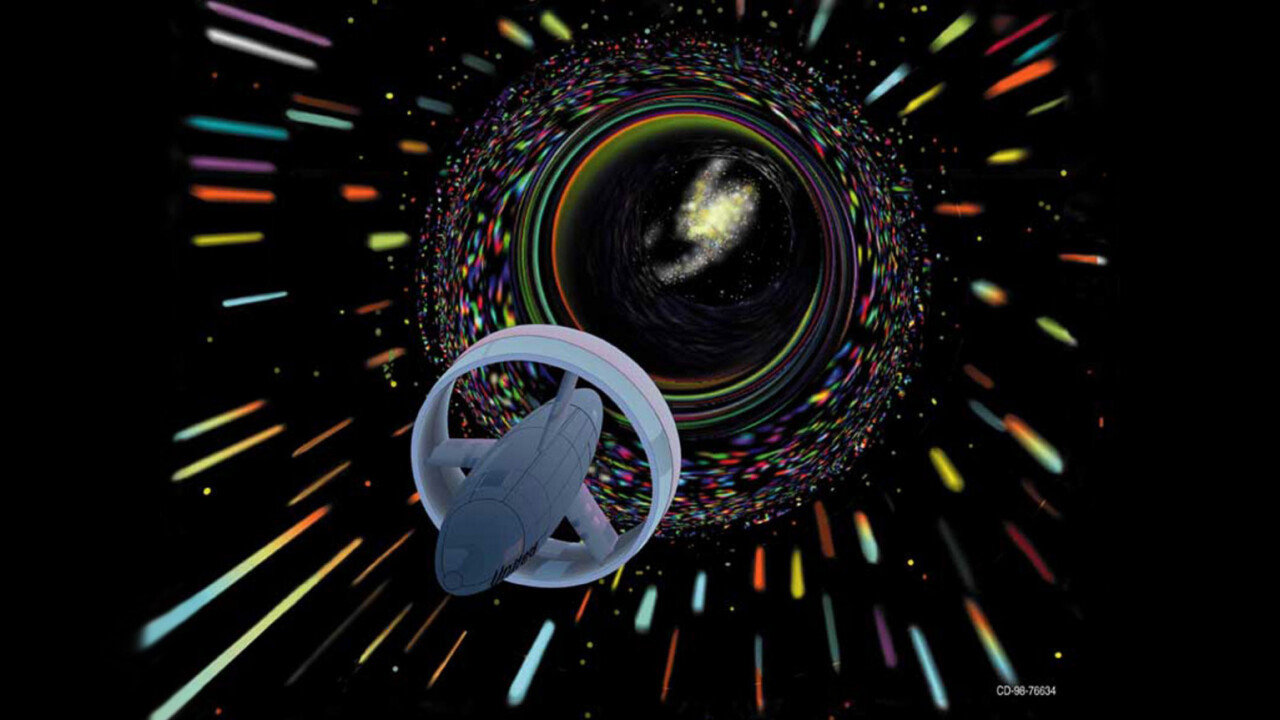
If humanity ever wants to travel easily between stars, people will need to go faster than light.
But so far, faster-than-light travel is possible only in science fiction.
As a kid, I read as many of those stories as I could get my hands on.
Some characters like the astronauts in the movies Interstellar and Thor usewormholes to travel between solar systemsin seconds.
Another approach familiar to Star Trek fans is warp drive technology.
Warp drives are theoretically possible if still far-fetched technology.
But how do these theoretical warp drives really work?
And will humans be making the jump to warp speed anytime soon?
40% off TNW Conference!

Early science fiction writersJohn Campbelland Asimov saw this warping as a way to skirt the speed limit.
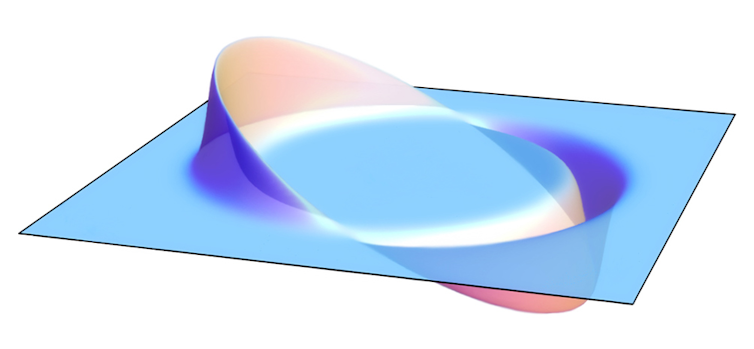
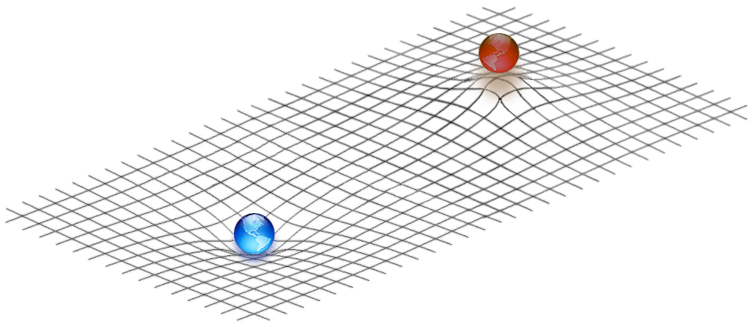
What if a starship could compress space in front of it while expanding spacetime behind it?
Star Trek took this idea and named it the warp drive.
So, what does that mean?
Imagine the distance between two points is 10 meters (33 feet).
Alcubierre showed that the warp drive from Star Trek was in fact theoretically possible.
Proxima Centauri here we come, right?
Unfortunately, Alcubierres method of compressing spacetime had one problem: it requires negative energy or negative mass.
Physicists have never observed negative mass, so that leaves negative energy as the only option.
This imbalance results in negative energy density.
Alcubierres warp drive would use this negative energy to create the spacetime bubble.
But for a warp drive to generate enough negative energy, you would need a lot of matter.
Alcubierre estimated that a warp drive with a 100-meter bubble wouldrequire the mass of the entire visible universe.
A significant improvement, but still far beyond all practical possibilities.
A sci-fi future?
This solution, though, does not produce a warp drive that can go faster than light.
Independently, Lentz also proposed a solution that does not require negative energy.
Lentzs solution would allow the bubble to travel faster than the speed of light.
It is essential to point out that these exciting developments are mathematical models.
As a physicist, I wont fully trust models until we have experimental proof.
Yet, the science of warp drives is coming into view.
As a science fiction fan, I welcome all this innovative thinking.
In thewords of Captain Picard, things are only impossible until they are not.
