Imagine a future where internet connections are not only lightning-fast but also remarkably reliable, even in crowded spaces.
This vision is rapidly approaching reality, thanks to new research on terahertz communications technologies.
Im an engineer whofocuses on photonics, the study of how light and otherelectromagnetic waves are generated and detected.
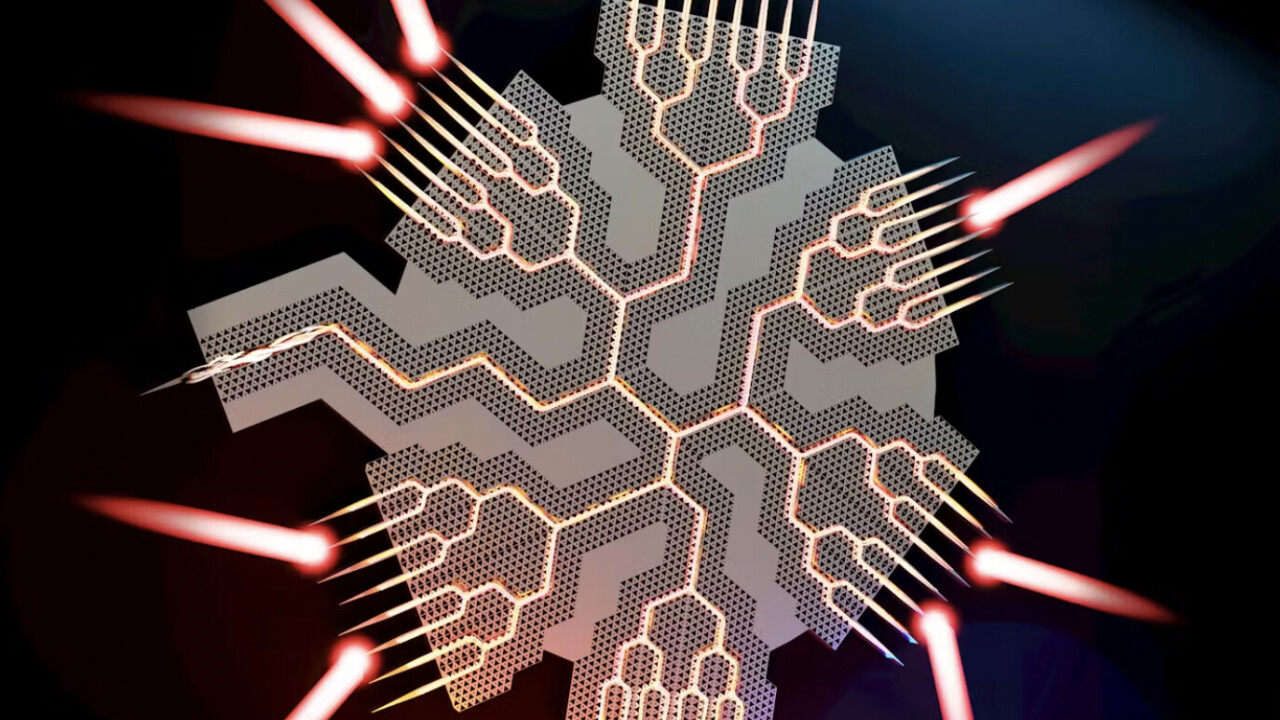
In this research, my colleagues and I have developed a silicontopological beamformer chip.
Terahertz frequencies are crucial for 6G, which telecommunications companiesplan to roll out around 2030.
The radio frequency spectrum used by current wireless networks is becoming increasingly congested.
Terahertz waves offer a solution by using the relatively unoccupied portion of the electromagnetic spectrum between microwaves and infrared.
An experimental chip represented in this illustration spreads ultrafast terahertz beams in all directions around it.
The array of channels sends out powerful, focused beams that cover the entire 360 degrees around the chip.

We demonstrated the chip by splitting an input signal of a streaming HD video into four output beams.
Beamformers are essential for the next generation of wireless communication.
Our chip ensures that those beams provide coverage in all directions.
This focused approach not only extends the signals range but also improves its quality, even over long distances.
A future with terahertz beamforming
The potential impact of terahertz beamforming chips on everyday life is profound.
Beyond entertainment, they could make real-time holographic communication a reality, where people appear as lifelike holograms.
