As might be expected, they have the attention of US President Donald Trump and his Republican administration.
Its perhaps best known forits climate scepticism.
Discussions at the annual eventinclude disputing scientific observations on climate change, criticising climate alarmists and promoting fossil fuels.
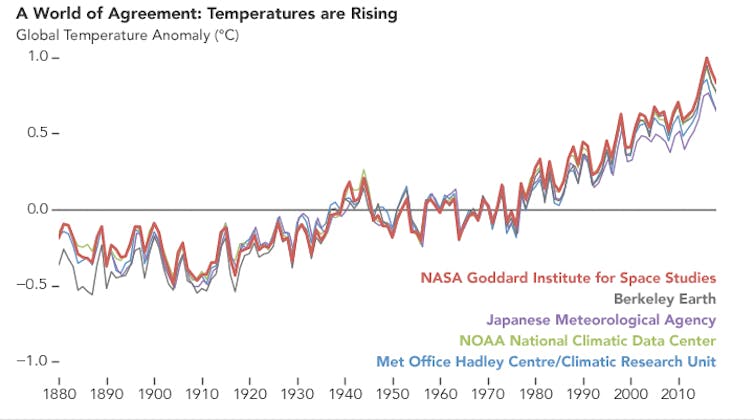
Temperature data shows rapid warming in the past few decades.
Through his own words, the presidents arguments mimic patterns in criminal behavior that criminologists call techniques of neutralization.
It’s free, every week, in your inbox.
Criminologists contend that criminals use techniques of neutralization to help deny or justify a crime they have committed.
Denial of responsibility it is not the offenders fault.
Denial of injury of harm the crime does not cause significant harm or may have positive results.

Denial of victim there is no clear victim.
Condemnation of the condemner the offender criticizes the criminal justice system to avoid criticism of the offender.
Appeal to higher loyalties deviant behavior was in aid of a greater good or to benefit someone else.

When justifying their actions in interviews, the answers offenders give often follow a predictable pattern.
Denial of responsibility climate change is happening, but humans arent the cause.
Appeal to higher loyalties economic progress and development are more important than preventing climate change.
This will help protect us from energy poverty and allow developing nations to prosper.
I believe it helps us see their statements in a new light.
In tweets, speeches, and in conversations with journalists, these patterns appear to play out.
Whendenying responsibilityfor tackling the climate problem, external competitors like China make for a useful scapegoat.
The concept of global warming was created by and for the Chinese so that make U.S. manufacturing non-competitive.
This article is republished fromThe ConversationbyRuth McKie, Lecturer in Criminology,De Montfort Universityunder a Creative Commons license.
