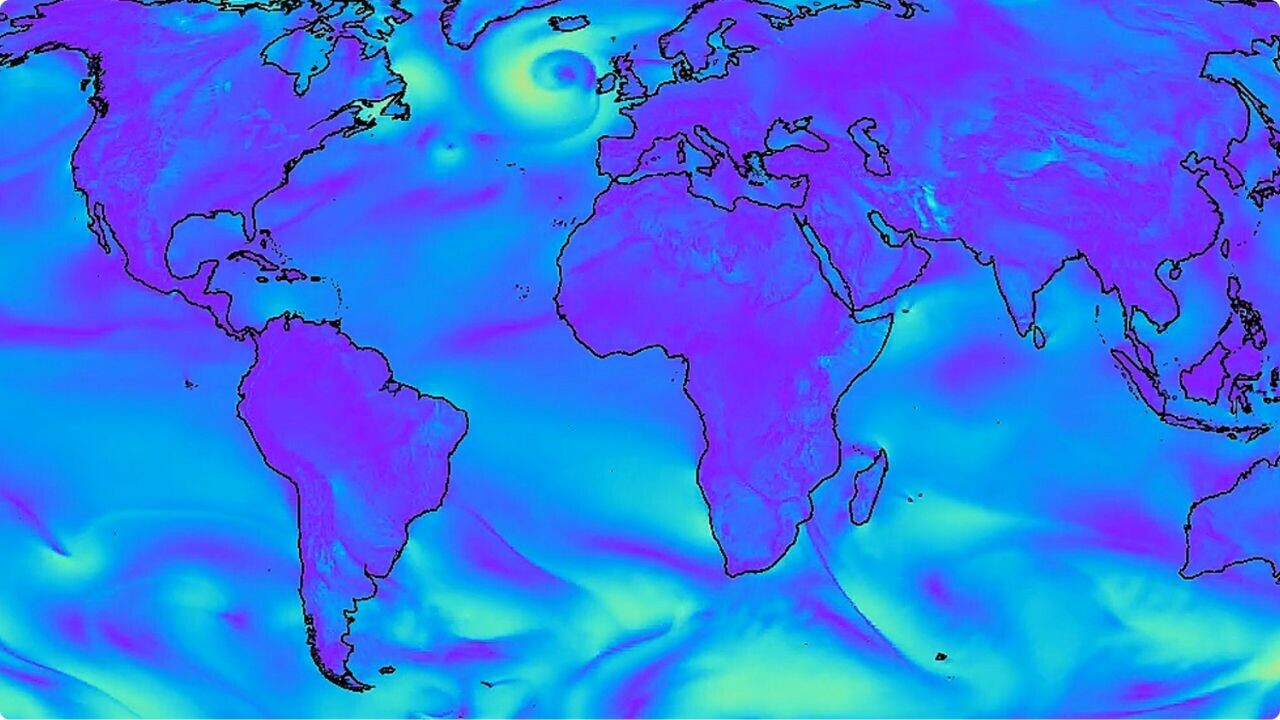
Named GraphCast, the model promises medium-range weather forecasts of unprecedented accuracy.
The system also predicted extreme weather further into the future than was previously possible.
40% off TNW Conference!
They also provided less consistent predictions of the time and location of landfall.
Intriguingly, GraphCast can identify dangerous weather events without being trained to find them.
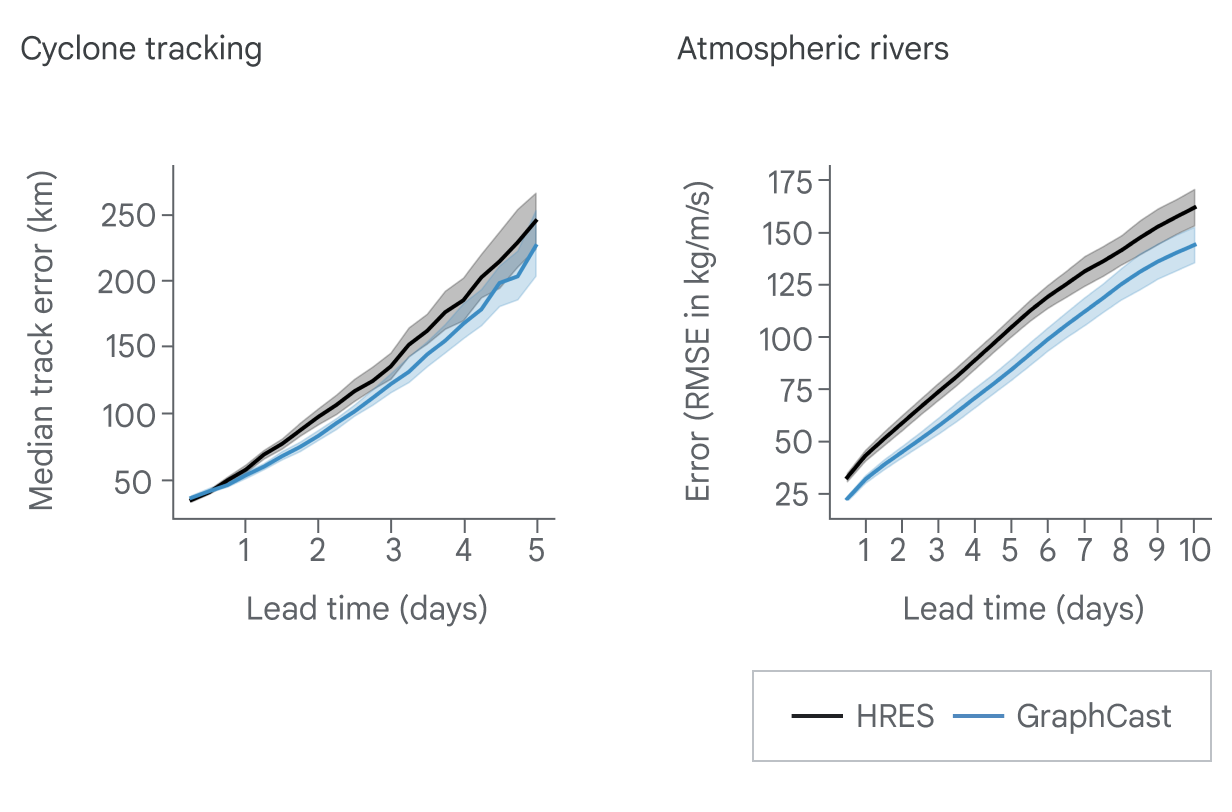
After integrating a simple cyclone tracker, the model predicted cyclone movements more accurately than the HRES method.
Such data could save lives and livelihoods.
Matthew Chantry, amachine learningcoordinator at the ECMWF, believes his industry has reached an inflection point.
Meteorological organisations, he added, had previously expectedAIto be most useful when merged with physics.
But recent breakthroughs show that machine learning can also directly forecast the weather.
The process can be painstaking.
It also requires specialist knowledge and vast computing resources.
GraphCast harnesses a different technique.
To learn the causes andeffects that determine weather changes, the system was trained on decades of weather information.
When there are gaps in the observations, physics-based prediction methods fill them in.
The result is a detailed history of global weather.GraphCast uses these lessons from the past to predict the future.
GraphCast makes predictionsat a spatial resolution of 0.25-degrees latitude/longitude.
To put that into perspective, imagine the Earth divided into a million grid points.
At each point, the model predicts five Earth-surface variable and six atmospheric variables.
Together, they cover the planets entire atmosphere in 3D over 37 levels.
The variables encompass temperature, wind, humidity, precipitation, and sea-level pressure.
In tests, the results were impressive.
GraphCast significantly outperformed the most accurate operational deterministic systems on 90% of 1,380 test targets.
In this region, GraphCast outperformed HRES on 99.7% of the test variables for future weather.
GraphCast is also highly efficient.
A 10-day forecast takes under a minute to complete on a single Google TPU v4 machine.
A conventional approach, by comparison, can take hours of computation in a supercomputer with hundreds of machines.
Gentry is keen to see how much this can improve.
Those improvements could now come from anywhere, because DeepMind hasopen-sourced the model code.
Global organisations and individuals alike can now experiment with GraphCast and add their own improvements.
The potential applications are, ironically, unpredictable.
The forecasts could, for instance, inform renewable energy production and air traffic routing.
But they could also be applied to tasks that havent even been imagined.
Theres a lot of downstream use cases for weather forecasts, said Peter Battaglia, Google DeepMinds research director.
And were not aware of all of those.
Story byThomas Macaulay
Thomas is the managing editor of TNW.
He leads our coverage of European tech and oversees our talented team of writers.
Away from work, he e(show all)Thomas is the managing editor of TNW.
He leads our coverage of European tech and oversees our talented team of writers.
Away from work, he enjoys playing chess (badly) and the guitar (even worse).
