Design is an ever-evolving field.
So much so that its hard to keep track of design job titles.
Originally, product designers designed industrial products while graphic designers focused on print as a medium.
Designers considered business priorities, user needs, and material constraints amongst other factors, and designed the solutions.
The digital Product of today constantly learns about the users understanding of itself and evolves as it learns.
The requirement comes in batches and continuously builds on top of the existing solution.

A measure of each metric highlights high-level patterns and preferences of the users.
I personally prefer percentile (80th) over averages to eliminate outliers.
It’s free, every week, in your inbox.
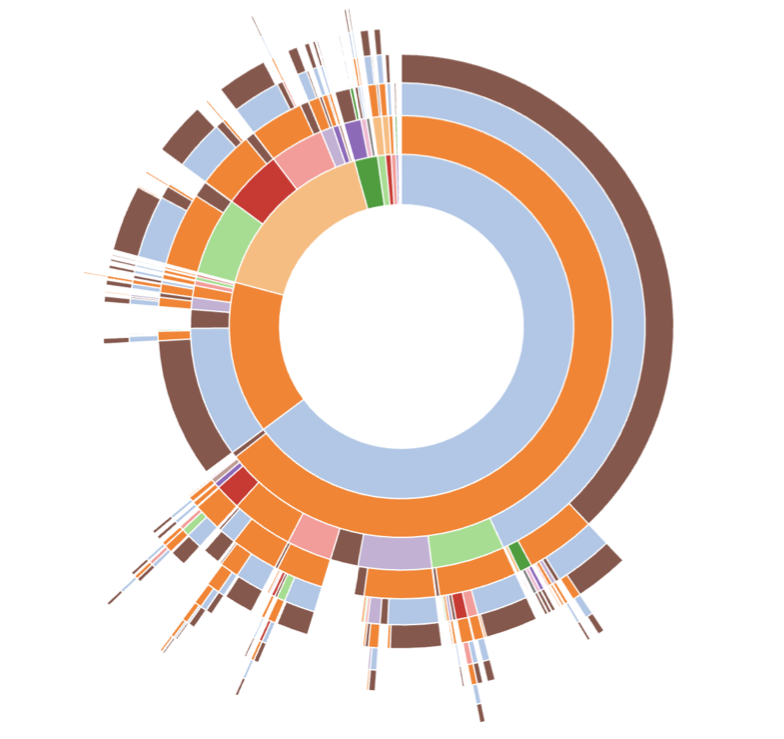
Now, in a data-informed environment, these numbers drive product and design decisions and experiments.
Since we identify high-level patterns through these metrics, we are essentially designing for Personas.
Also, even before starting to design a product, our ethnographic studies focus on bucketing users in personas.

Hence, both our qualitative and quantitative indicators of the day help us in designing for these Personas.
The Future: Create for the individuals
You must have had some magical experiences with a product.
I remember Google Home picked out the top 10 restaurants in my area for my anniversary.
And Cleartrip highlighted a local holiday for me while making a flight booking for the said date.
What if magical experiences were a norm?
Personalization in content is ubiquitous these days.
But now, were on the verge of elevating it to the product itself.
Designs objective has always been about designing for users a.k.a User-Centric-Design.
Metaphorize AI as a childhood friend, one who understands you, and grows old with you.
In anAI-poweredworld, we can scale Empathy.
We can understand individuals amongst data and truly designUser-Centeredsolutions.
Use research to innovate and data to amplify.
Can AI replace designers?
Maybe we can expect a new title soon: AIXD!
This article was originally published onUX Collectionby Sumit Dager, a design leader, and entrepreneur.
Dager helps to grow startups transition into a stable product and an innovation culture.
Hes interested in creating consumer products for emerging markets and accessible innovations for disabled users.
