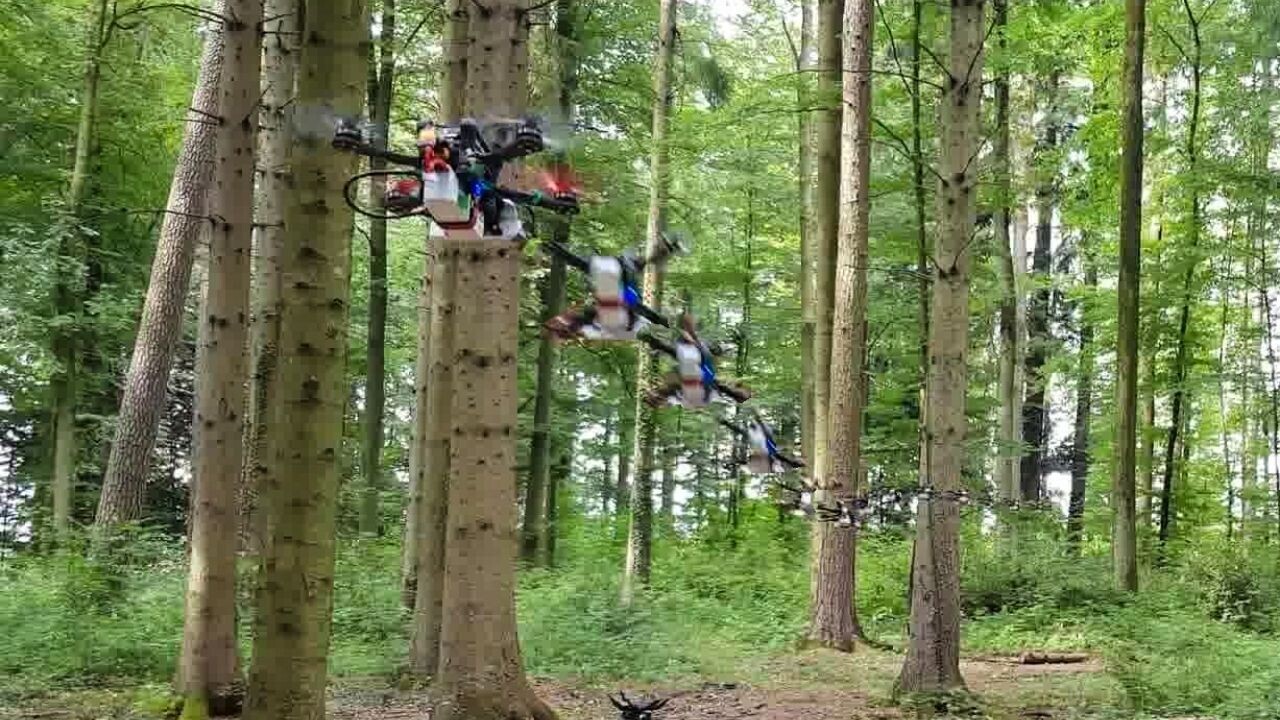
The quadcopters flight lessons took place in a simulation.
Analgorithmfirst piloted a computer-generated drone through a simulated environment that contained complex obstacles.
This data was used to train the dronesneural networkto predict a flight path based on information from onboard sensors.
40% off TNW Conference!
The approach has several advantages over other methods.
The direct mapping of sensory observations to flight trajectories reduces processing latency.
The system also increases robustness to perception disturbances, such as motion blur and missing data.
The team now wants to develop faster sensors that would enable drones to safely fly at even faster speeds.
Their approach could prove useful in emergencies and on construction sites.
It also looks well-suited to hunting down undesirables.
Story byThomas Macaulay
Thomas is the managing editor of TNW.
He leads our coverage of European tech and oversees our talented team of writers.
Away from work, he e(show all)Thomas is the managing editor of TNW.
He leads our coverage of European tech and oversees our talented team of writers.
Away from work, he enjoys playing chess (badly) and the guitar (even worse).
