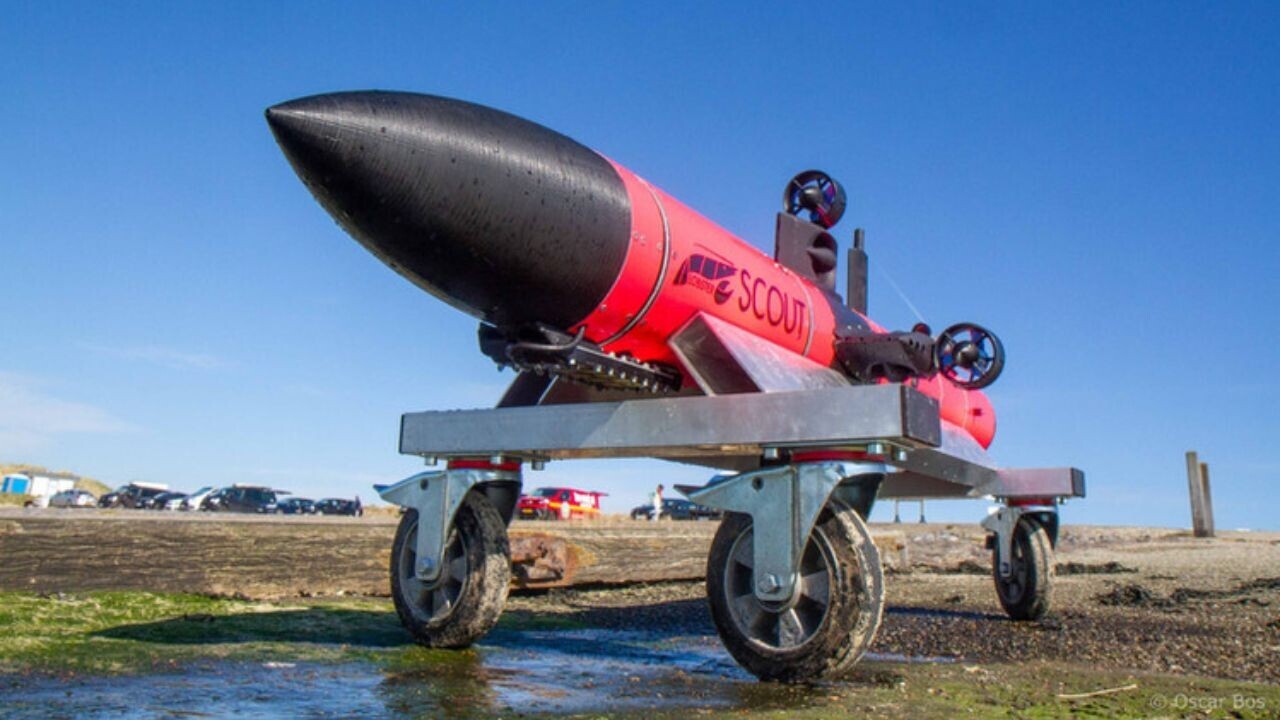
The company, namedLobster Robotics, develops underwater drones that survey the seas.
That data produces high-resolution, interactive, optical seabed maps.
Their contents reveal what is normally invisible.
40% off TNW Conference!
Users could monitor marine habitats, explore the oceans, or search for sunken treasure.
They could also deploy the robots inseabed security a growing concern since the attack on theNord Stream pipelines.
After several postponed launches, the team shifted their focus back to Earth.
They targeted our planets most challenging environment: the deep sea.
By 2021, the student project had evolved into Lobster Robotics.
Two years later, the team launched their first machine: Lobster Scout.
The robot can obtain sub-millimeter resolution over hectares of scale.
This ability, the team says, won them a place on the NATO accelerator.
Canadas Phantom Photonics and the USAs Dolphin Labs round off the list.
All the startups will receive funding of up to 300,000.
NATO will also help them to develop their concepts.
Professor Deeph Chana, DIANAs managing director, praised the startups innovative ideas.
Story byThomas Macaulay
Thomas is the managing editor of TNW.
He leads our coverage of European tech and oversees our talented team of writers.
Away from work, he e(show all)Thomas is the managing editor of TNW.
He leads our coverage of European tech and oversees our talented team of writers.
Away from work, he enjoys playing chess (badly) and the guitar (even worse).
