Are we alone in the universe?
It comes down to whether intelligence is a probable outcome of natural selection or an improbable fluke.
By definition, probable events occur frequently, improbable events occur rarely or once.
Our evolution may have been like winning the lottery…only far less likely.
The universe is astonishingly vast.
So where is everyone?
This is theFermi paradox.
Could intelligence simply be unlikely to evolve?
Unfortunately, we cant study extraterrestrial life to answer this question.
Evolution sometimes repeats, with different species independently converging onsimilar outcomes.
If evolution frequently repeats itself, then our evolution might beprobable, even inevitable.
Wikipedia
40% off TNW Conference!
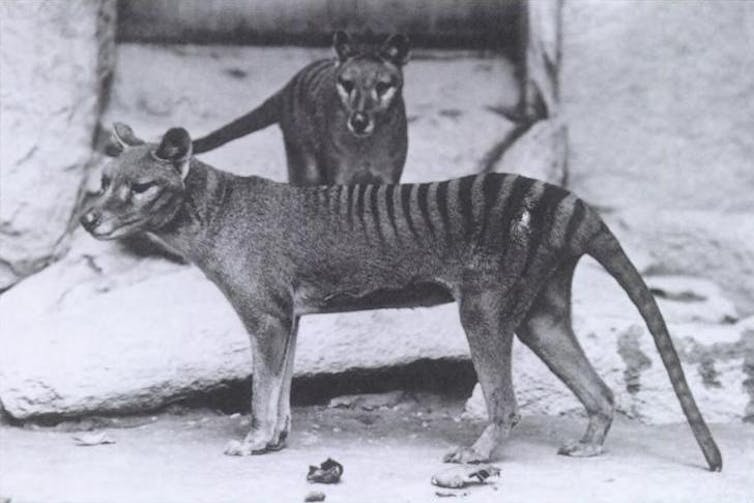
There are also marsupial moles, marsupial anteaters, and marsupial flying squirrels.
Remarkably, Australias entire evolutionary history, withmammals diversifyingafter the dinosaur extinction, parallels other continents.
PLoS Biology
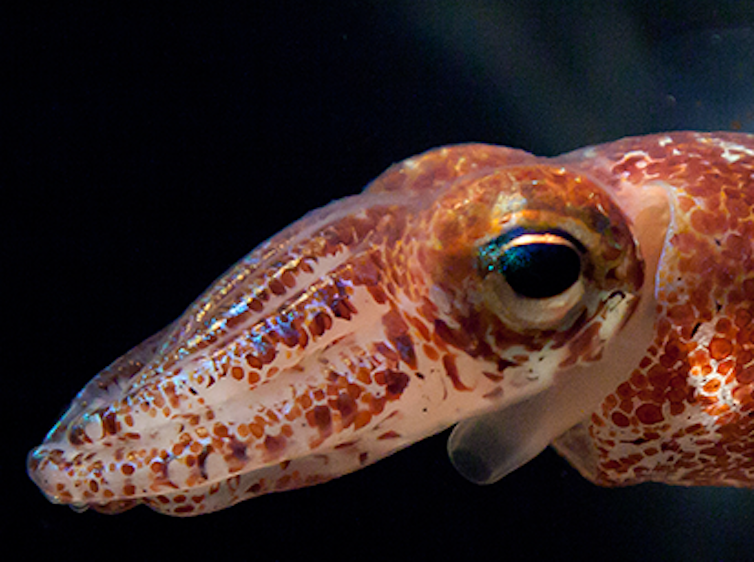
We also see convergence in individual organs.

Eyes evolved not just in vertebrates, but in arthropods, octopi, worms, and jellyfish.
Vertebrates, arthropods, octopi, and worms independently invented jaws.
All this convergence happened within one lineage, the Eumetazoa.

Eumetazoans are complex animals with symmetry, mouths, guts, muscles, a nervous system.
Complex animalsevolved oncein lifes history, suggesting theyre improbable.
Surprisingly, many critical events in our evolutionary history are unique and, probably, improbable.
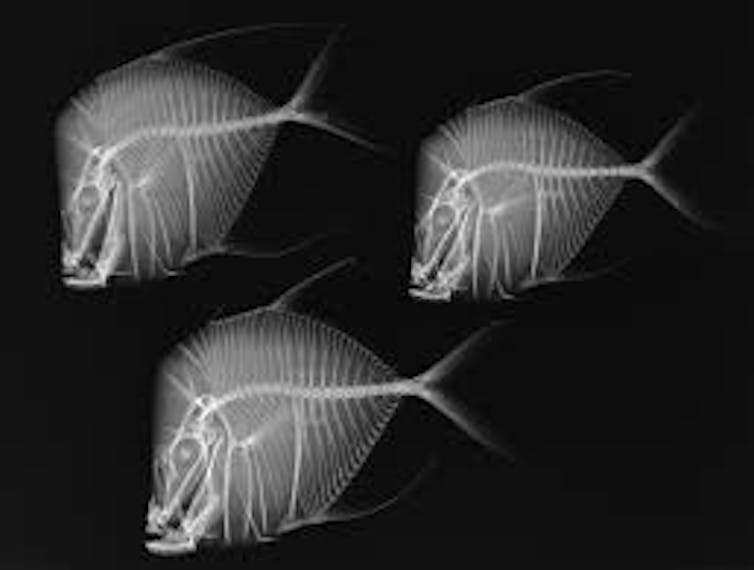
One is the bony skeleton of vertebrates, which let large animals move onto land.
Sex evolved just once.
Photosynthesis, which increased the energy available to life and produced oxygen, isa one-off.
For that matter, so is human-level intelligence.
There are marsupial wolves and moles, but no marsupial humans.
The vertebrate skeleton is unique.
Smithsonian Institution
There are places where evolution repeats, and places where it doesnt.
If we only look for convergence, it creates confirmation bias.
Convergence seems to be the rule, and our evolution looks probable.
Whats more, these events depended on one another.
Humans couldnt evolve until fish evolved bones that let them crawl onto land.
Bones couldnt evolve until complex animals appeared.
Complex animals needed complex cells, and complex cells needed oxygen, made by photosynthesis.
None of this happens without the evolution of life, a singular event among singular events.
All organisms come from a single ancestor; as far as we can tell,life only happened once.
Curiously, all this takes a surprisingly long time.
That these innovations are so useful but took so long to evolve implies that theyre exceedingly improbable.
If so, our evolution wasnt like winning the lottery.
It was like winning the lottery again, and again, and again.
The odds of evolving intelligence become one in 10 million.
Photosynthesis, another unique adaptation.
Nick Longrich
But complex adaptations might be even less likely.
Photosynthesis required a series of adaptations in proteins, pigments, and membranes.
Eumetazoan animals required multiple anatomical innovations (nerves, muscles, mouths and so on).
So maybe each of these seven key innovations evolves just 1 percent of the time.
If so, intelligence will evolve on just 1 in 100 trillion habitable worlds.
And yet, were here.
That must count for something, right?
Intelligence seems to depend on a chain of improbable events.
The improbable result was us.
