A substantial part of humanity is slowly emerging from weeks of lockdown.
What we have experienced is truly rare: a real global threat, menacing to all wherever we lived.
But how did humanity respond to this pandemic?
Did people consistently stay at home as most governments asked them to?
And if they didnt, where did they go?
We can answer these questions thanks to Google.

Never before has this level of detail been available.
The Google dataset seems to be of such quality that several scientific questions can finally be resolved.
Across Europe, the picture the data paints is varied.
Some of the difference can be attributed to the lockdown strategies of different countries.
But some, seemingly, cannot.
This may be useful when considering future lockdowns.
It’s free, every week, in your inbox.
To get a smoother image, we calculated a seven-day moving average.
What were the differences between countries?
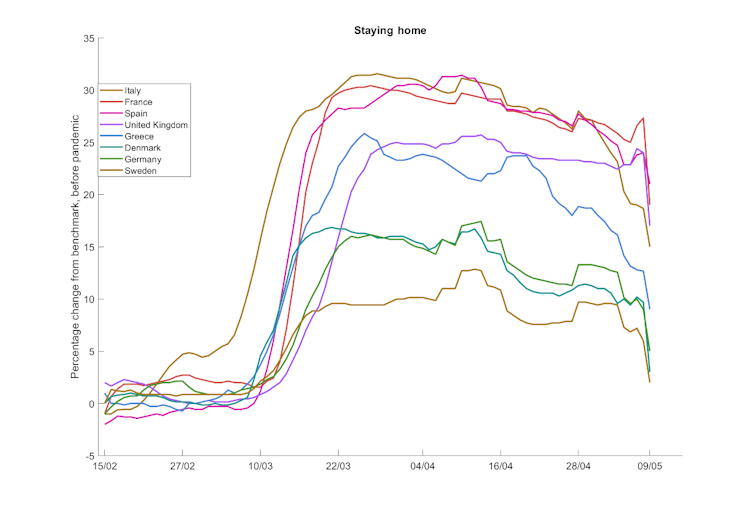
Lets start with people staying at home.
However, behavior varied substantially.
In Spain, Italy and France, time spent at home rose early in the pandemic by 30-35%.

Swedens increase was even lower at 8-10%.
This might indicate that compliance is a matter of perceived risk.
Greece kept its COVID-19 cases and deathsremarkably low, which may have caused people to relax.
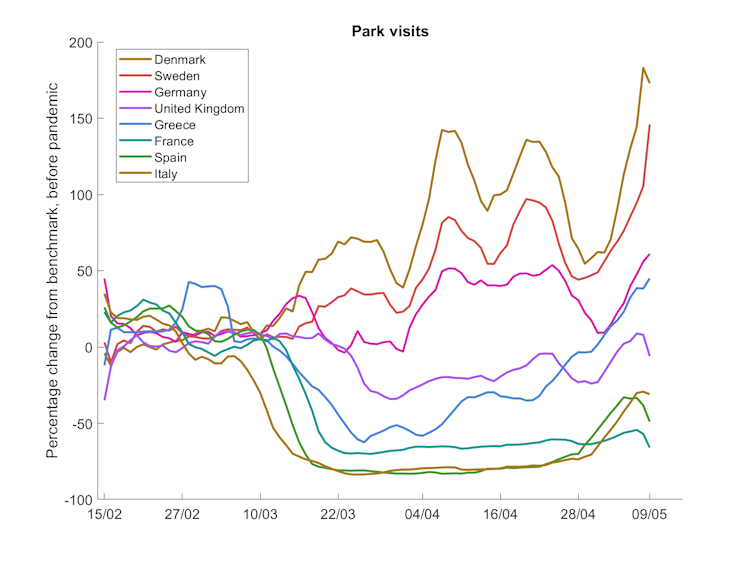
The mix of how people spent their outdoor time also differed.
For example, the next graph presents the park visit data.
At the same time, Italy and Spain saw 80% drops.
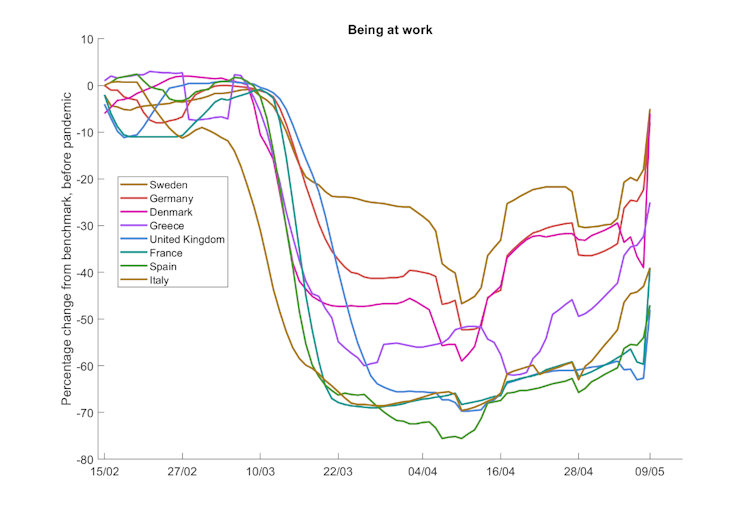
Lastly, let us look at time spent at workplaces.
We can see, though, the effect of Spain allowing some sectors toopen up again on April 14.
What should we do with this data?
While lockdown measures were still in place, people around Europe started leaving their homes more.
Its clear that adherence to lockdown decreased over time.
Governments now need to investigate whether this affected the spread of disease.
Is staying at home a solution?
And if people do not stay at home, does it matter where they go?
