Developershave set a new record in the endless quest to accurately calculate pi.
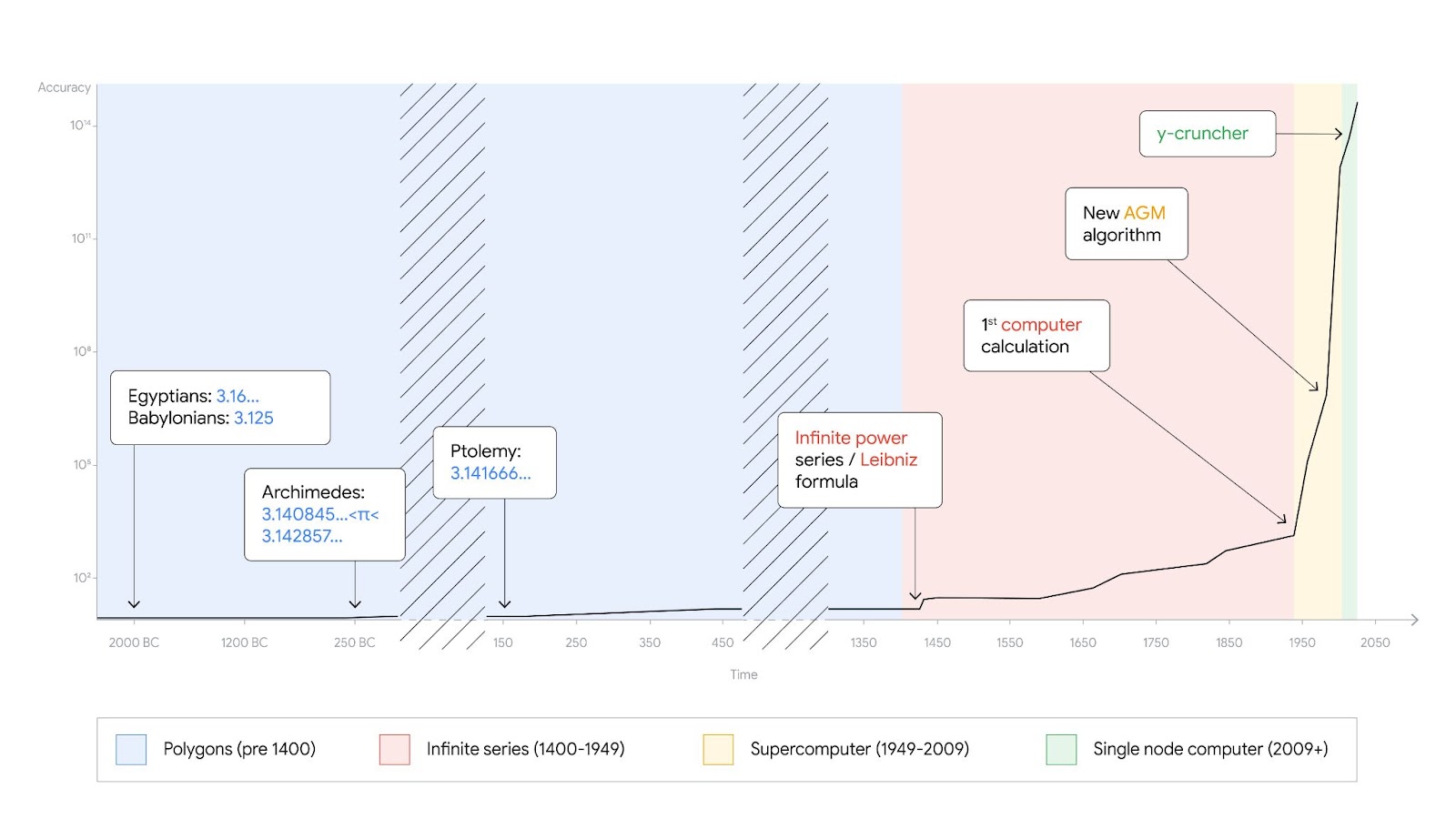
Brainiacs have sought to extend pi for millennia, but in recent years the digits have increased exponentially.
Advances in computing are now causing records to regularly tumble.

It’s free, every week, in your inbox.
A 2019 milestone that was also set by Iwao was surpassed within months.
That landmark was then overturned the next year, before Iwao reclaimed her crown this March.
Iwaos team used they-cruncherprogram andChudnovskyalgorithm.
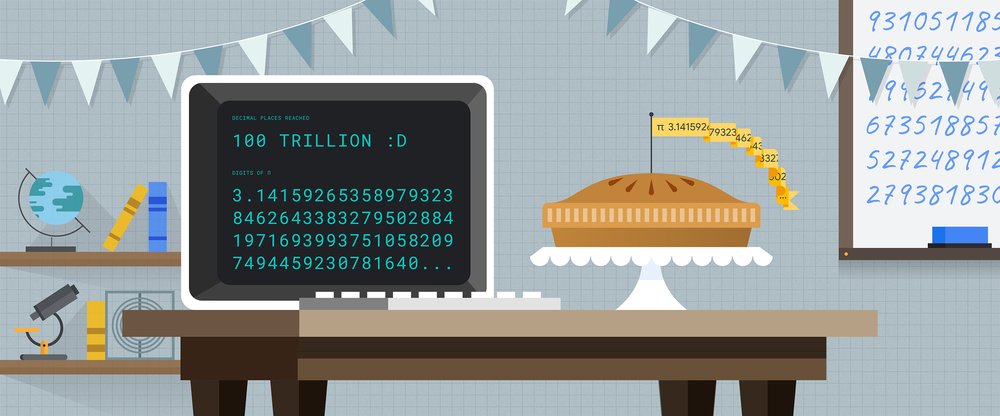
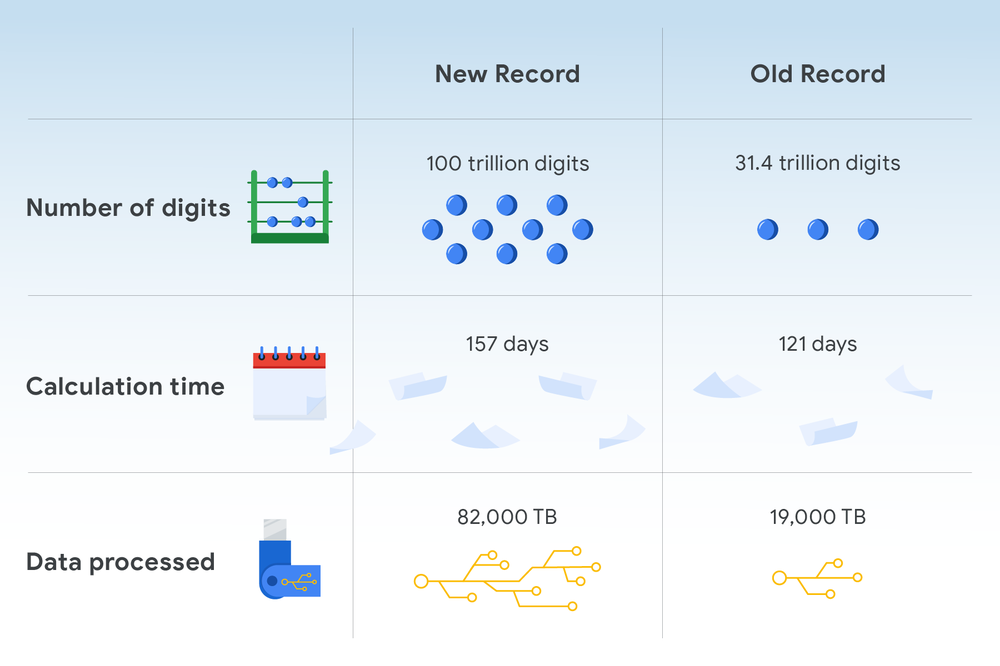
Their calculation ran for 157 days before finding the 100-trillionth decimal place a 0.
They then verified the final numbers withthe BaileyBorweinPlouffe formula.

In total, the process used a whopping 515 TB of storage and 82 PB ofI/O.
The feat clearly required immense time and resources which begs the question, what was the point?
Pi serves many practical purposes.
Yet these myriad uses rarely require approximating pi to 10 decimal places let alone 100 trillion.
Even NASA needs no more than 15.
The agencys Jet Propulsion Laboratory said itshighest accuracy calculation which is used for interplanetary navigation is 3.141592653589793.
Congratulations,@Yuryu, on your record-breaking calculations of pi to 100 trillion digits.
Iwao admits as much.
Googles pi calculations also provide a chance to flaunt how fast its computers have become.
When the team broke the record in 2019, they needed 121 days to find 31.4 trillion digits.
This time, they took 157 days to hit three times as many numbers.
Story byThomas Macaulay
Thomas is the managing editor of TNW.
He leads our coverage of European tech and oversees our talented team of writers.
Away from work, he e(show all)Thomas is the managing editor of TNW.
He leads our coverage of European tech and oversees our talented team of writers.
Away from work, he enjoys playing chess (badly) and the guitar (even worse).
