Despite its digital nature, online harassment can havereal-world consequences for victims, including emotional and physical distress.
This has left online gaming companies and players scrambling for better community management techniques to prevent harassment.
The stakes are high.

Competitive video gaming, or esports, now exceedsUS$1 billionin yearly revenue.
Professional, collegiate and high school leagues are expanding, especially as COVID-19 hasdecreased opportunities for traditional sports.
It’s free, every week, in your inbox.

However, these issues are hardly new.
Similar problems arose in 2014sGamerGateTwitter-based campaign of harassment of female gamers, designers and journalists.
Sexism was also common before GamerGate.
Survey data from theAmerican Defamation Leaguesuggests that at least 37% of female gamers have faced gender-based harassment.
Rather, a culture of harassment requires community norms that allow for it.
This suggests that online bad behavior can be addressed effectively.
The question is how.
For instance, some play only with friends or avoid using voice chat to hide their gender.
Other gamers get really good at their favorite games, to shut down harassment through skill.

Research by other media scholars, such asKishonna GrayandStephanie Ortiz, has found similar results across race and sexuality.
These strategies have significant downsides, however.
For example, ignoring toxicity or brushing it off allows it to persist.
Pushing back against harassers often results in further harassment.
This can drive victims out of online spaces.
How companies can intervene
Game companies are becoming increasingly invested in community management strategies.
Its important that interventions be rooted in the experiences of players, however.
Right now, many companies intervene though practices like banning or blocking harassers.
Blocking also manages harassment after it occurs, rather than stopping it at the source.
Thus blocking should be combined with other potential approaches.
First, companies should expand the tools they provide players to manage their online identities.
Many participants avoided voice chat to limit gender harassment.
This at times made it difficult to compete.
Similar tools could be built into many other online games.
Grouping mechanisms work particularly well when matched to the needs of their specific game.
Abuse can occur when randomly assigned teammates all want to play the same character.
This appears toreduce abusive in-game chat.
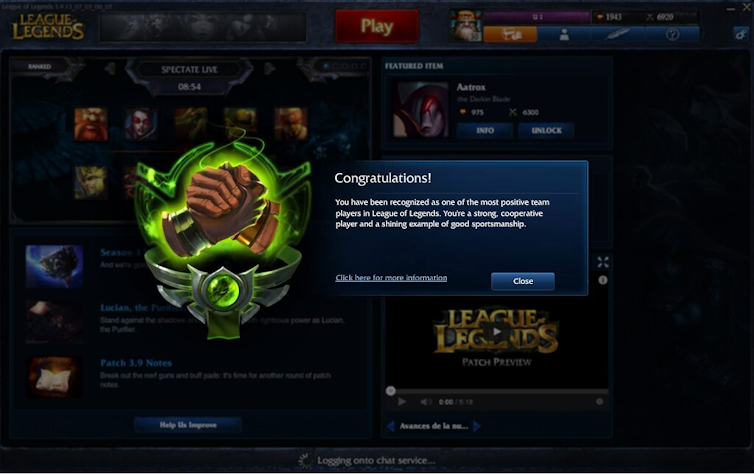
An example of in-game commendations for positive behavior in League of Legends.
Daniel Garrido/Flickr, CC BY
Finally, companies should work to change their basic cultural norms.
