Picture the keypad of a telephone and calculator side by side.
Can you see the subtle difference between the two without resorting to your smartphone?
Dont worry if you cant recall the design.
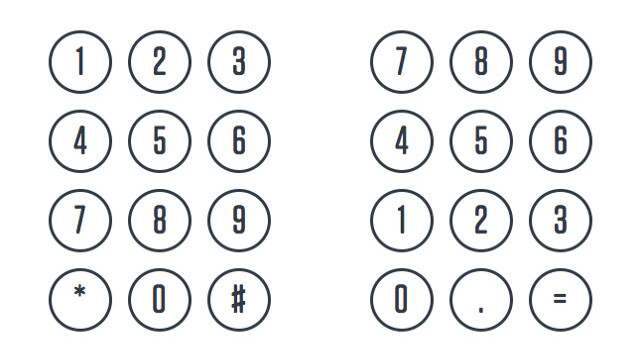
A calculator has the 789 buttons at the top whereas a phone uses the 123 format.
Subtle, but puzzling since they serve the same functional goal input numbers.
Theres no logical reason for the inversion if a user operates the interface in the same way.

Common sense suggests the reason should be technological constraints.
Maybe its due to a patent battle between the inventors.
Some people theorize its ergonomics.
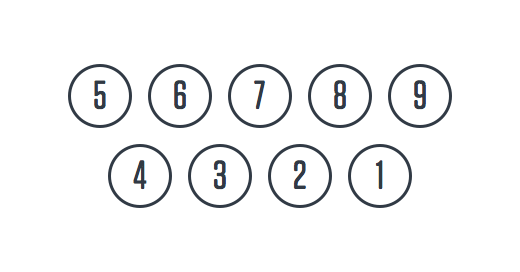
With no clear explanation, I knew history and the evolution of these devices would provide the answer.
Which rig was invented first?
Which keypad influenced the other?
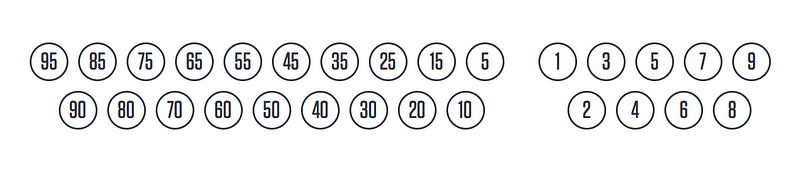
Most importantly, who invented the keypad in the first place?
The keyboard came about sometime between the first and second industrial revolutions (from 1820 to 1920).
Some inventors had already begun experimenting with machines similar to pianos in the late 18th century.
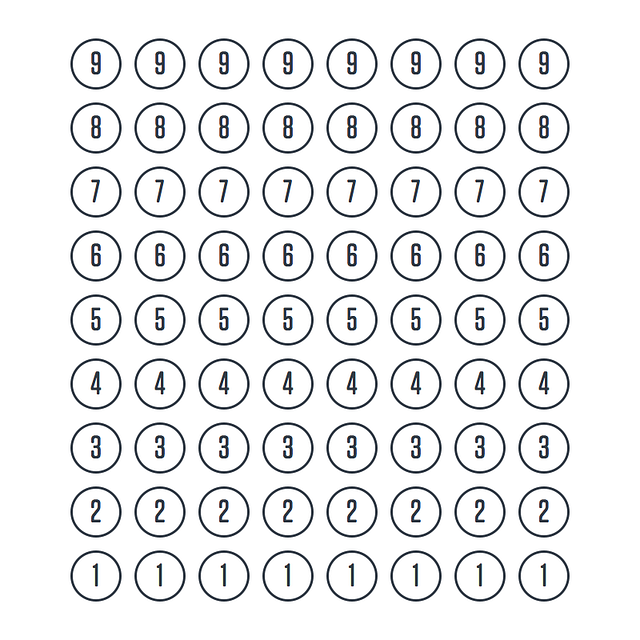
In 1822, author James WhitesNew Century of Inventionsshowed a key-based gadget with nine numeric keys.
However, these ideas still dont provide an explanation as to why modern calculators use the reverse 90 arrangement.
Theoriesinclude the suggestion that the calculator was based on the cash register design.
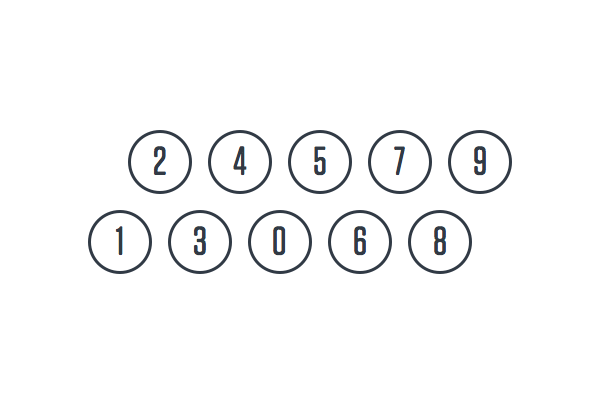
For the argument to be valid, its important to look at the birth of cash registers.
These corresponded to the price, in cents, of items sold in stores and saloons.
Still, there is even earlier evidence that suggests vertical columns were already invented.
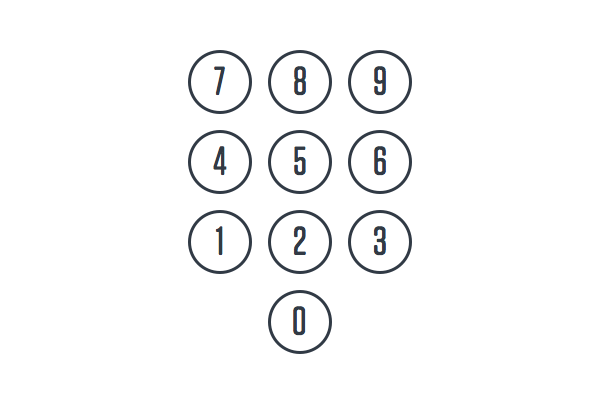
The idea was based on the Pasaclines mechanism, the layout of Thomas Mills machine and a macaroni box.
Keep in mind that 0 was still not a part of the key sequence.
History shows that it was a 9 to 1 sequence (Dalakov, 2018).
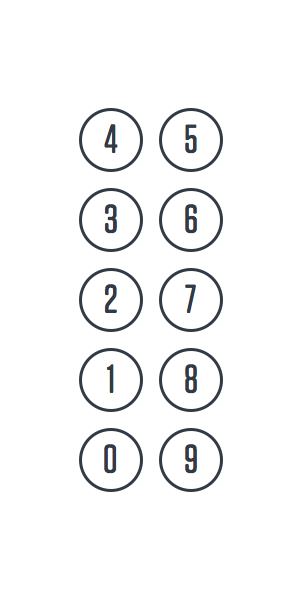
Cash registers were still in the process of catching up.
Here is where the story gets interesting.
Why did Felt choose to display the numbers in a 9 to 1 sequence?
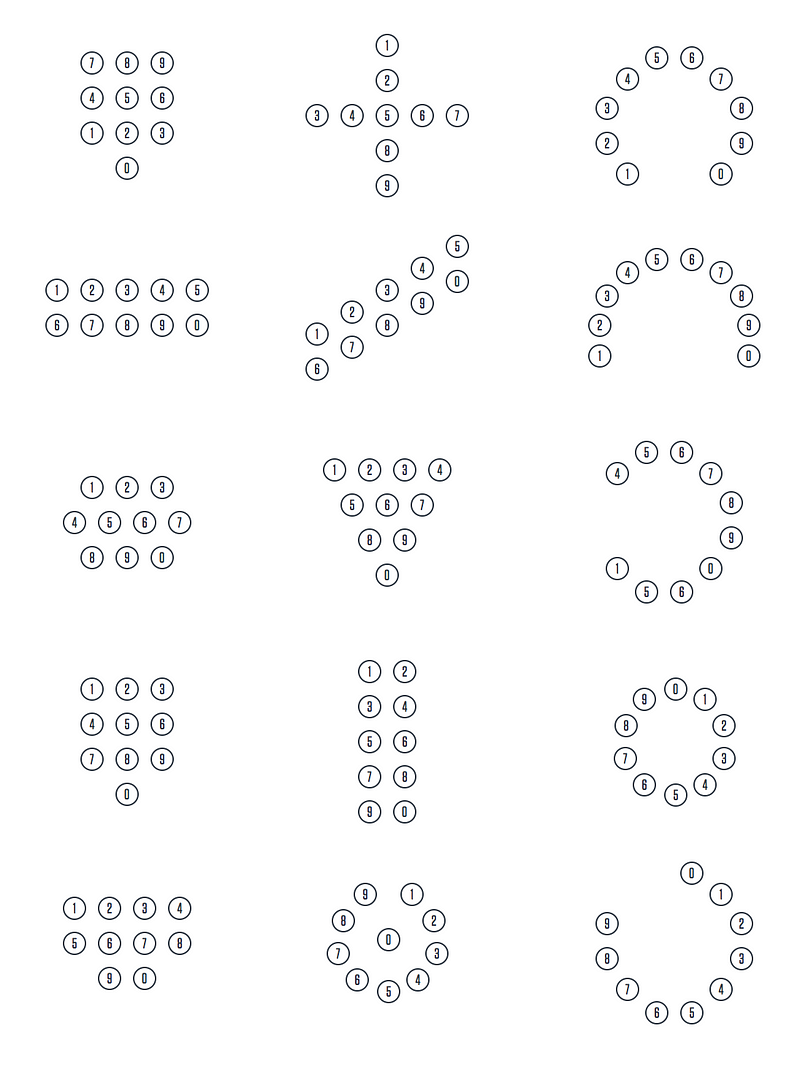
It wasnt a widespread notion at the time.
After all, the knowledge of arithmetical devices was not as widespread.
Another interesting explanation from a modern design standpoint goes beyond the mechanical reasons.
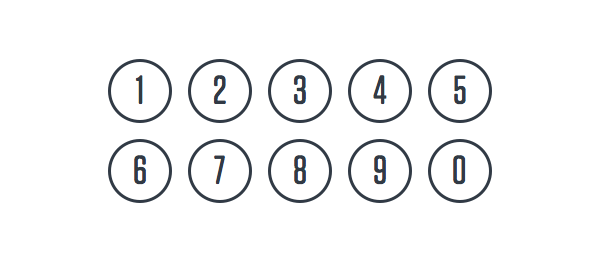
According to theComptometer Manual, operators were meant to input numbers by using the lowest values on the keyboard.
Instead, they were to press, in sequence, the 4 and 5 key.
The machine would do the math.
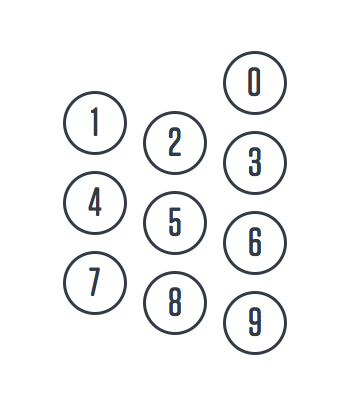
Felt was all about efficiency, which meant keeping commonly used keys within the fingers reach.
The Comptometer and its competitors required highly-trained users to attain maximum productivity.
It was also difficult to do with one hand, especially when it came to multiplications.
Whats different in the arrangement that was not seen up until now?
(Durant, 2011)
Thats right!
The 0 finally appeared in a sequence.

Bookkeepers around the world rejoiced when the development of the Dalton (Dalakov, 2018).
The quest for further development continued.
In 1914, David Sundstrand, a Swedish-born American man, filed patent No1198487 under the name Sundstrand Corporation.
The goal was to push the usability of these adding machines further.
He rearranged the key in a more logical, natural configuration.
It could be operated with one hand, which made it the fastest keyboard of all adding machines.
The layout became the standard for calculator keypads even 100+ years later.
From calculators to telephones
Does the evolution of calculators prove its influence on modern phones?
Possibly, but theres no straight answer.
It isnt until the 1950s that direct distance dialing expanded to a significant number of communities.
Local numbers (usually six digits or less) were then expanded to a standard seven-digit named exchange.
It was important to determine which configuration would be best for users (Deininger 1960).
Surprisingly, the calculator layout didnt do so well, and users preferred a left-to-right, top-to-bottom layout.
(Deininger 1960).
AT&T opted for the 33+1 layout, perhaps due to its compact format and versatility.
Now perhaps is the keyword here.
Both studies have not given a final, matter-of-fact answer.
And the UK adopted the 55-H layout, again perhaps due to patent reasons.
No physical constraints, other than the screen real estate that limits designers creativity.
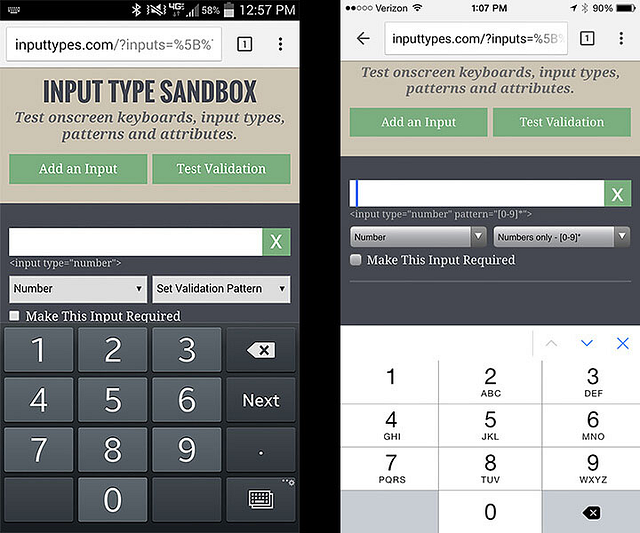
Look at your Android or iPhone apps.
Youll notice that both the phone and calculator layouts are similar to the ones invented a century ago.
Possibly these interfaces reached the maximum optimization an interface can have.
Most recent version of the iOS prompts the special characters board instead).
Oculus, Xbox, choose the legacy of desktop applications.
