If you thought that C is the kind of language that only 60-year-old white men know, think again.
Yeah, its the dinosaur among todays programming languages.
But its still alive and kicking in more areas than youd think.
This made Unix a lot more portable across different machines, and helped make it popular.
If youve ever worked with databases, youve definitely used C, too.
Even if you werent aware about that!

Unless youre opting for Jython, IronPython or PyPy, youre usingCPython.
Its not just a big fat dinosaur that somehow managed to survive in the modern age.
Its incredibly successful because its extremely useful.
Thats why it may come as a surprise that C didnt originate from success.
The school teacher who was buddies with Alan Turing
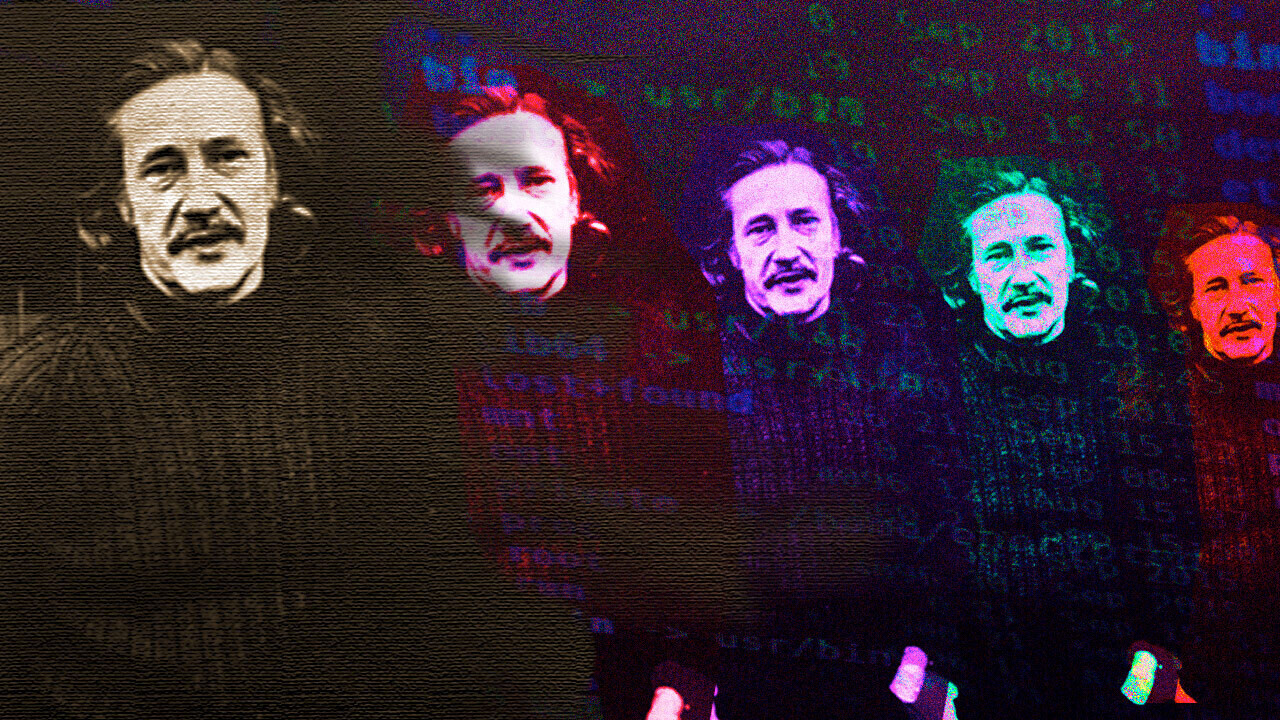
Meet Christopher Stratchey.
That might be the reason why he didnt pursue an academic career like many of his peers.
Instead, he spent the war years inindustrial radar research.
He then became a schoolteacher and remained one until 1951.
Thats when everything changed for him.
A friend introduced him to the facilities of Britains National Physical Laboratory.
Stratchey aimed at teaching the computer how to play checkers.
Tackling such a logical task was remarkable at a time where computers were primarily used to quickly solve equations.
He didnt succeed in his first attempt because thePilot ACEdidnt have the storage capacity to do the job.
With his friends guidance, he finally succeeded.
Three Davids want a language
Meanwhile in Cambridge, the university wanted to buy a new computer.
It was clear that a new computer needed a new operating system, but not necessarily a new language.
In addition, the three Davids didnt ask the future users about the pros and cons of old languages.
The three Davids thought that they could easily create something better, though.
They dubbed it CPL, short for Cambridge Programming Language.
That became Combined Programming Language after a couple of researchers from the university of London joined the three Davids.
The development team therefore got hooked up on minor issues instead of treating the big ones effectively.
Soon enough, CPL was known as Christophers Programming Language.
When they wanted to write a compiler, it largely failed because the resulting machine code was inefficient.
The goal was, of course, to get something that produces a good compiler and efficient machine code.
Thats how Richards made BCPL out of CPL Basic CPL.
(Iteventually survived, but thats a different story.)
Thompson eventually pivoted to developing Unix, one of the most-used operating systems to this day.
A high-level Unix, in contrast, would work on any machine.
Thompson tried to use NB for this task but failed.
Ritchie and he then added one feature after the other into NB until he was able to write Unix.
Notably, they added structures, which werent to be found in any other languages at the time.
Structures were a change notable enough for the two to call it a new language.
Voila, in 1973, C was born!
One success factor might have been that the PDP-11 minicomputer was extremely popular.
It was dirt cheap to install Unix on it, and C came with Unix.
This further leveled the playing field for beginners.
And without Thompsons task of rewriting Unix, it might have never happened.
But without those, C might not even have been invented.
Features of C are everywhere.
That doesnt mean that languages like Python dont get used there, too, especially for first sketches.
But the last step the fine polish, if you want is often written in C or C++.
So yeah, C is a dinosaur if measured by its age.
But I bet its nimbler and more agile than your grandpa!
Or your grandchild, for that matter…
This article was written byAri Jouryand was originally published onData Driven Investor.
you could read ithere.
