It was the summer of 1959, and the United States needed a Cold War to win.
In 1957, the Soviet bloc scored a major technological victory with Sputnik 1.
The next year, Chinas Communist leadership launched the sweeping, and ultimately devastating, Great Leap Forward.
In the spring of 1959 in Cuba, Fidel Castros guerrillas forced president Fulgencio Batista into exile.
The US needed to recapture the momentum and demonstrate that it was still at the helm of world affairs.
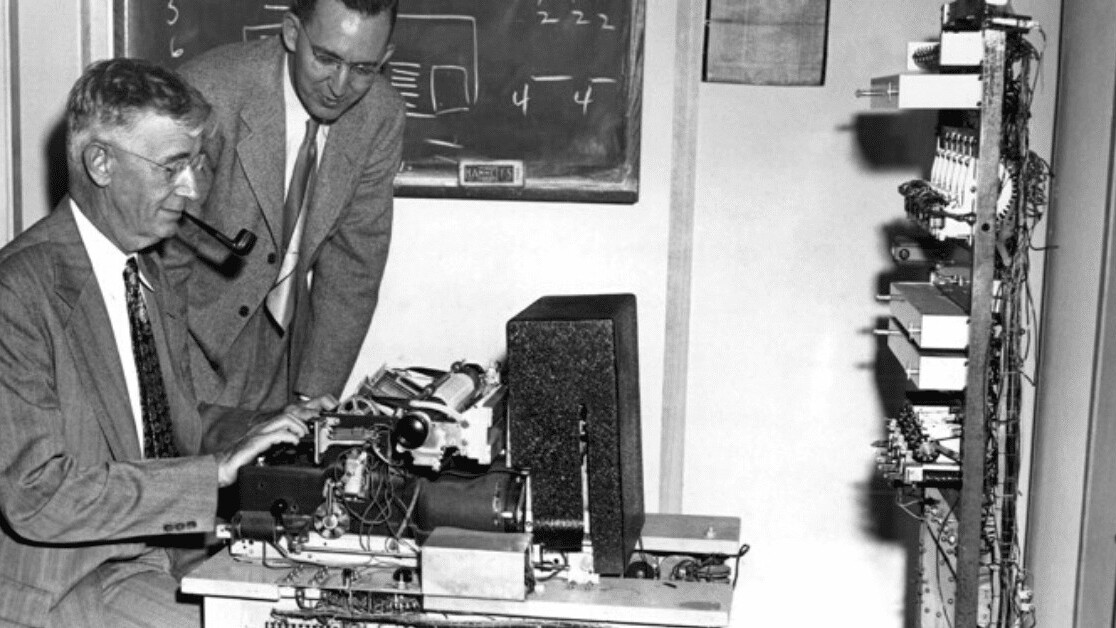
The plan: president Dwight D Eisenhower was to unveil the worlds first Chinese computer.

It would mean that the Chinese language was not backward in the way that many had claimed.
Caldwell was a man of many talents.
It’s free, every week, in your inbox.
One talent Caldwell could not claim was the ability to speak or read Chinese.
His first exposure to the language came thanks to informal dinnertime chats with his overseas Chinese students at MIT.
In between bites of stir fry and dumplings, Caldwell and his students got to talking about Chinese characters.
Caldwell sought the help of Lien-Sheng Yang, a professor of Far Eastern Languages at Harvard.
In the course of his research, Caldwell made a second startling discovery.
What took nine letters to spell might, therefore, take only five letters to find.
Certain characters in his test sample required 11 strokes to compose, but only five to find.
Caldwell had not only invented the worlds first Chinese computer.
He also unwittingly invented what we now know as autocompletion.
But Caldwell didnt see his invention in such stark Cold War terms.
The answer to this question seems simple and clear.
Its difficult to tell what Caldwell thought about the enthusiastic military backing his invention received.
But in his own view, the Sinotype was a means toward a more peaceful future.
If they made their own computing breakthrough, it would severely undercut the psychological victory of Caldwells invention.
But the summer passed without any major developments.
Eisenhower did not unveil the Chinese computer, and the Sinotype did not make its public debut.
Would it prove viable for Chinese users?
Was it, indeed, as potentially field-changing as the designers had come to believe?
Then, the next year, the project was dealt with its heaviest blow: Caldwell died.
Without his pioneering leadership, enthusiasm in military circles diminished.
This article was written byThomas S Mullaneyand originally published at Aeon.
It has been republished under Creative Commons.
