The current crisis is first and foremost humanitarian, with 300k casualties to date worldwide and massive joblessness.
It is also economic, with almost all companies having financial difficulties and many collapsing.
However, a few sectors are currently booming (e.g.
Many countries are still largely shut down, while others are re-opening.
Economies are initiating a reboot.
Health-related behaviors are changing.

This has started to trickle down to startups and tech development.
Overall, I do not foresee any aspects of the pre-crisis future being completely absent from thepost-crisisfuture.
I rather anticipate an acceleration for some segments and deceleration for others.

Likewise, programs with a long term benefit will trigger more collaboration to share costs and risks.
The likely winners
40% off TNW Conference!
Source: Skitterphoto
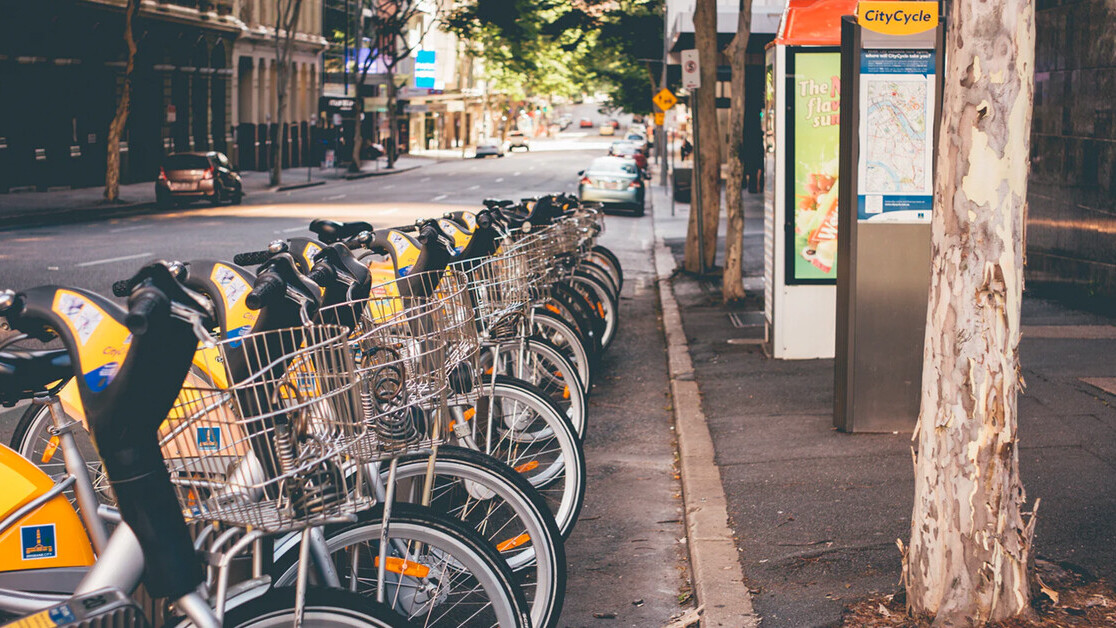
Private micromobility.Micromobility has gained massive traction globally as a shared mode starting in 2017.

Many cities are also creating temporary bike lanes.
Italy is offering500 incentivesto buy bikes and scooters.
Privately-owned micromobility should be a clear winner.

e-Commerce.Widespread confinement has given a massive boost to e-commerce and home deliveries as analyzed in thisNew York Times article.
More people are shopping online now, accelerating a pre-existing long term trend.
Amazon hired over 100k people to address the increased demand.

Its Russian competitor Yandex is observing a similar pattern.Walmartsaw the number of monthly online grocery app downloads triple.
Last-mile delivery.Companies involved in last-mile delivery are set to gain from the crisis.
This segment was already quite active, as described in my Dec. 2019article.
In the short term, many ride-hailing companies have redeployed their drivers to deliver food.
Instacart and DoorDash are in the process of raising hundreds of millions of dollars.
Target just announced it was buying the assets of same-day delivery startup Deliv.
More investment should be expected.
Source: Nuro
Autonomous cargo transportationwill likely benefit from the crisis as well.
Customer experience.Tesla will likely continue to benefit not only from its products but also from its direct distribution.
Traditional dealers are marching full steam towards pure online sales and contactless deliveries.
Customers will likely benefit from less friction in the sales process.
Dealership tools.Customer behavioral shift towards more online is expected to last, as it parallels other shopping experiences.
Most dealers and repair shops are trying to adapt extremely quickly to match the Tesla and Carvana models.
the complete promote-sell-finance-insure process) or vehicle remote health monitoring will benefit.
The likely losers
Automotive supply chain.The supply chain as a whole, i.e.
Source: CLEPA
Shared micromobilityhas come to a full stop in most countries.
Many operators will close down as a result.
Others with complementary positions will join forces.
I expect shared mobility will regain significant traction once the industry finds solutions to reduce the risk of infection.
Indeed, shared micromobility remains a very good solution for short distances or as feeders to public transit.
Ride sharing, car sharing.These services suffer from both home confinement and the risk of infection.
Riders have reverted to personal cars, walking , or biking.
Ride hailing has been badly hit with volumes dropping 60-80%.
Operators are taking actions to protect drivers and riders, with limited effect.
Some consolidation is to be expected, benefitting those with strong cash reserves.
Likewise, fleet-based and peer-to-peer car sharing is heavily impacted.
As of now, GM shuttered its (already suffering) car sharing program, Maven.
Autonomous drivingtech for passenger cars will suffer in the near term.
This shift will likely accelerate for those that survive.
However, the most mature companies will continue to forge ahead as automation remains in the future of transportation.
In this regard, Waymo just added $750M to close a $3B investment round.
Ridership often came down 80-90% where some traffic remained, as isthe case in the USA.
However, the modal shift towards micromobility and walking will likely linger.
Bringing business back will require strong actions and communication regarding health safety.
Other emerging tech.Several segments within the future of mobility will suffer in the short/mid term.
Read the original articlehereand follow them onLinkedinandTwitter.
This article was written by Marc Amblard, Founder & Managing Director,Orsay Consulting.
