But when cosmologists counted up everything they could see or measure at the time, they came up short.
Everything on the periodic table and pretty much anything that you think of as stuff is made of baryons.
This sparked the missing baryon problem.
This was termed the warm-hot intergalactic medium and nicknamed the WHIM.
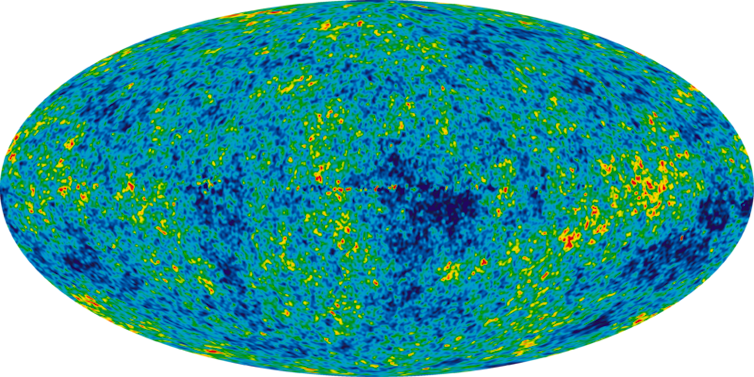
In 2001, another piece of evidence in favor of the WHIM emerged.
Now cosmologists just had to find this invisible plasma.
If the WHIM existed, it was too faint and diffuse to detect.
FRBs are extremely brief, highly energetic pulses of radio emissions.
But when radio waves pass through matter, they are briefly slowed down.
The longer the wavelength, the more a radio wave feels the matter.
Think of it like wind resistance.
A bigger car feels more wind resistance than a smaller car.
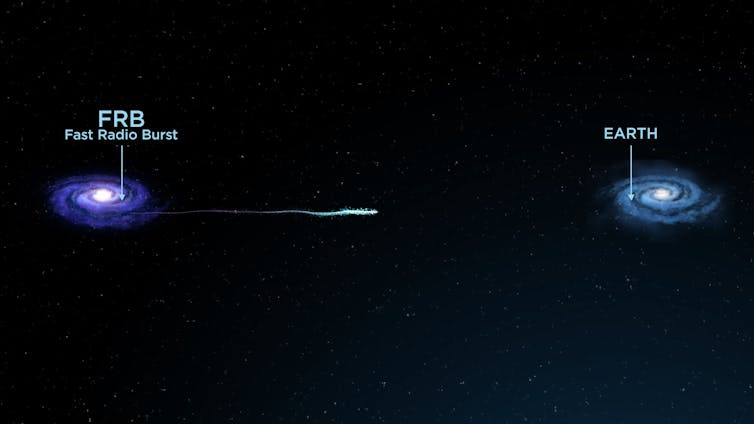
The wind resistance effect on radio waves is incredibly small, but space is big.
At this point we were so close, but there was one final piece of information we needed.
To precisely measure the baryon density, we needed to know where in the sky an FRB came from.
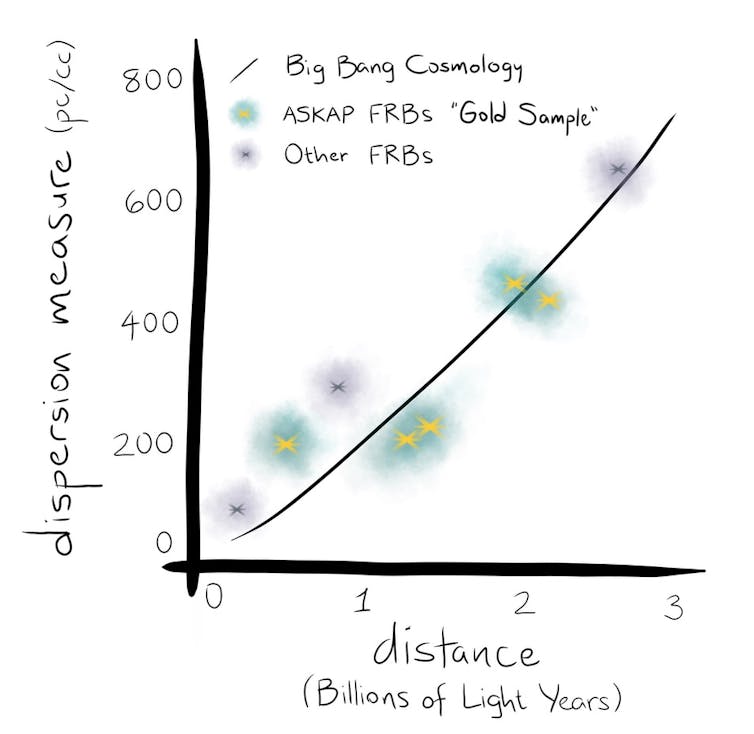
If we knew the source galaxy, we would know how far the radio waves traveled.
Technical innovation
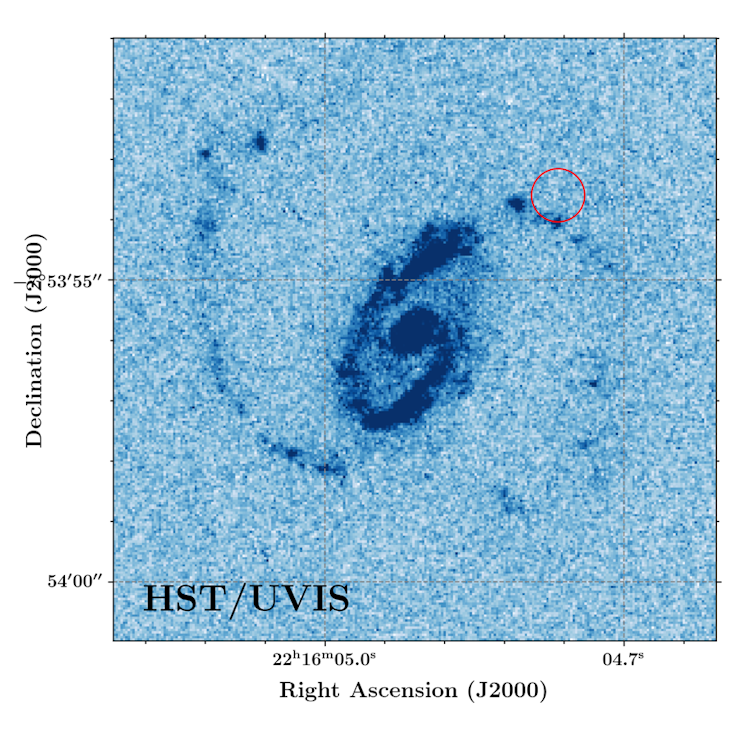
It was 11 years until we were able to place or localize our first FRB.
ASKAP captured itsfirst FRBone month later.
The technology and technique worked.
We had measured the dispersion from an FRB and knew where it came from.
But we needed to catch a few more of them for attain a statistically significant count of the baryons.
So we waited and hoped space would send us some more FRBs.
The excellent correspondence confirms the detection of all the missing matter.
This article is republished fromThe ConversationbyJ.
