In the era ofartificial intelligenceand accessible photo editing, you cant believe everything you see online.
One exception, of course, is (usually) if its published by a reputable news source.
The foundation of photojournalism lies in its ability to present reality in anauthentic and unaltered manner.
These organisations adhere to strictcodes of conductdesigned to ensure the integrity of the images they distribute.
If an image is accepted but later found to violate these guidelines, it is given a kill order.
It sounds dramatic, but this instantly stops the distribution.
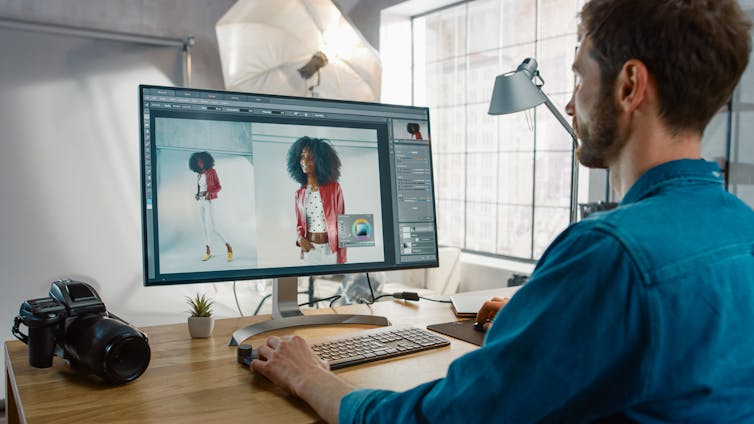
Some retouching is accepted in photojournalism and fashion photography.
The main reason why photo agencies cannot accept digitally manipulated imagery is the potential distortion of truth.
40% off TNW Conference!
Even family portraits of public figures become historical documents.

There is a grey area around portraits in the ethical discussion.
They can be staged or directed the photographer will guide and position people.
But there is still a requirement in the press to avoid any retouching.
Several agencies decided toretract the photoof the royals because it did not meet their standards.
News organisations are also experimenting with AI-generated text, anddeveloping guidelinesfor this.
They tend to focus on transparency, making clear to readers when artificially generated content is being used.
This welcomes, innovative techniques, non-traditional modes of presentation, and new approaches to storytelling.
The contest organisers considered allowing AI-generated images in 2023, butbacktrackedafter outrage from many photojournalists.
The rise of advanced editing tools and software has made it harder to distinguish between authentic and manipulated images.
