How does a sport go from a series of events to climate activists?
And an international sailing competition?
So I headed to San Francisco to learn all about it.
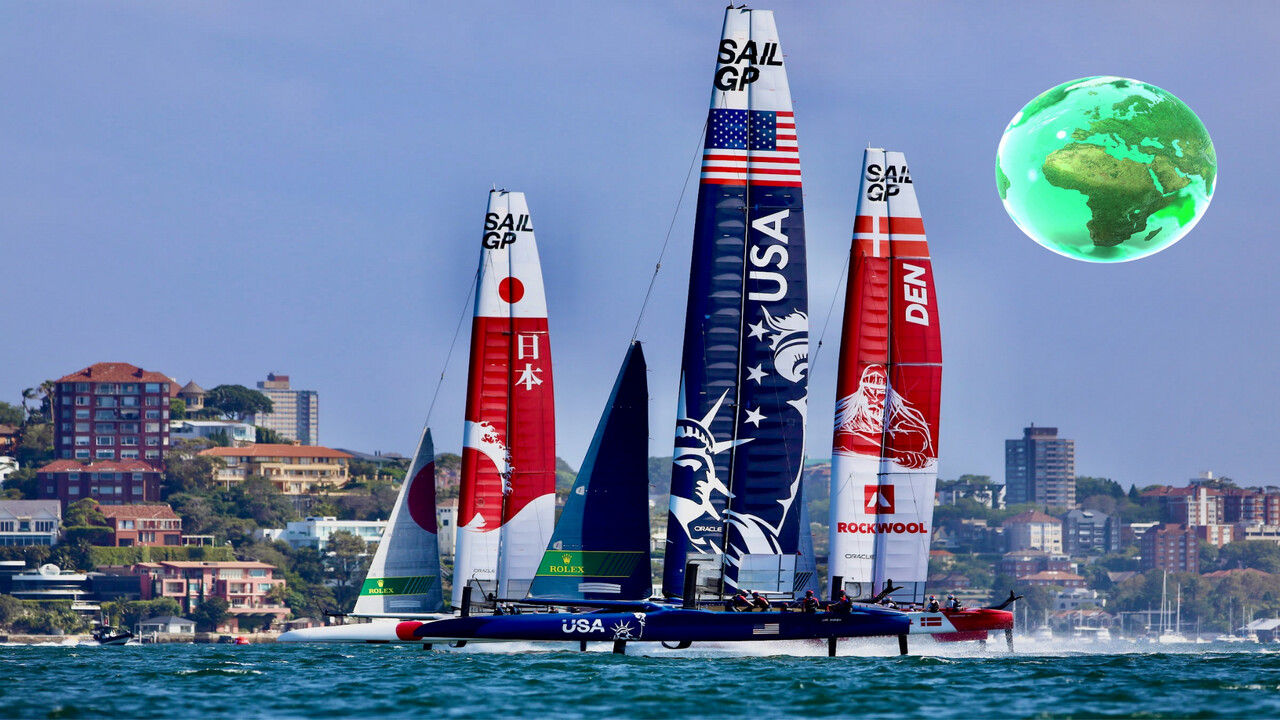
To be clear and transparent, just so you know, I attended on the leagues dime.
Lets start with the basics:
Whats SailGP?
The sailboats are literally powered by nature (wind, sun, and water).
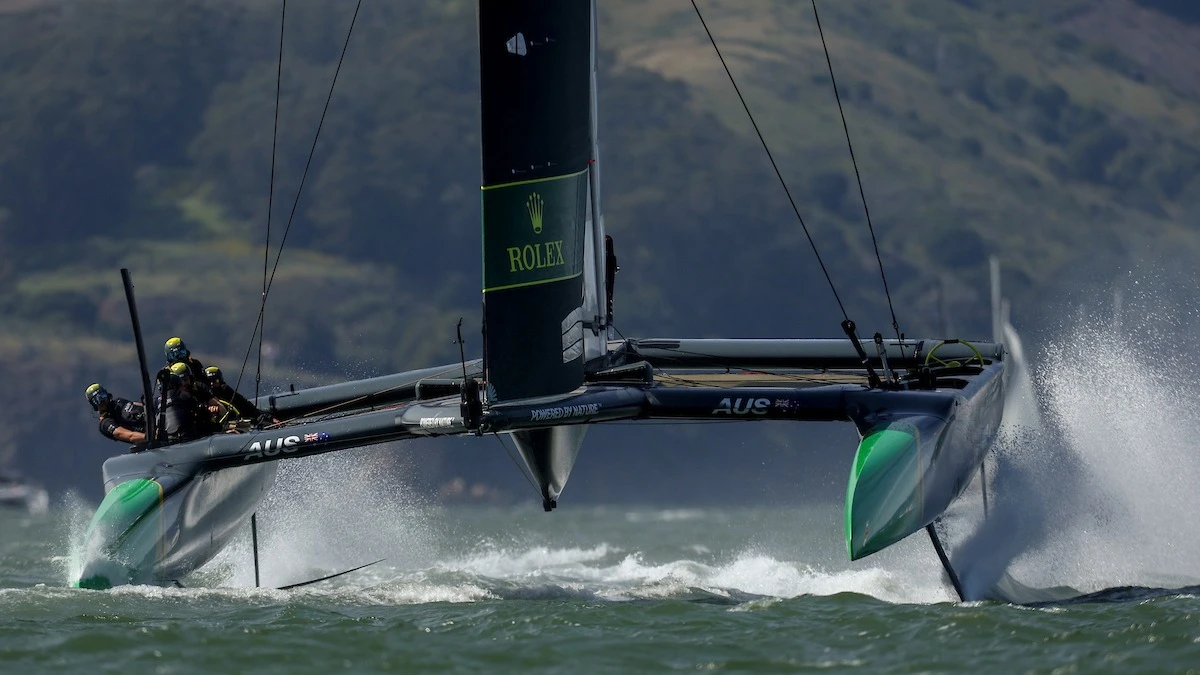
Each season comprises eight or more events across the globe, with each event including multiple races.
Events occur across two days, with six races scheduled for each Sail Grand Prix.
And the prize is a tidy $1 million for the winning team.
What does it mean to be carbon-positive?
Dont worry, I asked too.
SailGP says it has removed over 50,000 tons of CO2 from the atmosphere.
This is the equivalent to taking almost 11,000 cars off the road for a whole year.
It includes the use of a greenhouse gas calculator which it’s possible for you to downloadhere.
Okay, that sounds pretty good, but were talking about sailing.
Isnt that an activity just for rich people who care more about champagne than carbon miles?
I mean, its logical that sailors have an affinity for protecting and preserving the ocean, but racing?
Verity explained that the marine industry is about 20 years behind the automotive industry regarding sustainability.
As he notes:
Most people own a car.
They dont own a boat.
So people in a car want to see the trends in the wider technology world.
And theyre pushing that they would want electrification.
But without a critical mass, boating has lacked such consumer drive.
What a race event like SailGP can do is act as a catalyst for change.
And likewise, it recognizes that peoplelikesport, and it can be used as a catalyst for change.
Its also about collaboration and partnerships.
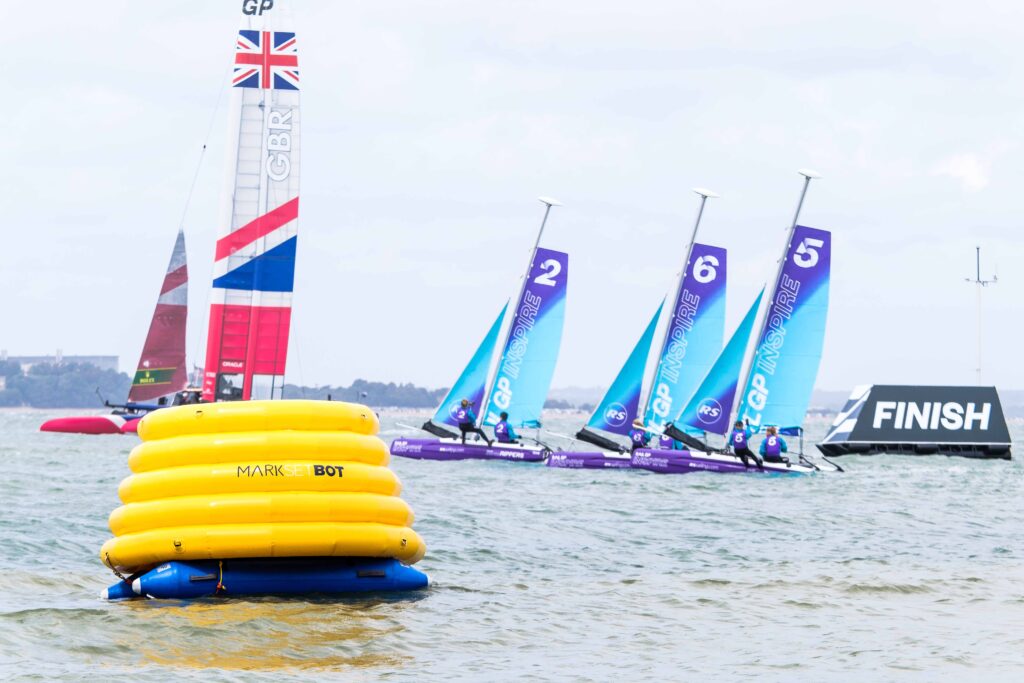
Another partner isMarkSetBot, who creates robotic sailing buoys.
In deep water venues, this pollution is often compounded with marks set using line and cinder blocks.
These were abandoned at the end of each day to sink into the ocean in the past.
This removes the need for additional boats on the water to position the buoys for each race.
Verity explained that SailGP is working with vendors to explore the options of producing portable charge units.
In a race environment, boats need to be recharged quickly without a lot of downtime off the water.
They dont have much downtime between the daily races and the test races.
It means the solar kit is assembled and dismantled quickly, for transporting from event to event.
But, its also about working with host cities.
So theyve got this great, like sustainability and energy roadmap, how can we help?
How can we add value?
How can we accelerate what theyre doing?
These boats are traditionally petrol-engined for reasons of speed.
The first electric boat can outperform fossil fuel power boats, according to the company.
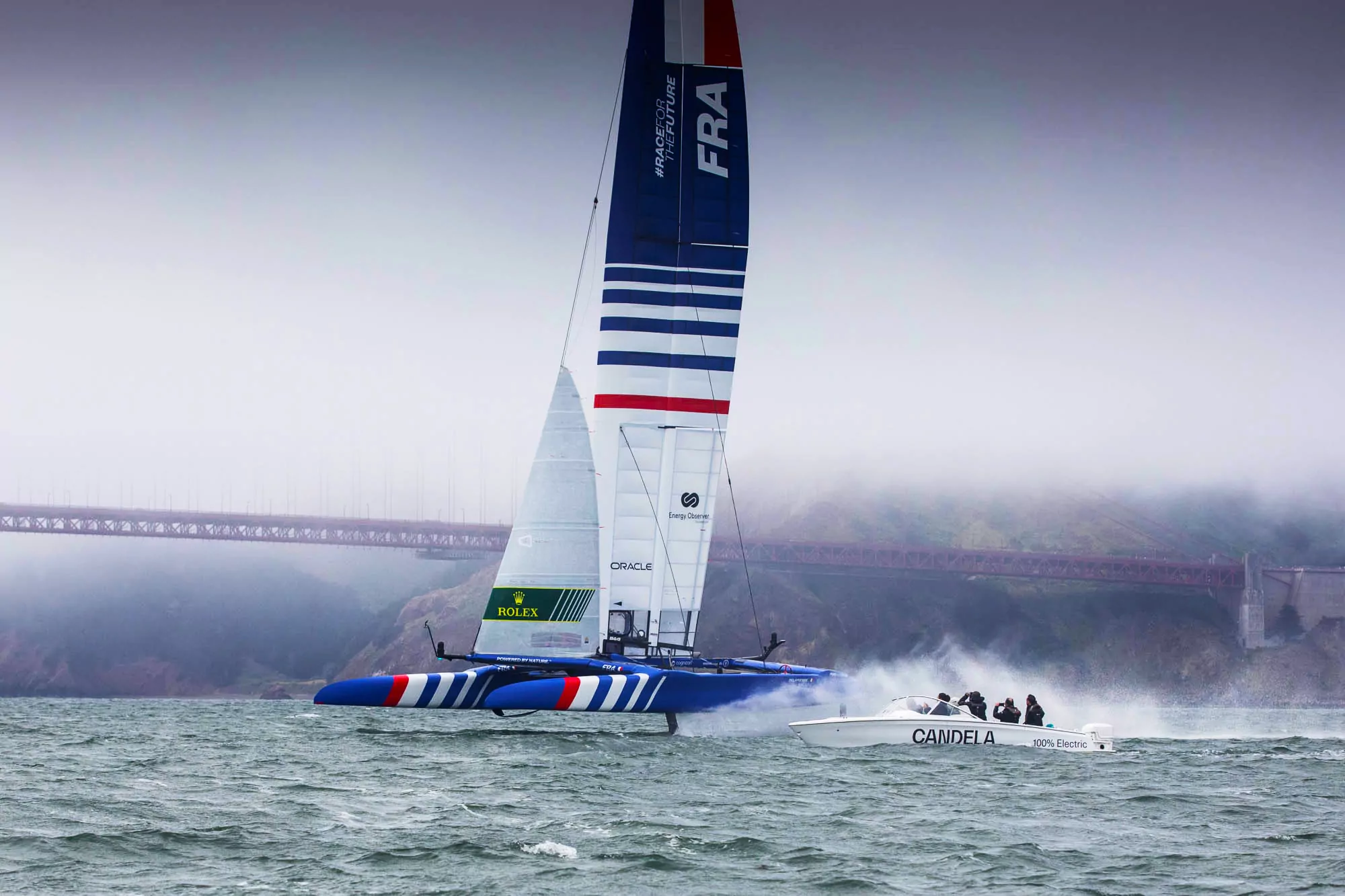
The French team used the boats this year to carry VIPs and media.
Manufactured in Stockholm, the C7 is 95% cheaper to drive than a gas-powered boat!
A full charge costs 5-7 ($5.40 to $7.60).
A comparable fossil fuel bowrider would use fuel worth 200.
And one significant example is remote broadcasting.
Morgan notes that the pandemic has helped shift the mindset about remote operations.
Traditional umpiring requires judges to travel to each site and score from out on the water.
But now, umpiring is now done remotely online in real-time from the HQ in London.
Morgan stresses that its all about sell the sizzle, selling the vision and the utopia.
Weve all learned that when youre saying doom and gloom, thats not helping anyone change behaviors.
Morgan notes that the future is likely to include more fan engagement.
The Impact League
And its not just about a race.
This year kicked off a parallel competition called theSailGP Impact League.
Criteria include travel, merchandise, tech and innovation, reducing the use of single-use plastic, and advocacy.
The results are independently audited and verified after each event.
This years winner was the New Zealand team, which awarded the funds to theLive Ocean Foundation.
I think thats pretty damn impressive for just one sporting league.
Story byCate Lawrence
Cate Lawrence is an Australian tech journo living in Berlin.
