The Internet of Trucks is here.
Or, to be, more specific: the internet of tarpaulins.
Industrial textile companySioenis currently developing smart truck tarpaulins that notify security when someone tries to cut through it.

Dutch police caught 500 people in 2015, and in 2016 this number had more than doubled to 1280.
It’s free, every week, in your inbox.
This years statistics have not yet been published but according to Leon Verver, the number is still growing.

Verver is policeman and director of the Dutch Institute for Technology, Safety & Security (DITSS).
Apparently, these people most of them Albanians still believe the UK is their best bet.
So they wait until nightfall to climb into parked trucks near the harbors.
Smart fences
PASSAnT aims to tackle each of these crimes, using new technologies.
Besides intrusion-proof tarpaulins, interactive fences and smart camera software are also in the making.
By the end of next year, the pilot should be up and running.
So when someone accidentally touches the fence, the system wont notify the alarm room.
But when this happens three times in a row, it does.
Thats where image analysis software comes in.
Suppose youre walking along the fence and stop a few times.
That behavior makes sense if youre walking your dog.
If youre by yourself and carry a large backpack, on the other hand, its more suspicious.
Think of it as a point system: each suspicious element earn a point.
When a certain threshold is reached, the system will notify security.
Backpacks yes, skin color no
What does the algorithm look for?
Verver can name a few suspicious elements but doesnt know the entire list.
The Dutch government is betting big on data science to predict crime.
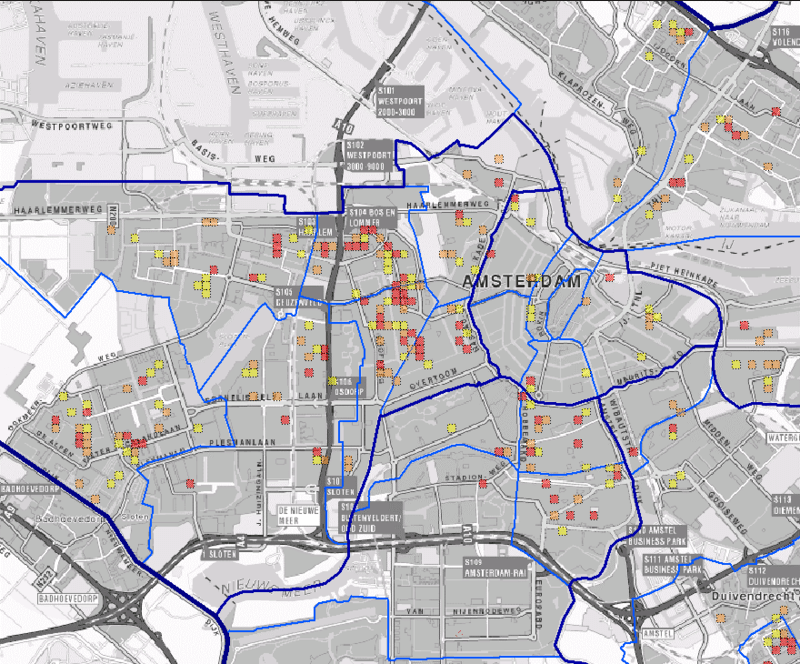
The city of Roermond, close to the Dutch-German border, struggles with thieving gangs from that region.
In that case, police officers can ask for their ID and check their bags, says Verver.
Does it work?
In many countries besides the Netherlands, the jurys still out on whether it works.
ADutch studyexploring how police officers feel about using predictive software CAS shows the response is lukewarm at best.
To be fair, some of these concerns can probably be tackled with more education.
Give these officers some time to get used to this new reality, he says.
Policing will become increasingly tech-based and right now, not everyone is ready for that change.
Now that much crime has gone digital, the Dutch police need tech talent more than ever.
Check out thevarious tech jobsthey have to offer.
Story byAnouk Vleugels
As Publisher, Anouk is responsible for TNW’s overall media strategy.
