Picture a professional recording studio.
What do you see?
But in recent years, a different kind of recording studio has emerged: the podcast studio.
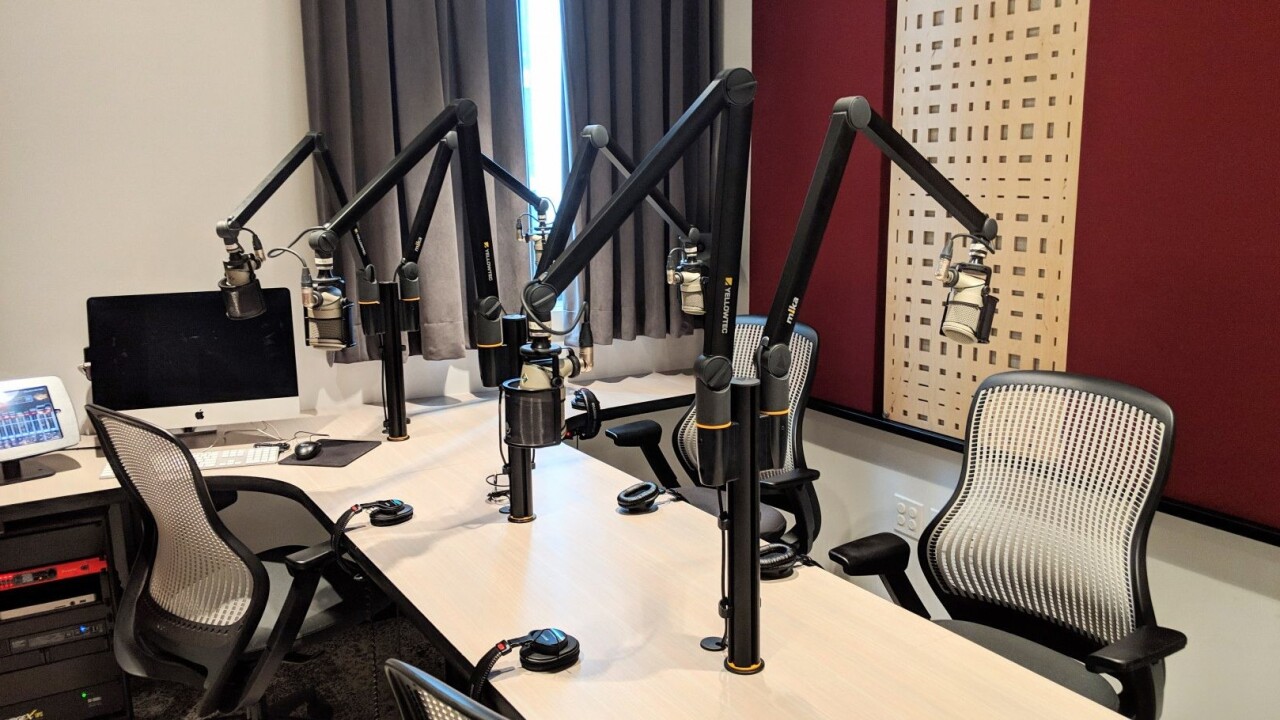
You may not have heard of WSDG, but youve probably heard some of the music its helped create.
40% off TNW Conference!
After all, arent podcasts just a person or two rambling about a topic for an hour?
Indeed, most podcasters start out with something like this.
But despite the low barrier for entry or perhaps because of it podcasts are exploding.
That number was only about 30 percent in the 2018 survey.
More telling, an estimated 22 percent of Americans over 12 about 62 million listen to podcasts every week.
That means creators have to up their game to catch your ear.
The levels of production on podcasts have gotten much more complicated… demanding much more sophisticated production techniques.
Once you go beyond the simple uncut interview or discussion, consistency and efficiency are key.
You need equipment thats stable and rooms that are stable.
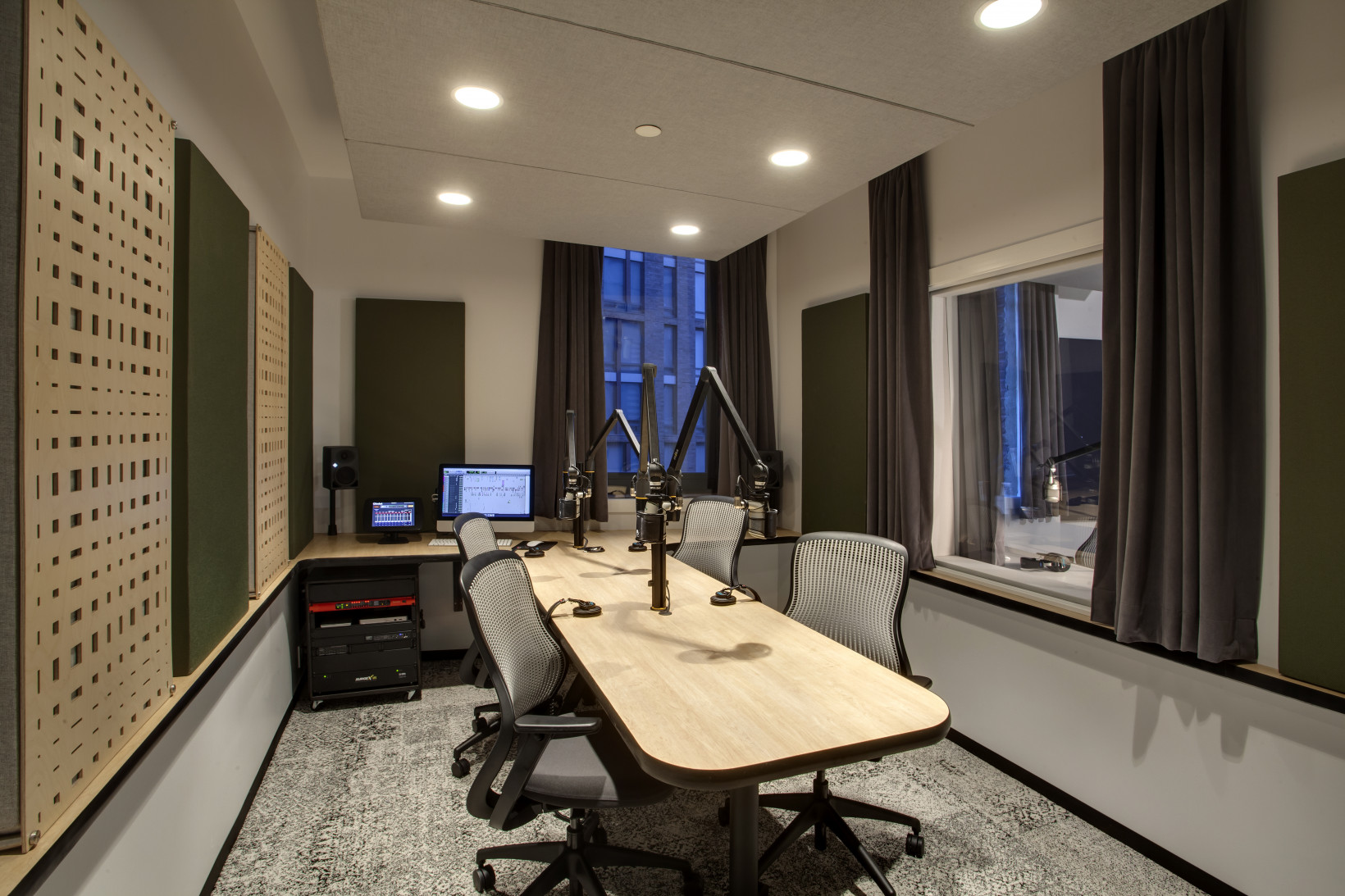
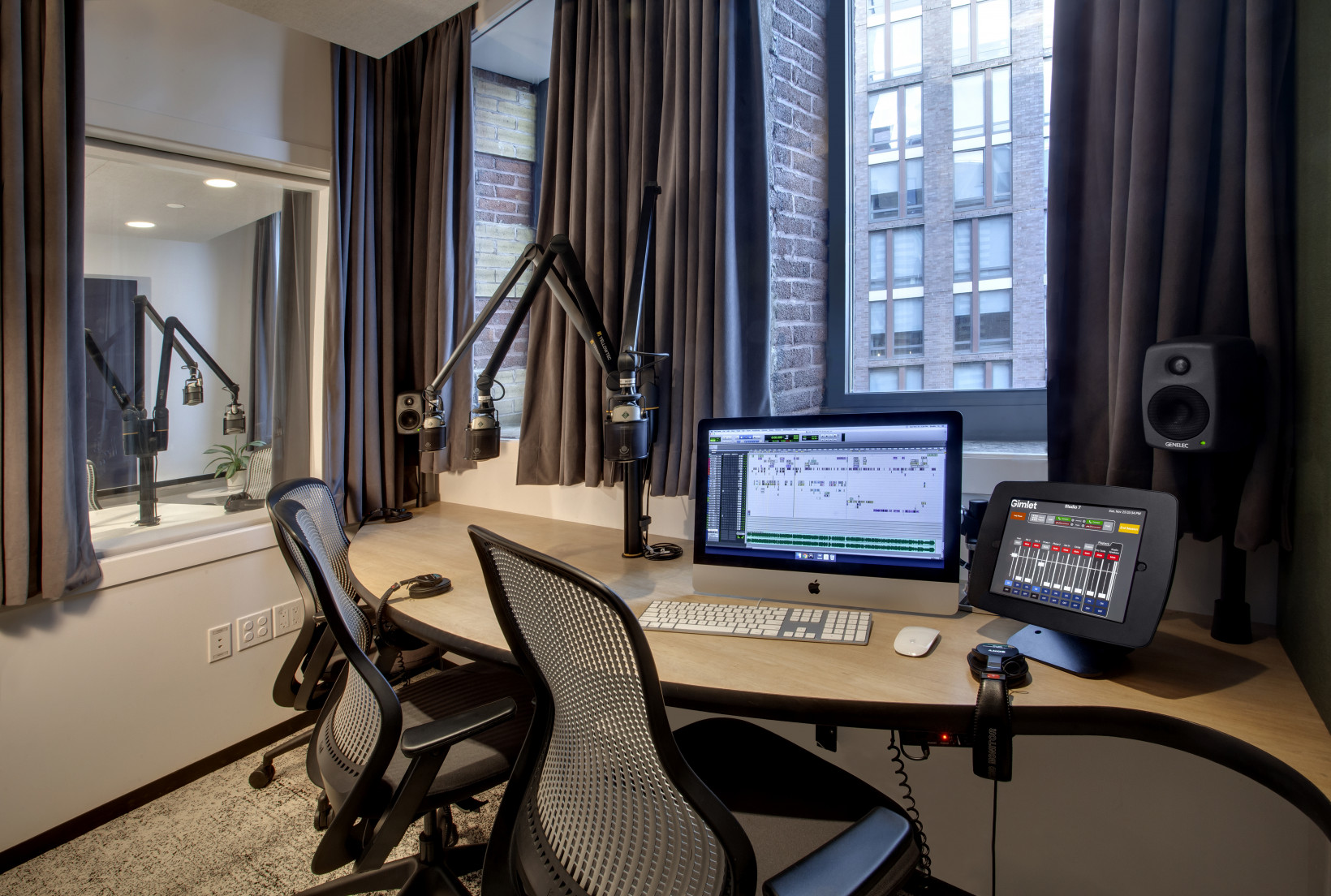
Herein lies one of the biggest challenges WSDG encountered designing rooms for Gimlet.
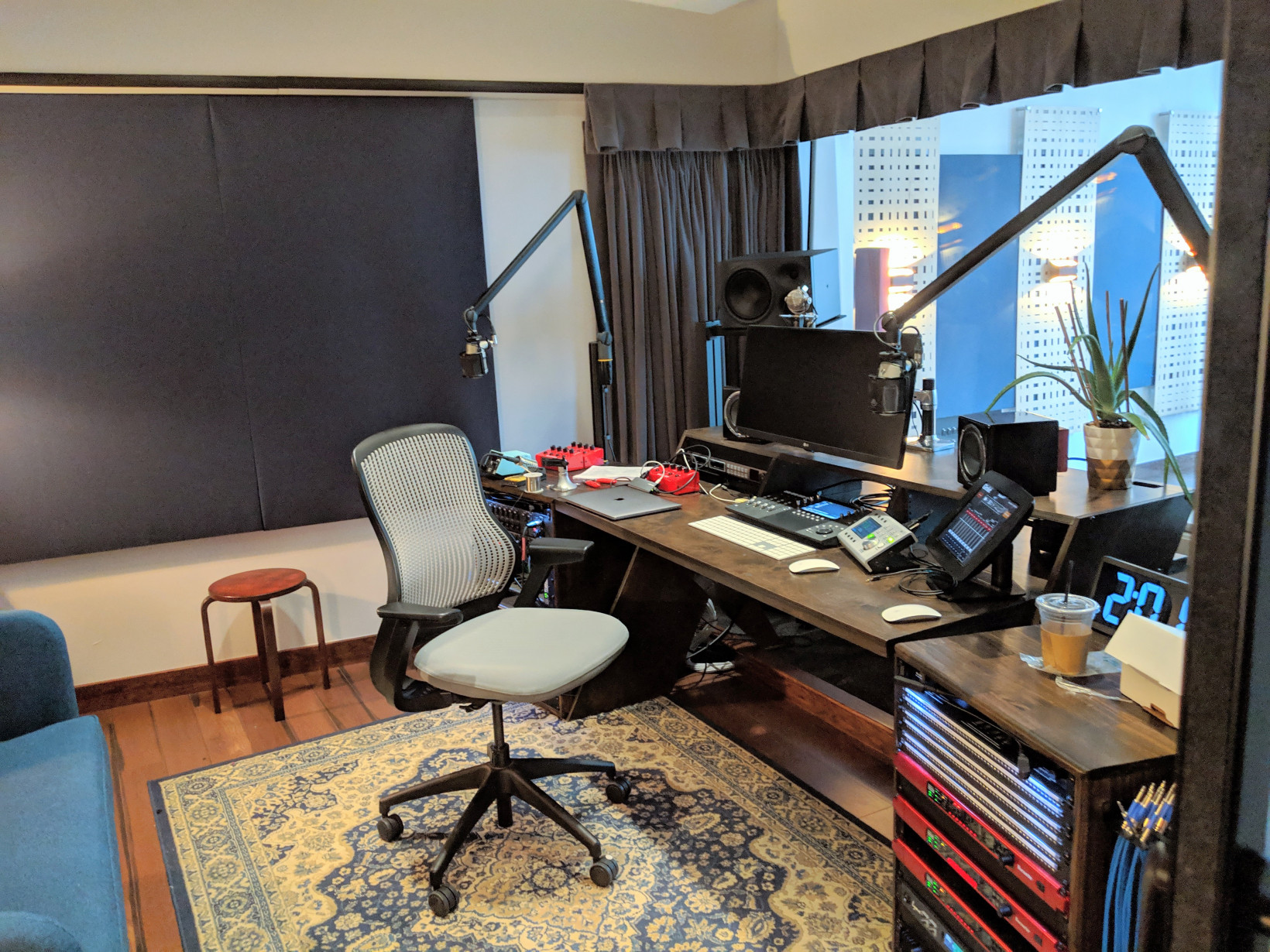
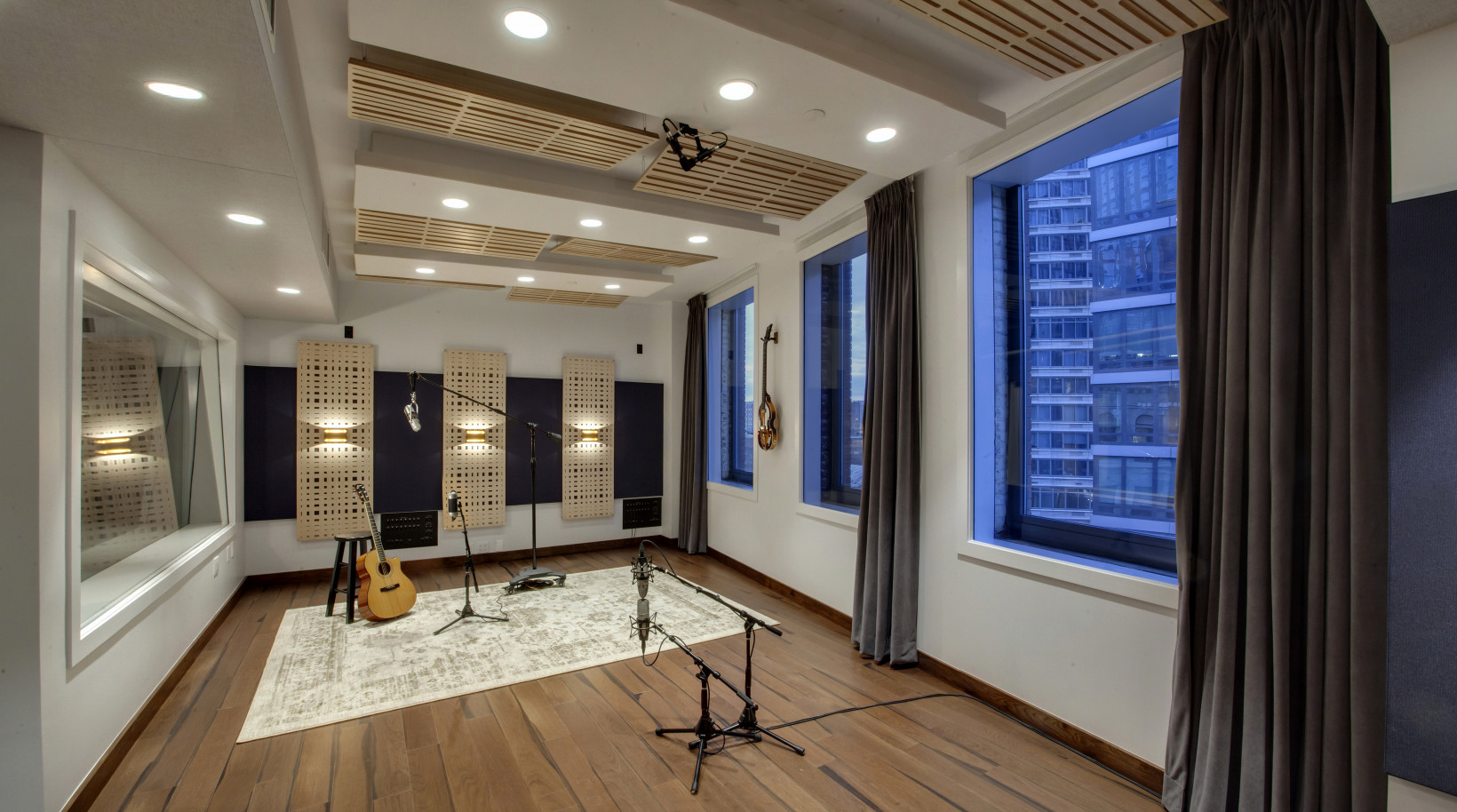
When you record music, it pretty much all happens in one room.
Further complicating matters is the fact the podcast studios are mostly small, adjacent rooms.
That said, sometimes podcast studios do pull double duty as music studios.
And not all podcasts are people talking about crime, history, or food.
Others, like GimletsThe Two Princes,are the modern-day version of the radio drama.
Theyre original stories with original soundtracks.
It comes down to efficiency.
These companies are vying for the premier talent.
That podcasts are even able to get such exclusive guests speaks to the growing influence of the format.
But nobody wants the bedroom podcaster to go away.
Accessibility is part of a podcasts appeal; all you need is a laptop and a good idea.
But when your hobby starts to become your livelihood, the stakes change.
When that happens, we get a call.
I suspect Storyk will be getting a lot more calls in the years to come.
