Chinarecently launchedits Tianwen-1 mission to Mars.
Similarly, the launch of theEmirates Mars Missionmarked the Arab worlds foray into interplanetary space travel.
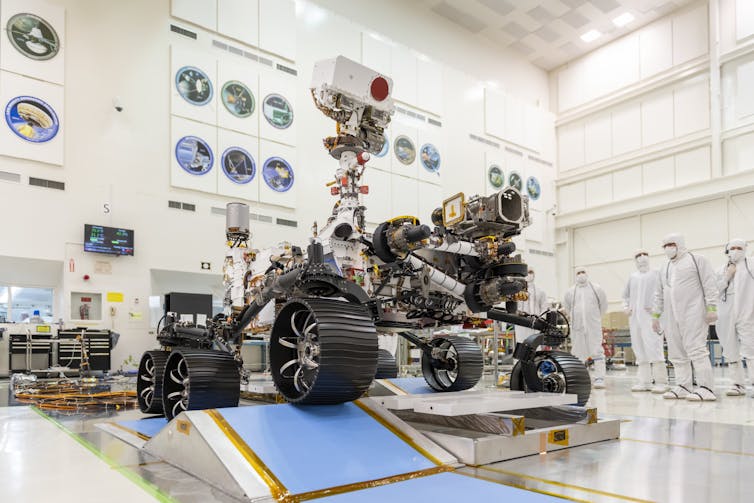
And on July 30, we saw NASAs Mars Perseverance roverfinallytake off from Florida.
For many nations and their people, space is becoming the ultimate frontier.
While the possibilities of space exploration seem endless, so are its dangers.
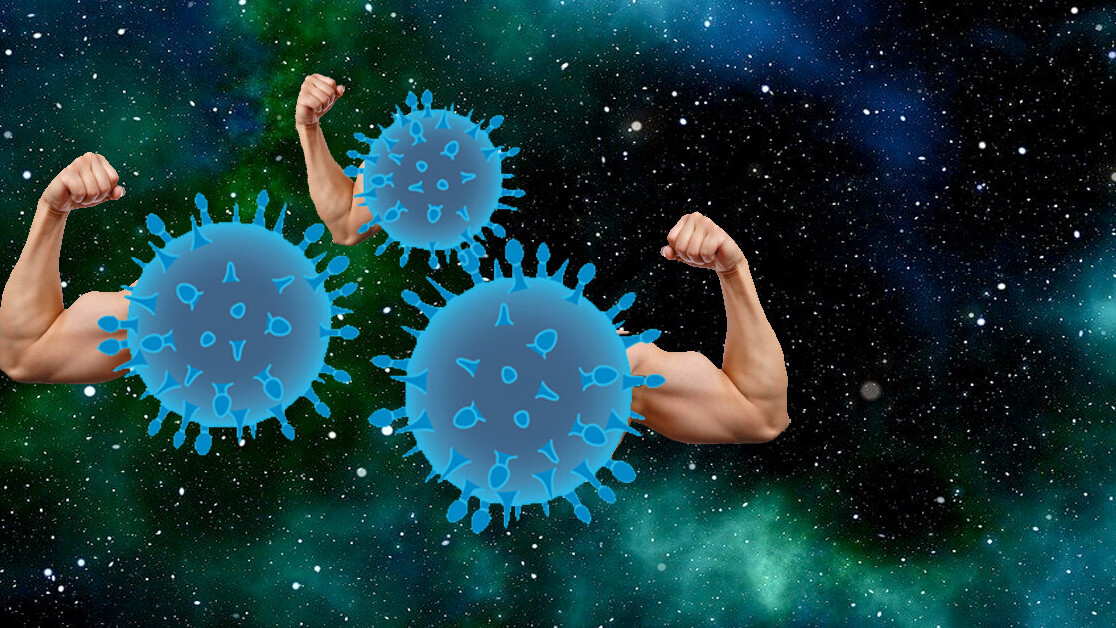
And one particular danger comes from the smallest life forms on Earth: bacteria.
40% off TNW Conference!
So whether we like it or not, these microscopic organisms tag along wherever we go including into space.
Just as spaces unique environment has an impact on us, so too does it impact bacteria.
[Read:Why are scientists trying to manufacture organs in space?]
Thus, Earths life has not adapted to spend time in space.
When gravity is removed or greatly reduced, processes influenced by gravity behave differently as well.
Its not yet fully understood how such changes impact lifeforms.
NASAs Perseverance Mars rover will be launched later this month.
In space, bacteria seem to becomemore resistant to antibioticsandmore lethal.
Adding to that, bacteria also seem tomutate quickerin space.
However, these mutations are predominately for the bacteria toadapt to the new environment not to become super deadly.
Bacterial teamwork is bad news for space stations
Research has shown spaces microgravity promotesbiofilm formation of bacteria.
Biofilms increase bacterias resistance to antibiotics, promote their survival, and improve their ability to cause infection.
We have seen biofilmsgrow and attach to equipmenton space stations, causing it to biodegrade.
The prolonged exposure of such equipment to biofilms can lead to malfunction, which can have devastating effects.
Another effect of microgravity on bacteria involvestheir structural distortion.
Certain bacteria have shown reductions in cell size and increases in cell numbers when grown in microgravity.
This could result in the increased drug resistance and infectiousness of bacteria in space.
Experiencing a bacterial infection that cannot be treated in these circumstances would be catastrophic.
For example,molecular crystalsin spaces microgravity grow muchlarger and more symmetricallythan on Earth.
Also, the crystallization of molecules helps determinetheir precise structures.
Many molecules that cannot be crystallized on Earth can be in space.
So, the structure of such moleculescould be determinedwith the help of space research.
This, too, would aid the development of higher-quality drugs.
This greatly increases data transmission capacity, making networking and telecommunications faster.
This article is republished fromThe ConversationbyVikrant Minhas, PhD candidate,University of Adelaideunder a Creative Commons license.
