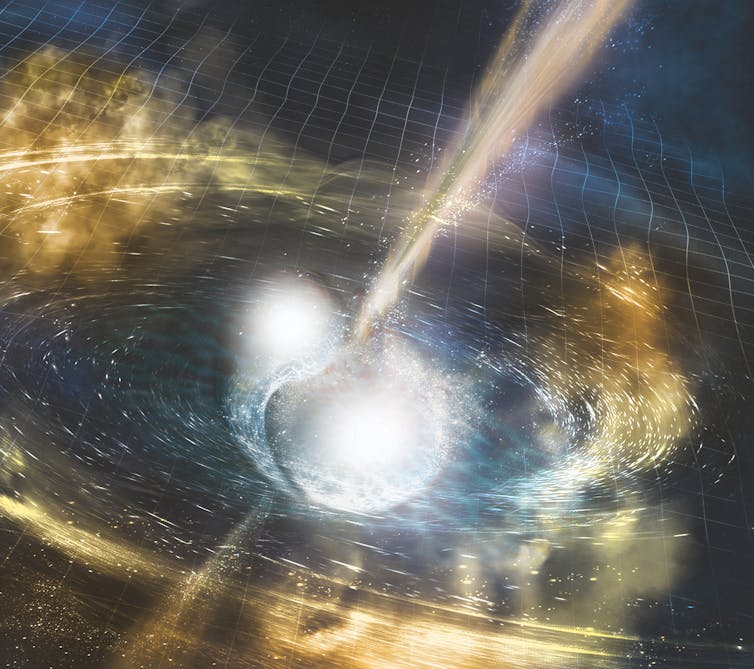
We studied a pair of stars called the Double Pulsar which provide just such a situation.
After 16 years of observations, we have foundno cracks in Einsteins theory.
It’s free, every week, in your inbox.
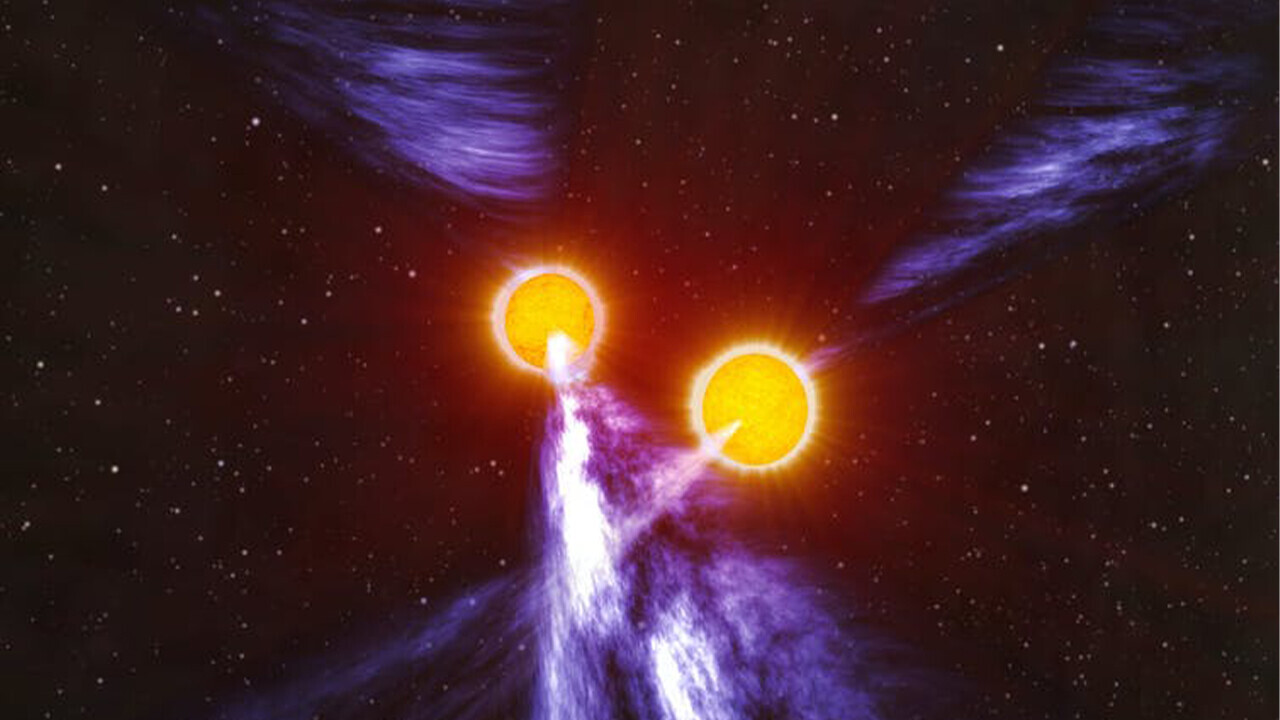
This slow loss of energy makes the stars orbit drift ever closer together.
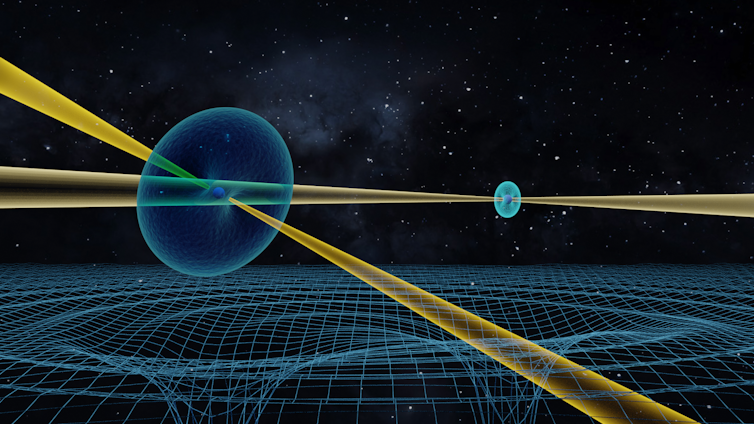
Artists impression of the Double Pulsar system and its effect on spacetime.
The spacetime curvature (shown in the grid at the bottom) is highest near the pulsars.

The VLBA has such high resolution it could spot a human hair 10km away!
This provided the last puzzle piece we needed to put Einstein to the test.
One of these effects is the loss of energy due to gravitational waves described above.
In total, we detected seven post-Newtonian effects, including some never seen before.
Together, they give by far the best test so far of general relativity in strong gravitational fields.
Eventually, however, the two stars will spiral together and merge.
Such collisions can be detected by gravitational wave laser interferometers, and provide a complementary test of general relativity.
But for now, Einstein still reigns supreme.
Also tagged with