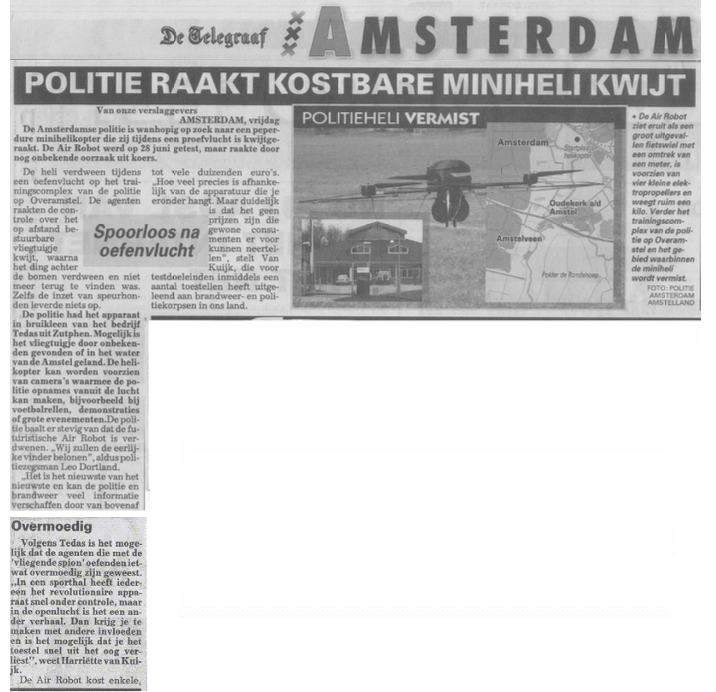
During one of the first test flights in the Netherlands back in 2006, police drone AirRobotgot lost.
It was programmed to return to a certain location, but it didnt.
The guy found the UAV walking his dog, says Hans Schonfeld who was part of the drone team.
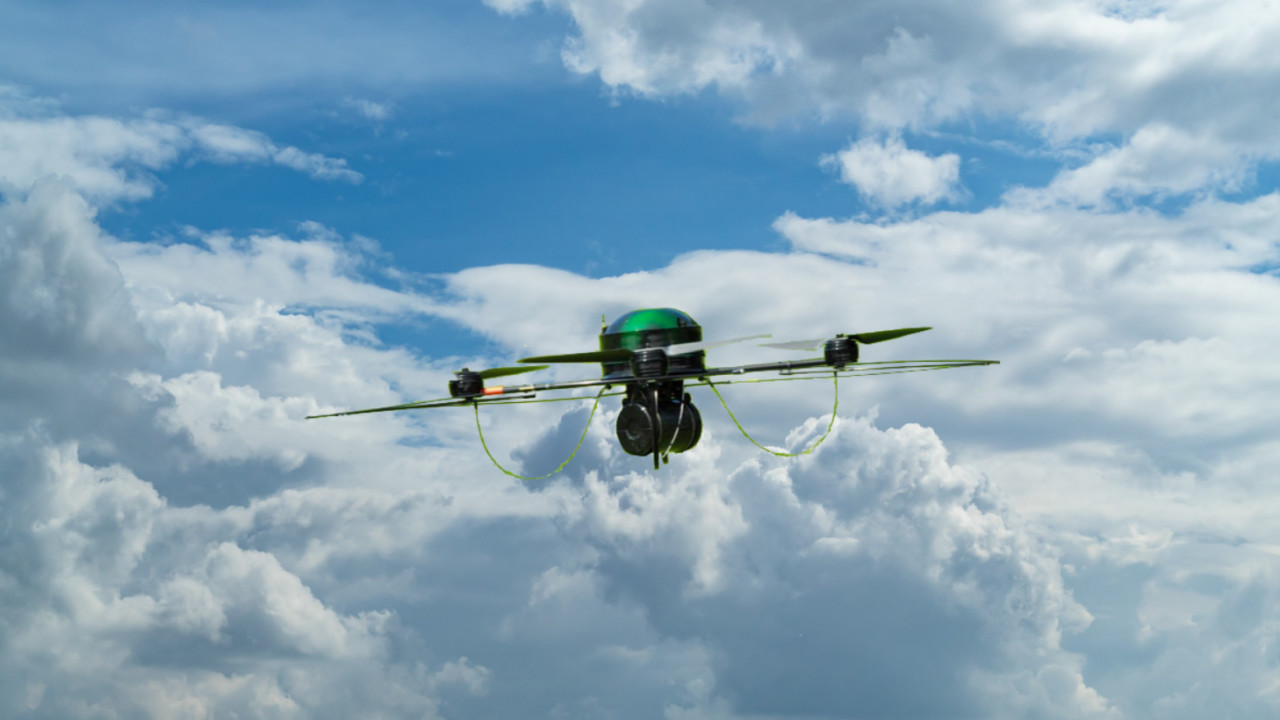
And, then, proudly: It had landed perfectly on its own.
Model airplanes
Looking back now, the Dutch police was certainly ahead of its time.
you’re able to tell this from looking atpeoples online reactionsto the news article about the missing mini-helicopter.
40% off TNW Conference!
Today, drones are considered mainstream technology and truly available at every toy store.
Yet police drones still havent made it past the pilot phase.
Whats taking so long?
Back then, only one police helicopter was available for Amsterdam, and other cities sometimes borrowed the aircraft.
So we needed a cheap alternative for air surveillance, continues Schonfeld.
Drones could be the solution, his team thought.
So two quadcopters were developed in the early 2000s.
A small camera underneath could make videos and take pictures.
Spying in criminals homes
The AirRobots were helpful in several big investigations, says Schonfeld.
We used the UAV to collect evidence in suspects homes.
If theyd left a window open, we would fly the AirRobot inside.
If not, we would peek through windows and take pictures.
Was this even legal?
Well, kind of, says Schonfeld though the use of drones was virtually unregulated.
In some criminal investigations, police is granted permission to search private places like homes and cars.
Schonfeld cant name names, but these were investigations into serious crimes, he says.
Murder cases, assassinations, large-scale drug trafficking.
In the years that followed, the AirRobots started to show up in less covert operations.
In 2008, one unit was used during a large-scale eviction of squatters in Amsterdam.
Judging by a short news video produced by local media AT5, police believed this was just the beginning.
Police drones in 2018
Its been ten years and the AirRobots are long gone.
After running into technical difficulties in 2010, they were shipped off to the Dutch Police Museum.
Other drones were developed and used in the following years but had little success.
In 2013,a report was publishedsaying that since 2009, only four cases have been solved using drones.
Dutch police nowhave a dedicated drone departmentand are running several small-scale experiments to test their effectiveness.
There are 15 police officers certified to pilot a drone and five drones available for law enforcement.
Except that it isnt the beginning far from it.
It will still happenreally
Schonfeld sighs.
And thats exactly what our organizations problem is.
New technologies are adopted at a very slow rate, while we should be ahead of the curve.
He still believes in drones, though.
Data can be exchanged in real-time, so they can be maneuvered much more precisely.
In addition, people-carrying drones will also make their entry.
Worldwide, several companies are competing to launch the first commercial passenger drones.
The Ehang 184,a Chinese-made flying taxi, has already completed over 1,000 test flights.
The autonomous drone can carry one passenger plus cargo for 23 minutes.
Airbus has developed theVahanaandAstro Aerospacecreated the Elroy, which can take two passengers at once.
Dutch flying carPAL-V Libertyseems a likely choice here, but other manufacturers are reviewed as well.
Its time we start exploring our options in the sky, Schonfeld concludes.
Its the only way we can keep up with whats coming.
Now that much crime has gone digital, the Dutch police need tech talent more than ever.
Check out themany tech jobsthey have to offer.
Story byAnouk Vleugels
As Publisher, Anouk is responsible for TNW’s overall media strategy.
