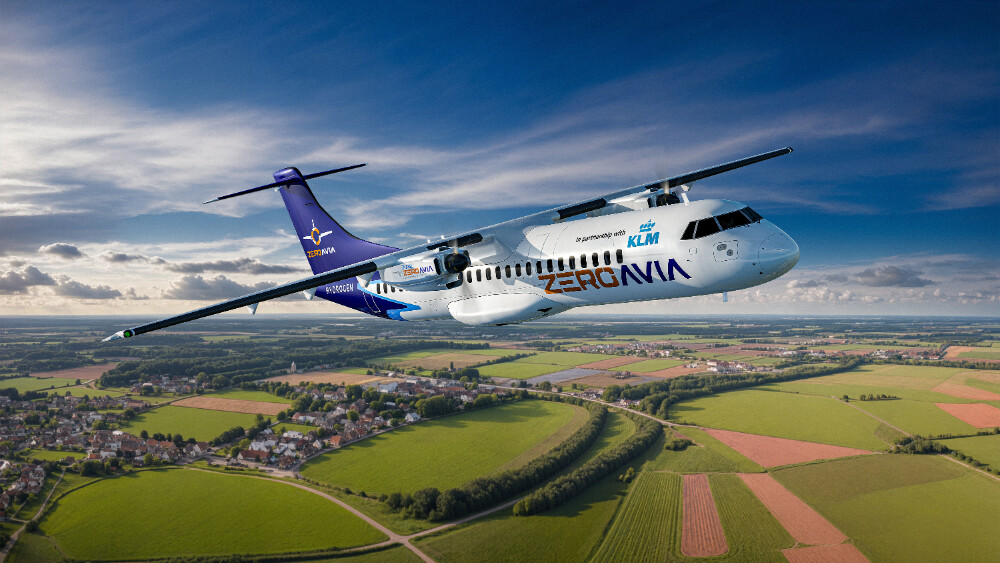
Dutch airline KLM has teamed up with British-American startupZeroAviato develop a liquid hydrogen-powered turboprop aircraft.
The partners aim to conduct a flight demonstration between two yet-to-be-named airports in 2026.
ZeroAviabuilds hydrogen-electric powertrains that can be retrofitted onto new or existing aircraft.
Hydrogen-electric engines use hydrogen in fuel cells to generate electricity.
This then powers electric motors that turn the aircrafts propellers.
The only emission is water vapour.

The engine will be retrofitted to a large regional turboprop, like theATR72or theDash 8 400.
40% off TNW Conference!
It will also assist with acquiring the regulatory permits to fly and ensuring a supply of liquid hydrogen fuel.

The Netherlands is the secondlargest producer of hydrogenin Europe, behind Germany.
KLM and ZeroAvia hope the demonstration flight will accelerate the development of hydrogen aircraft across the EU.
ZeroAvia has alreadyflown its first planedozens of times a19-seat Dornier 228retrofitted with its ZA600 engine.
That plane runs on hydrogen gas.
But the ZA2000, fuelled by liquid hydrogen, is another kettle of fish.
This means ZeroAvia has to develop expensive cryogenic tanks capable of storing the fuel below -252.87C.
Several industries, including aerospace, already use cryogenic liquid hydrogen storage tanks.
EuropesAriane 6 rocketuses liquid hydrogen to propel into space.
These planes would also need tokeep the hydrogen in the liquid statefor much longer.
The startup aims to start selling the ZA2000 powertrain in 2027, a year after the planned demonstration flight.
Zero-emission flight?
As airlines across the world look to decarbonise, there are a few options on the table.
The most mature technology is battery-electric.
However, todaysbatteries are not dense enoughto take planes more than a few hundred kilometres.
ZeroAvia claims that its hydrogen-electric powertrains will enable zero-emission flight.
But whether hydrogen planes are truly clean depends entirely on how the hydrogen was made.
Almost allhydrogen today is producedusing natural gas, coal, or oil.
Only 1% is green hydrogen, made through electrolysis using renewable electricity.
A lot of these claims depend on massive increases in the supply of green hydrogen.
Story bySion Geschwindt
Sion is a freelance science and technology reporter, specialising in climate and energy.
