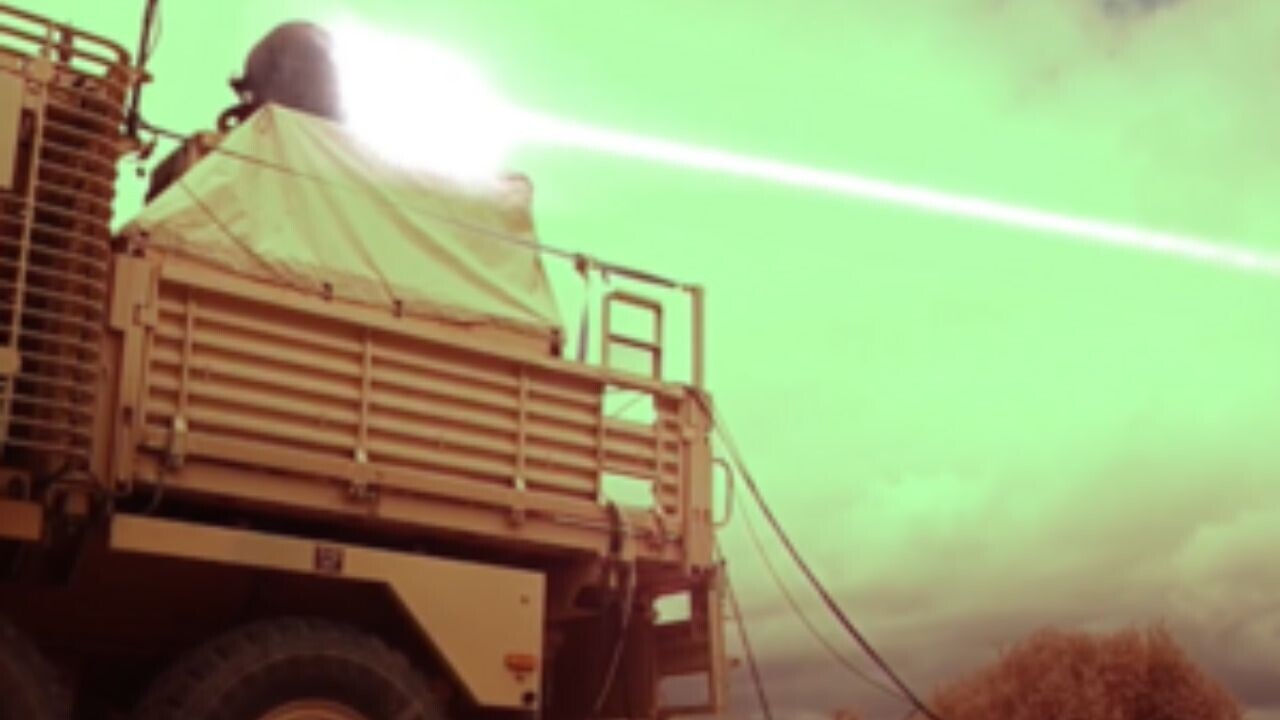
During trials, the system neutralised targets at distances in excess of 1km, officials said.
It’s free, every week, in your inbox.
Dstl nows plans to test the capabilities in real-world scenarios.
Laser quests
The government commissioned the laser to defeat enemydrones.
Arm manufacturer Raytheon UK led the systems development.
Portable, affordable, and easy to operate, the weapon can track multiple targets.

It can also engage faster than the speed of light, officials said.
The laser operates with a command and control function.
It can integrate with wider battle management systems and fit on various platforms.

Operators then fired the laser at aerial targets.
James Gray, CEO of Raytheon UK, joined the government in celebrating the trial.
The next step in that mission is trials with military personnel.
Slated for next year, the tests will join a growing range of British military experiments with lasers.
In May, the governmentreleased filmfrom another test.
The declassified footage showcased a more advanced weapon: the DragonFire.
The DragonFire promises a precise alternative to short-range missiles.
Officials claim the laser can fry a coin-sized target from a kilometre away.
Story byThomas Macaulay
Thomas is the managing editor of TNW.
He leads our coverage of European tech and oversees our talented team of writers.
Away from work, he e(show all)Thomas is the managing editor of TNW.
He leads our coverage of European tech and oversees our talented team of writers.
Away from work, he enjoys playing chess (badly) and the guitar (even worse).
