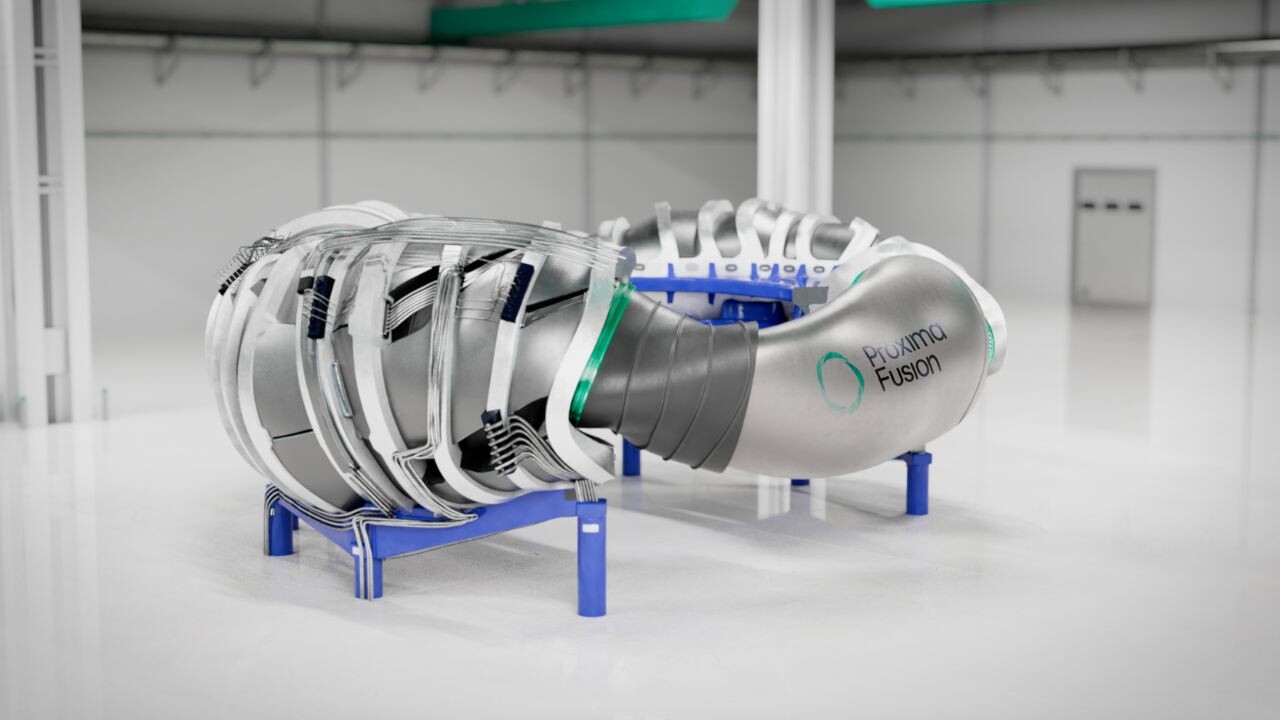
Dubbed Stellaris, the machine is a quasi-isodynamic (QI) stellarator with high-temperature superconducting (HTS) magnets.
No other fusion power plant design has yet been demonstrated to be capable of that.
While Wendelstein 7-X was developed for research, Stellaris could one day power the grid.
It’s free, every week, in your inbox.
Alpha will be the first-ever fusion unit demonstrating net energy production in a steady state, said Sciortino.
They need less power to operate and are more stable.

Their biggest drawback is complexity stellarators are notoriously hard to design and build.
This is why they were largely set aside in the 1960s for the tokamak.
However, advances in computational power are closing the gap.

So instead of having to build multiple prototypes, Proxima can jump straight into building a functioning demonstrator.
The understanding of complex geometry and its consequences is everything in stellarators, said Sciortino.
AI is helping Proxima to uncover patterns that lead to simpler, faster, and cheaper designs.

Stellaris is designed to generate more power per unit volume than any previous stellarator.
HTS magnets create stronger magnetic fields, allowing for smaller, faster-to-build, and more efficient reactors.
This approach also reduces costs in both construction and operation.
Stellaris uses only existing materials, making it buildable with todays supply chains, the company said.
Full details of the reactor were published today in the journalFusion Engineering and Design.
The institute focuses exclusively on fusion and has more plasma physicists than MIT.
Proximaraised 20mn in fundinglast year as it looks to turn the mind-bending physics of fusion into a viable business.
Stellaris positions QI-HTS stellarators as the leading technology in the global race to commercial fusion.
Story bySion Geschwindt
Sion is a freelance science and technology reporter, specialising in climate and energy.
