We tend to think of the moon as the archetypal dead world.
Not only is there no life, almost all its volcanic activitydied out billions of years ago.
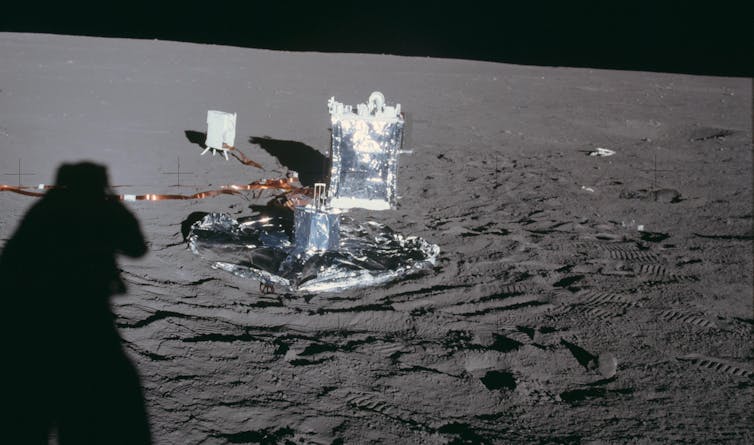
Apollo missions 12, 14, 15 and 16left working moonquake detectors(seismometers) on the lunar surface.
These transmitted recorded data to Earth until 1977, showing vibrations resulting from internal moonquakes.
Now a new study,published in Nature Geoscience, suggests the moon may indeed have active faults today.
The seismometer deployed on the moon by Apollo 14 (nearest of the three instruments).
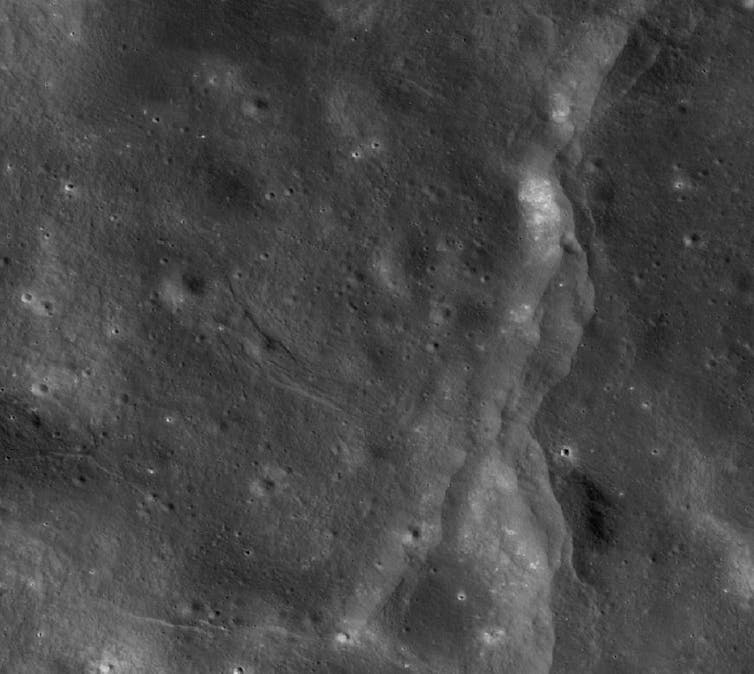
A 3.5km wide view of part of the moon disturbed by faults.
40% off TNW Conference!
As it does, thermal contraction causes its volume to shrink and compresses the surface.
That means thatthe moon is shrinking slightly.
However, thrust faults dont necessarily have to be active and moving, causing more further tremors.
There, the biggest scarps are nearly a hundred times larger than those on the moon.
Active faults
Analysis shows that these faults are relatively young, not older than about 50m years.
But are they active and still moving today?
Six of them happened when the moon was almost at the greatest distance from Earth in its orbit.
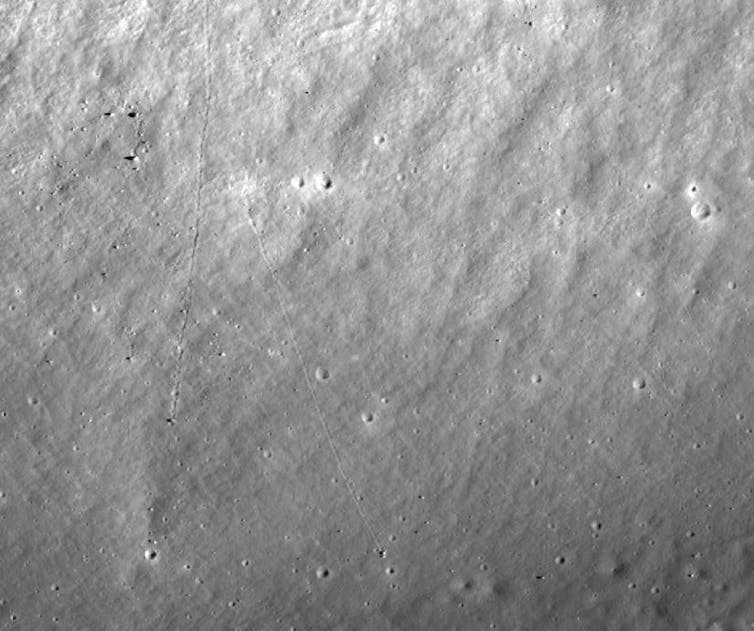
The team also investigated fresh looking tracks left by boulders that have been dislodged.
There are also traces of landslide deposits.
The tracks of two boulders that rolled downhill towards the Apollo 17 landing site.

Each boulder is at the southern end of its track, where it casts a shadow to its left.
NASA/GSFC/Arizona State University
So does this mean that the moon is unsafe for human exploration?
Luckily, none of the new findings mean that the moon is a hotbed of ground tremors.
