Researchers at Semmelweis University in Budapest have tapped intoVRto help the rehabilitation process of schizophrenia patients.
Theory of Mind is our ability to interpret the feelings, thoughts, and desires of others.
Schizophrenic patients tend to decode these messages incorrectly.
They often struggle to understand irony and metaphors, or misunderstand certain gestures.
How does it work?
40% off TNW Conference!

Then follow eight 50-minute-long intervention sessions.
In all simulated scenarios, patients interact with an avatar controlled by a therapist.
The two simulations are followed by analytical discussion between the therapist and the patient.
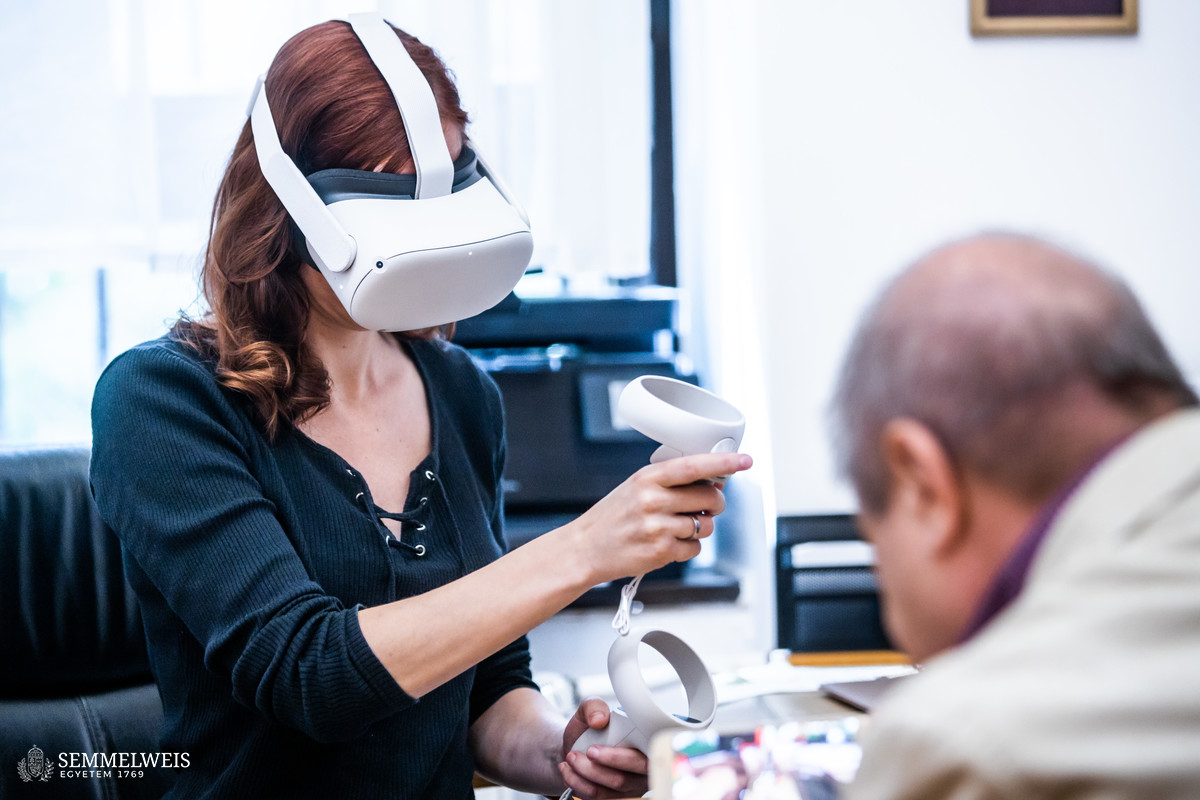
She believes that the therapys overall iterative approach contributes significantly to its success.
Promising results
The testing phase of the VR-ToMIS method concluded in 2022, involving 43 patients.
The researchers observed significant improvements in both the cognitive and negative symptoms of the participants.

The patients feedback was also very positive.
According to Vass, another crucial part of the methods success was the outstanding rate of patient compliance.
Compliance is the biggest obstacle to recovery in schizophrenia, she told TNW.
In our therapy there were no dropouts, so I think that VR might have a non-specific motivational effect.
Of course, the therapists approach might be another important factor as well.
The next step is training professionals in the field to use the method, initially in Hungary.
Story byIoanna Lykiardopoulou
Ioanna is a writer at TNW.
With a background in the humanities, she has a soft spot for social impact-enabling technologies.
