The site also contained trackers that tell Facebook and Google if users visited the site.
40% off TNW Conference!
Skibinski did not dispute that the organization shares data with third parties, including data brokers.

We then examined each nonprofits website as publicly listed inGuideStar.
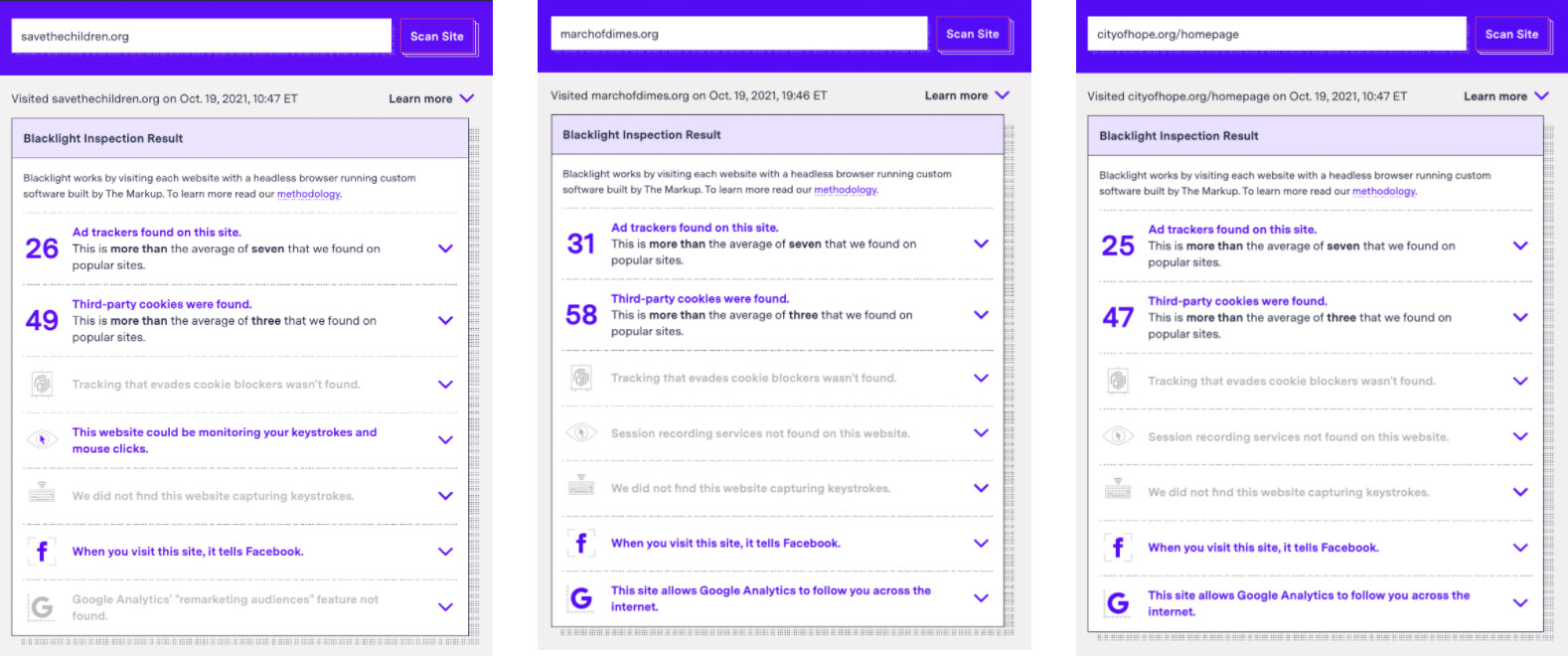
We found that about 86 percent of them had third-party cookies or tracking internet requests.
The more sensitive the website is, the more worried I am.
Additionally we know user experience has a big impact on following through on treatment.
Other nonprofits had a significant number of trackers embedded on their sites as well.
March of Dimes and City of Hope did not respond to requests for comment.
But nonprofits in two of those states, California and Virginia, dont need to adhere to the regulations.
A nonprofit might share your phone number and name with LiveRamp.
The data flows that go into these third-party aggregators and data brokers come often from nonprofits as well.
They dont keep it in-house, pretty much everybody keeps it with one of these services.
She noted that Blackbaud is a company that nonprofits often turn to.
Blackbaud didnt respond to a request for comment.
In both California and Virginia, the bills main supporters gave nonprofits an exemption as a political maneuver.
Eventually, I hope that the big nonprofits are included as well.
Does this pick up everybody that it should, or exempt everybody who needs an exemption?
Probably not, but it comes pretty close, Marsden said.
He also didnt understand why other states had exemptions.
Someone that has over 100,000 records is a good size, he said in an email.
They should have some protections or requirements to follow.
This article by Alfred Ng and Maddy Varner wasoriginally published on The Markupand was republished under theCreative Commons Attribution-NonCommercial-NoDerivativeslicense.
