Will our species go extinct?
The short answer is yes.
The fossil record shows everything goes extinct, eventually.
Almost all species that ever lived, over 99.9%, are extinct.
Most plesiosaurs, trilobites,Brontosaurus didnt.
Thats also true of other human species.
Neanderthals, Denisovans,Homo erectusall vanished, leaving justHomo sapiens.
Humans are inevitably heading for extinction.
The question isntwhetherwe go extinct, butwhen.
Headlines often suggest this extinction is imminent.
The threat ofearth-grazing asteroidsis a media favorite.Marsis regularly mooted as a bolt hole.
And there is the ongoing menace of the climate emergency.
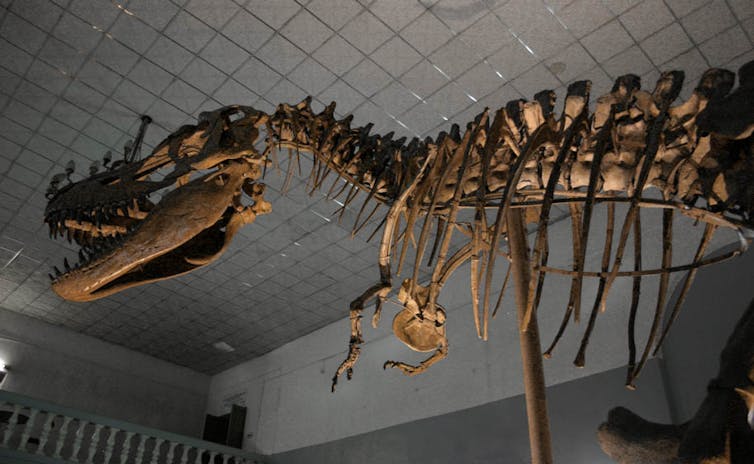
Large, warm-blooded animals like us dont handle ecological disruptions well.
Small, cold-blooded turtles and snakes can last months without food, so they survived.
Big animals with fast metabolisms tyrannosaurs, or humans require lots of food, constantly.
Tyrannosaurus quickly became extinct when the impact of winter made food scarce.
Were also long-lived, with long generation times, and few offspring.
That doomed mammoths, ground sloths, andother megafauna.

Big mammals reproducedtoo slowlyto withstand or adapt, to human overhunting.
So were vulnerable, but there are reasons to think humans are resistant to extinction, maybe uniquely so.
Geographically widespread organisms fare better during catastrophes such as anasteroid impact, andbetween mass extinction events.
A large geographic range means a species doesnt put all its eggs in one basket.
If one habitat is destroyed, it can survive in another.
Polar bearsandpandas, with small ranges, are endangered.Brown bearsand red foxes, with huge ranges, arent.
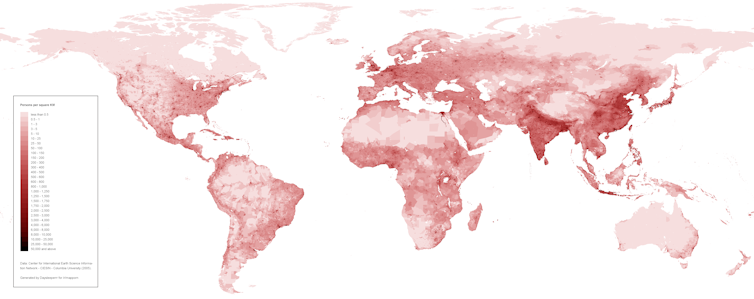
Humans exist everywhere, making us difficult to eradicate.
Wikipedia
And were not just everywhere, were abundant.
With 7.8 billion people, were among the most common animals on Earth.
Human biomassexceeds that of all wild mammals.
Species that survived thedinosaur-killingasteroid rarely relied on a single food source.
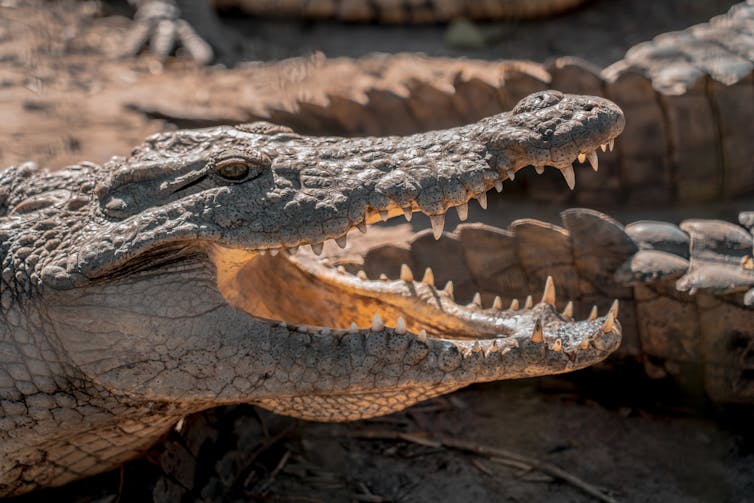
They wereomnivorous mammals, or predators such asalligators and snapping turtlesthat eat anything.
Humans eat thousands of animal and plant species.
Depending on whats available, were herbivores, piscivores, carnivores, omnivores.
Were animals,were mammals, but were such weird, special mammals.
Whales took millions of years to evolve flippers, pointy teeth, sonar.
In millennia, humans invented fishhooks, boats, and fish-finders.
Cultural evolution outpaces even viral evolution.
Viral genesevolve in days.
It takes a second to ask someone to wash their hands.
Cultural evolution isnt only faster than genetic evolution, its different.
Horses evolved grinding molars and complex guts to eat plants.
People domesticated plantsthen cleared forests for crops.
Cheetahs evolved speed to pursue their prey.
We bred cows and sheep that dont run.
Were so uniquely adaptable, we might even survive a mass extinction event.
But this adaptability sometimes makes us our own worst enemies, too clever for our own good.
Weve escaped every trap we set for ourselves.
Pessimistic scenarios could lead to the breakdown of civilization.
Interconnected world
Our global civilization also invented ways to support each other.
But interconnectivity and interdependence also create vulnerabilities.
International trade, travel, and communications link people around the world.
We could easily survive another 250,000 years or, longer.
Survival sets a pretty low bar.
