One of CUAVA-1s aims is to help improve space weather forecasts, which are currently very limited.
Satellites and space weather
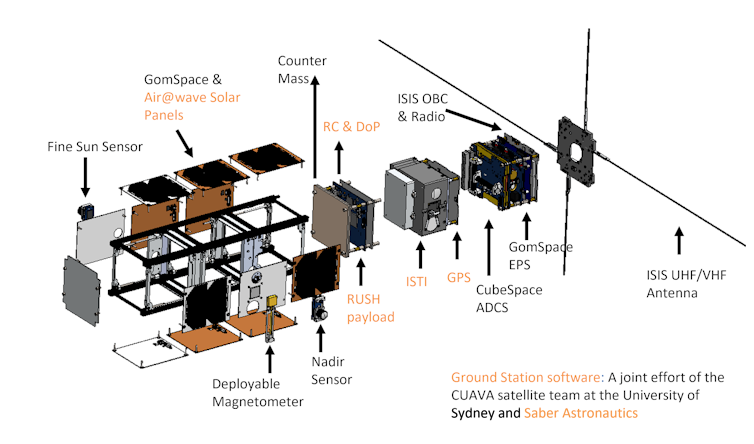
Exploded view of CUAVA-1 and its components and payloads.
Tanned labels indicate Australian-made components.
It’s free, every week, in your inbox.
The Bureau of Meteorology and other weather forecasting agencies rely onspace-based GPS datain their forecasting.
Space-based GPS receivers also make it possible to monitor the Earths ionosphere.
(A gas of charged particles is also called a plasma.)
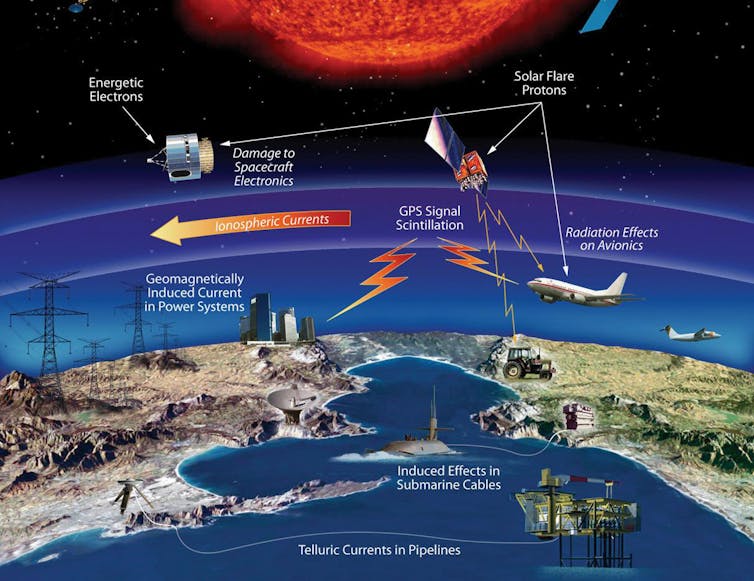
Technological and infrastructure affected by space weather events.
We know the ionosphere becomes highly irregular during severe geomagnetic storms.

It disrupts radio signals that pass through it and creates surges of electric current in power grids and pipelines.
Even outside geomagnetic storms, there are quiet-time disturbances that affectGPSand other electronic systems.
At present, we cant make accurate predictions of bad space weather beyond about three days ahead.
Also tagged with

