A remarkable combination of artificial intelligence (AI) and biology has produced the worlds first living robots.
The term xeno comes from the frog cells (Xenopus laevis) used to make them.
Xenobots are less than 1mm long and made of 500-1000 living cells.
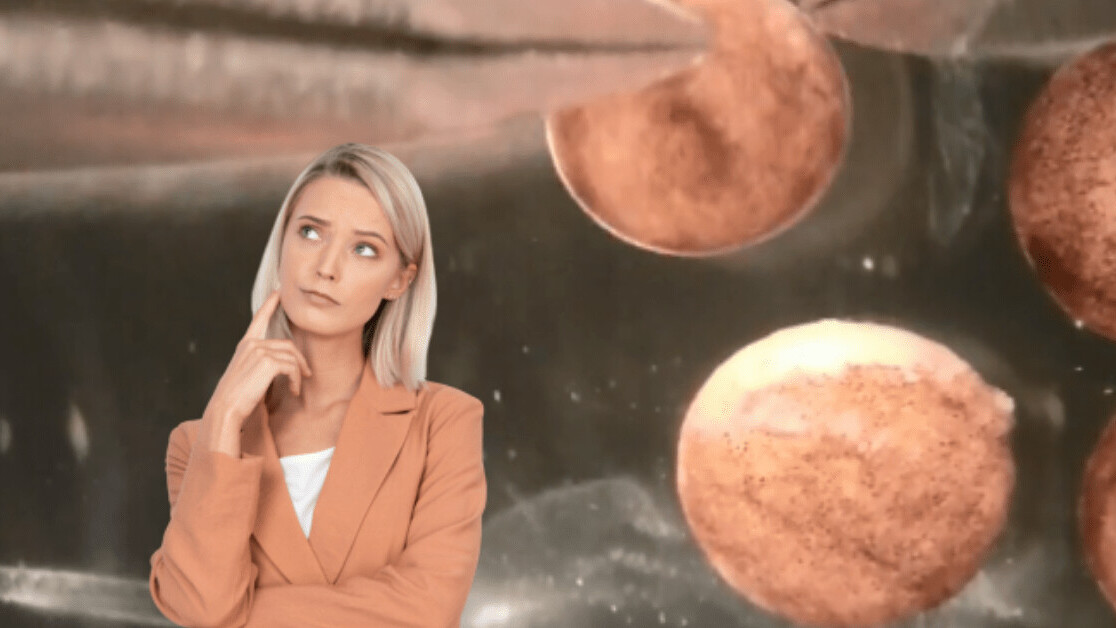
They have various simple shapes, including some with squat legs.
Using their own cellular energy, they can live up to 10 days.
Below is a video of atime-lapse video showing cells being manipulated and assembled to create xenobots.

time-lapse video showing cells being manipulated and assembled to create xenobots.
It’s free, every week, in your inbox.
The heart cells in these bespoke assemblies contract and relax, giving the organisms motion.
The creation of xenobots is groundbreaking.
Despite being described as programmable living robots, they are actually completely organic and made of living tissue.
They can also repair themselves after being damaged.
Similarly, they may be used to enter confined or dangerous areas to scavenge toxins or radioactive materials.

Xenobots designed with carefully shaped pouches might be able to carry drugs into human bodies.
Future versions may be built from a patients own cells to repair tissue or target cancers.
Being biodegradable, xenobots would have an edge on technologies made of plastic or metal.
Further development of biological robots could accelerate our understanding of living and robotic systems.
Legal and ethical questions
Conversely, xenobots raise legal and ethical concerns.
Some argue artificially making living things is unnatural, hubristic, or involves playing God.
For instance, xenobots might be used for hostile biological purposes prohibited under international law.
For complex tasks, xenobots may need sensory and nervous systems, possibly resulting in their sentience.
A sentient programmed organism would raise additional ethical questions.
Last year, the revival of a disembodied pig brainelicited concerns about different species suffering.
The scientist in questionis in prison.
When CRISPR became widely available, some experts called for amoratoriumon heritable genome editing.
Othersarguedthe benefits outweighed the risks.
Long road here, long road ahead
The creation of xenobots had various biological and robotic precedents.
In 2012, scientists created anartificial jellyfishcalled a medusoid from rat cells.
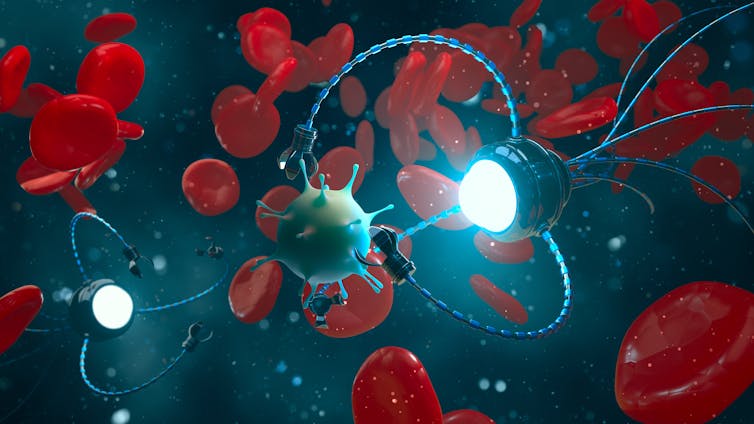
Nanobots are tiny robots that carry out specific tasks.
In medicine, they can be used for targeted drug delivery.
shutterstock
Nanobots canmonitor peoples blood sugar levelsand may eventually be able toclear clogged arteries.
Robots can incorporate living matter, which we witnessed when engineers and biologists created asting-ray robotpowered by light-activated cells.
And when we do, it is important we remain both open-minded and critical.
