Quantum computing has immense potential but incredible complexities.
While zealots claim it willcure cancerandsave the planet, critics warn their promises are far from being fulfilled.
One of their key challenges lies at the very heart of the field: quantum bits, or qubits.
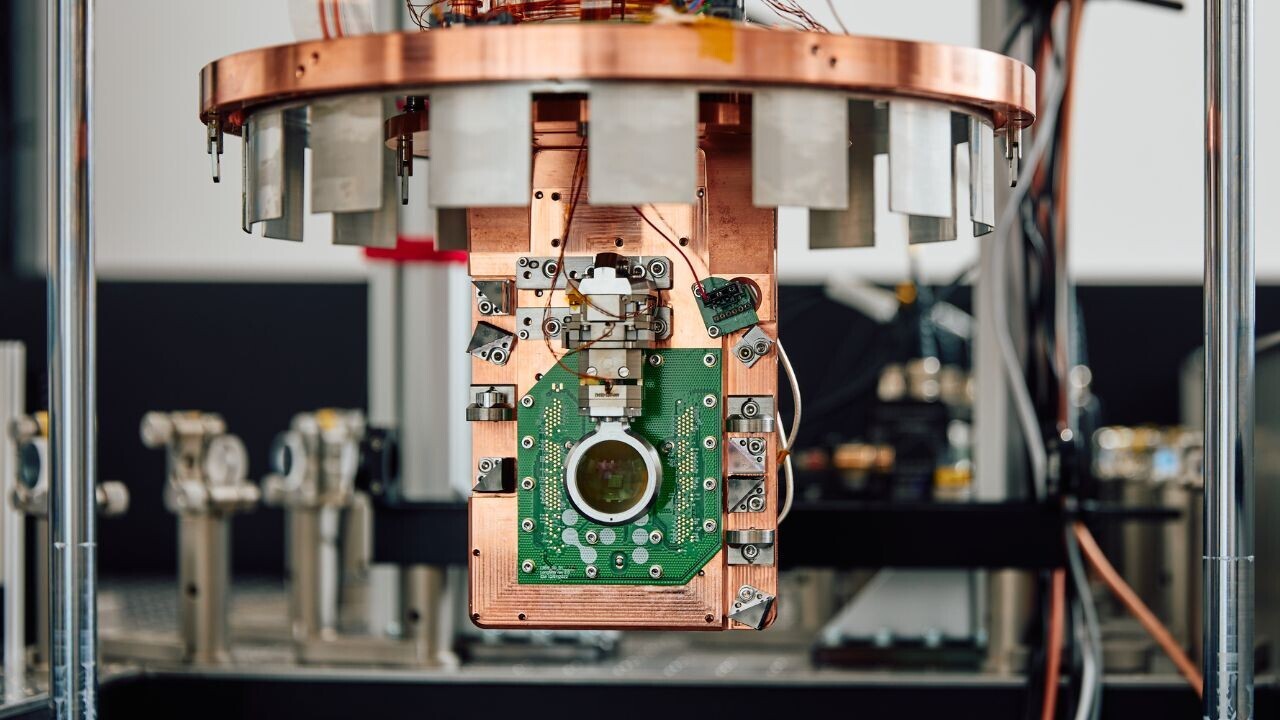
These information units are the quantum analog of binary bits in classical computers.
To make quantum computers useful, the qubits have to be reliably controlled and manufactured at scale.
Its a requirement that still confounds the worlds leading computer scientists.
One issue with this approach is that it requires million-dollar refrigerators.
Another is that just asingle atom in the wrong place on the chip can cause computing mistakes.
40% off TNW Conference!
The company uses a proprietary technology called Electronic Qubit Control (EQC) to control the qubits.
The quantum bits in this system are comprised of individual atoms.
In their natural state, these atoms dont tend to stay still long enough to perform a computation.
To stabilize them, one of their electrons is removed to make an ion.
We have perfect qubits.
Not building the qubits means we cant build them wrong.
Nature guarantees each individual atom is perfectly identical to any other.
Unlike other trapped-ion exponents, Oxford Ionics doesnt rely on lasers to control qubits.
They also become error-prone as the size of the processor and the number of qubits grows.
In tests, the Oxford Ionics system has shown seemingly superior results.
These achievements have caught the eyes of investors.
We are entering the discovery phase.
Balance is now looking forward to solving real-world problems.
Balance doesnt expect tointegrate Quantum Ionics tech into general-purpose chips.
Instead, he envisions the companys quantum chips running in parallel with classical semiconductors.
Think GPUs alongside CPUs, he says.
Story byThomas Macaulay
Thomas is the managing editor of TNW.
He leads our coverage of European tech and oversees our talented team of writers.
Away from work, he e(show all)Thomas is the managing editor of TNW.
He leads our coverage of European tech and oversees our talented team of writers.
Away from work, he enjoys playing chess (badly) and the guitar (even worse).
