To study the micro-world and help advance medical knowledge and treatments, these scientists use fluorescent nano-sized particles.
Quantum dots are one key in of nanoparticle, more commonly known for their use in TV screens.
Theyre super tiny crystals that can transport electrons.
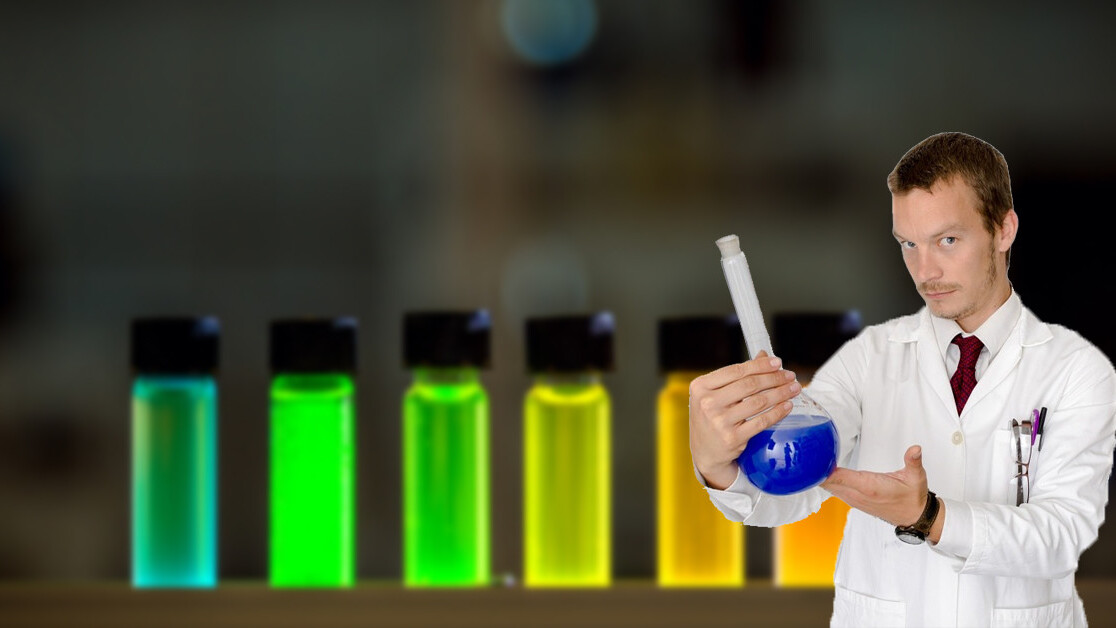
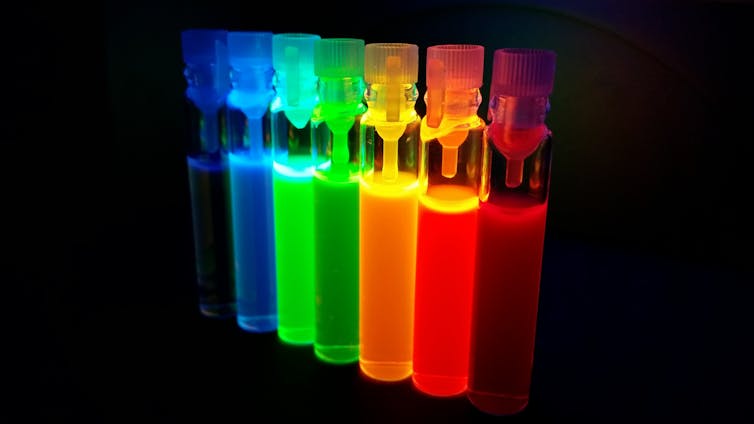
When UV light hits these semiconducting particles, they can emit light of various colors.
It’s free, every week, in your inbox.
Common brain diseases are estimated to cost the U.S.nearly US$800 billionannually.

These diseases including Alzheimers disease and neurodevelopmental disorders are hard to diagnose or treat.
Quantum dots as next-generation dyes
Researchers firstdiscovered quantum dots in the 1980s.
These tiny particles are different from other crystals in that they can produce different colors depending on their size.
They are so small that they are sometimes called zero-dimensional or artificial atoms.
The most commonly known use of quantum dots nowadays may be TV screens.
Samsung launched itsQLED TVs in 2015, and a few other companies followed not long after.
But scientists have been eyeing quantum dots for almost a decade.
The most common dyes have some significant problems.
Quantum dots would solve those problems.
They are very bright and fade very slowly.Their color can still stand out after a month.
Moreover, they are too small to physically affect the movement of cells or molecules.
Those properties make quantum dots popular in medical research.
But their use is still restricted to animal research, because scientists areconcerned about their use in human beings.
Quantum dots commonly contain cadmium, a heavy metal that is highly poisonous and carcinogenic.
They mayleak the toxic metalor form an unstable aggregate, causing cell death andinflammation.
Some organs may tolerate a small amount of this, but the brain cannot withstand such injury.
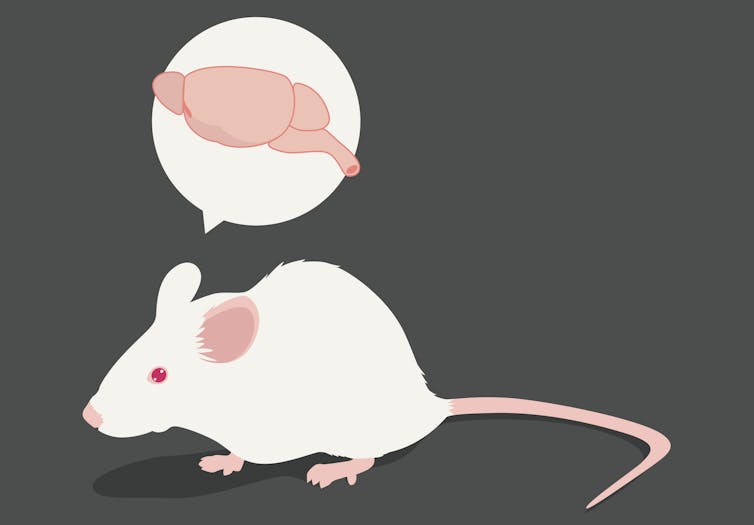
We looked at thestability, toxicity and cellular interactions of quantum dots in the developing brains of rats.
We wrapped the tiny quantum dots in different chemical coats.
We found that different chemical coats give different behaviors to quantum dots.
Quantum dots with a polymer coat of polyethylene glycol (PEG) were the most promising.
Its a protective mechanism embedded in the cells that happens to ward off injury by quantum dots.
Quantum dots are also eaten bymicroglia, the brains inner immune cells.
These cells regulate inflammation in the brain and are involved in multiple brain disorders.
Quantum dots are then transported to the microglias lysosomes, the cells garbage cans, for degradation.
For example, cell cultures contain brain cells but lack the connected cellular networks that tissues have.
Whats the future for quantum dots?
We imagine they could be used to track real-time movements of viruses or cells in the brain.
In the future, along with MRI or CT scans, quantum dots may become vital imaging tools.
They might also be used as traceable carriers that deliver drugs to specific cells.
