Do human beings have a magnetic sense?Biologists knowother animals do.
They think it helps creatures including bees, turtles and birdsnavigate through the world.
Scientists have tried to investigate whether humans belong on the list of magnetically sensitive organisms.
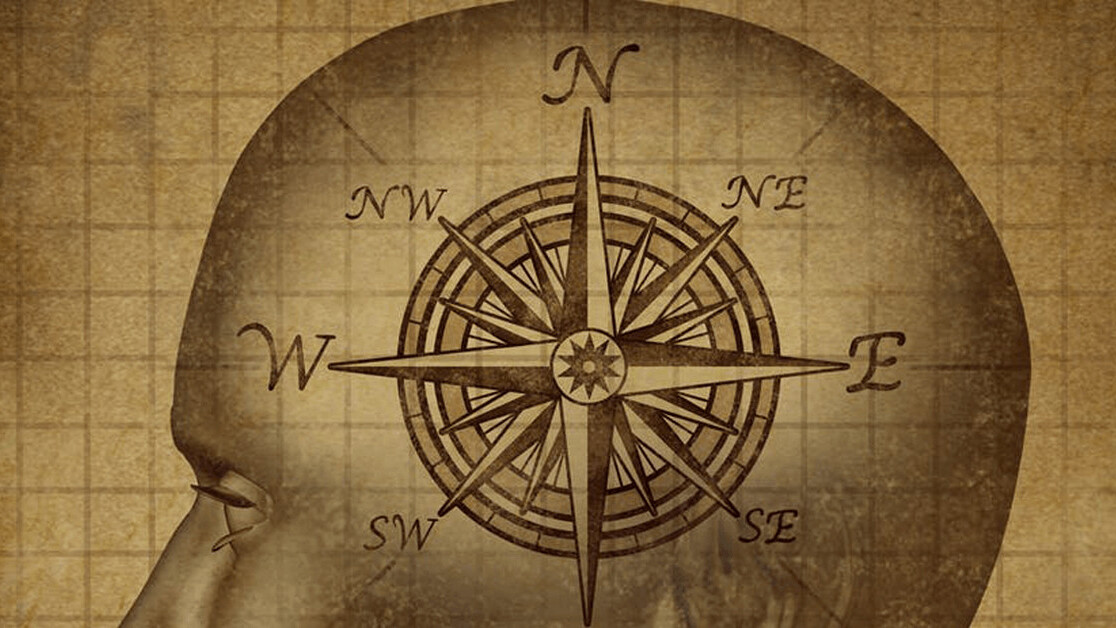
For decades, theres been a back-and-forth betweenpositive reportsandfailures to demonstratethe trait in people, withseemingly endless controversy.
Such faint impressions could easily be misinterpreted or just plain missed when trying to make decisions.
How does a biological geomagnetic sense work?

The Earth is surrounded by a magnetic field, generated by the movement of the planets liquid core.
Its why a magnetic compass points north.
It’s free, every week, in your inbox.
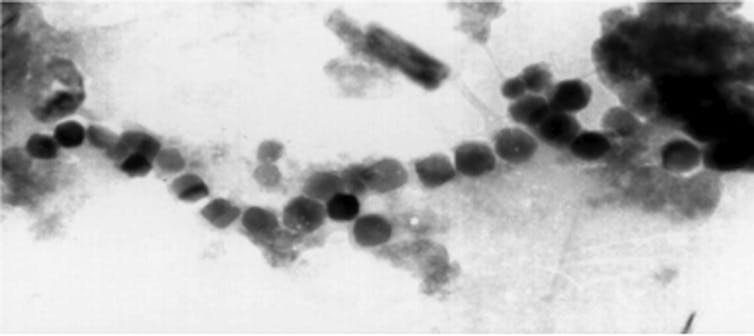
Chains of magnetosomes from a sockeye salmon.
When we shifted the magnetic field in the chamber, our participants did not experience any obvious feelings.
That we saw such alpha-ERD patterns in response to simple magnetic rotations is powerful evidence for human magnetoreception.
They did not respond to unnatural directions of the magnetic field such as when it pointed upwards.
Other researchers have shown that animals brains filter magnetic signals, only responding to those that are environmentally relevant.
Our results are consistent only with functional magnetoreceptor cells based on thebiological magnetite hypothesis.
Underneath, though, their brains revealed a wide range of differences.
It remains to be seen what these hidden reactions might mean for human behavioral capabilities.
Do the weak and strong brain responses reflect some kind of individual differences in navigational ability?
Can those with weaker brain responses benefit from some kind of training?
Can those with strong brain responses be trained to actually feel the magnetic field?
A human response to Earth-strength magnetic fields might seem surprising.
The full extent of our magnetic inheritance remains to be discovered.
TNW Conference 2019 is coming!
