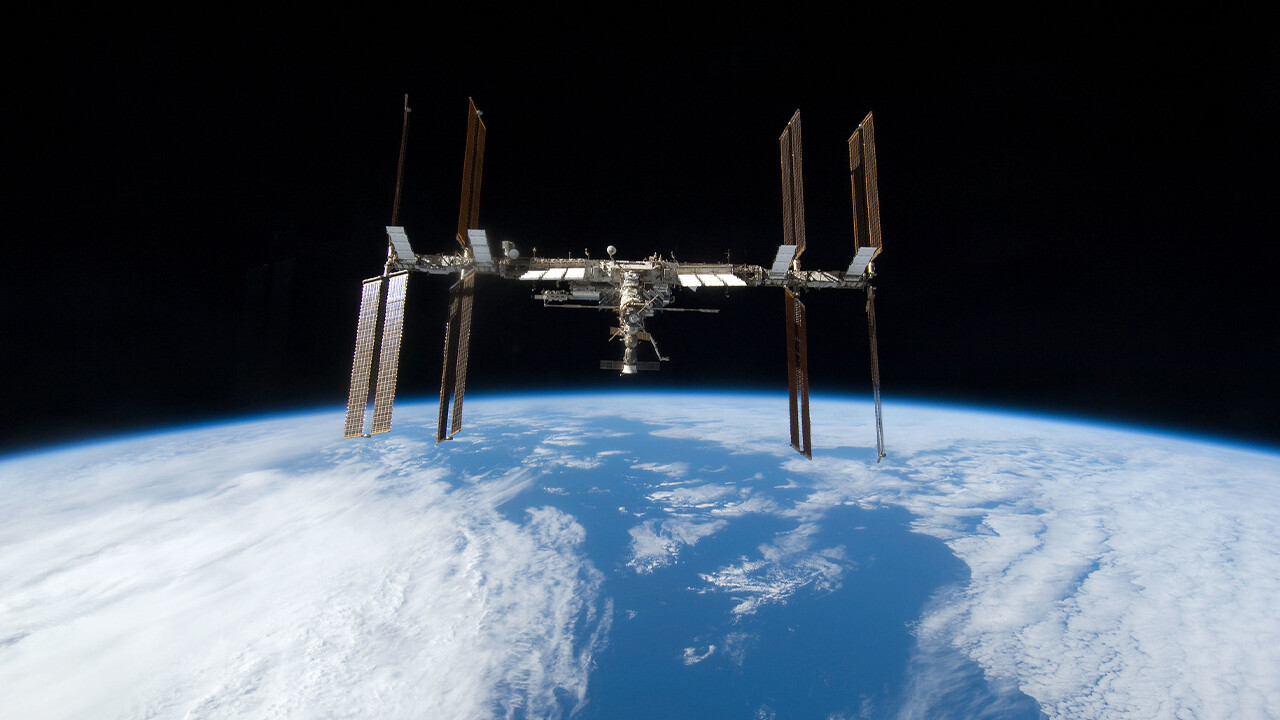
The International Space Station has often stayed above the fray of geopolitics.
That position is under threat.
The station has been continuously occupied for over 20 years and hashosted more than 250 peoplefrom 19 countries.
It’s free, every week, in your inbox.
But the Russian government has brought the ISS into geopolitics before and is doing so again.
The body thatgoverns the operation of the space stationis the Multilateral Coordination Board.

The board operates by consensus in making decisions on things like acode of conduct for ISS crews.
Even among international partners who want to work together, consensus is not always possible.
Under the ISS agreements, each country maintains control over how its modules are used.
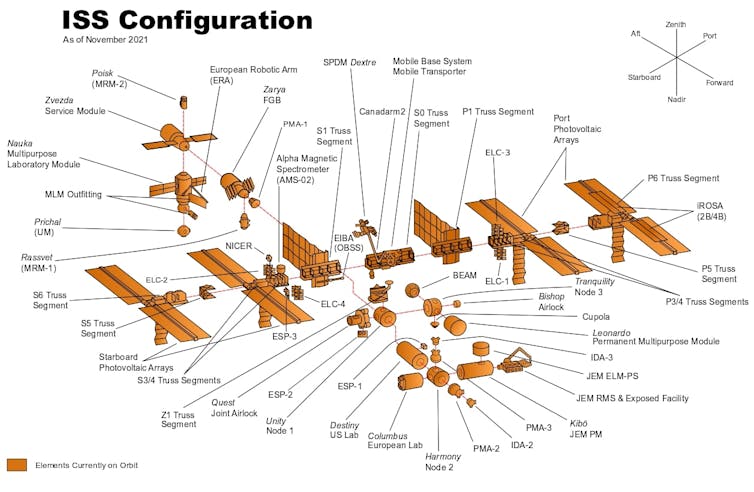
The result is that ISS modules are treated legally as if they areterritorial extensionsof their countries of origin.
When Russian forces annexedthe Ukrainian territory of Crimea in 2014, the U.S. imposed economic sanctions on Russia.
As a result, Russian officialsannounced that they would no longer launchU.S.
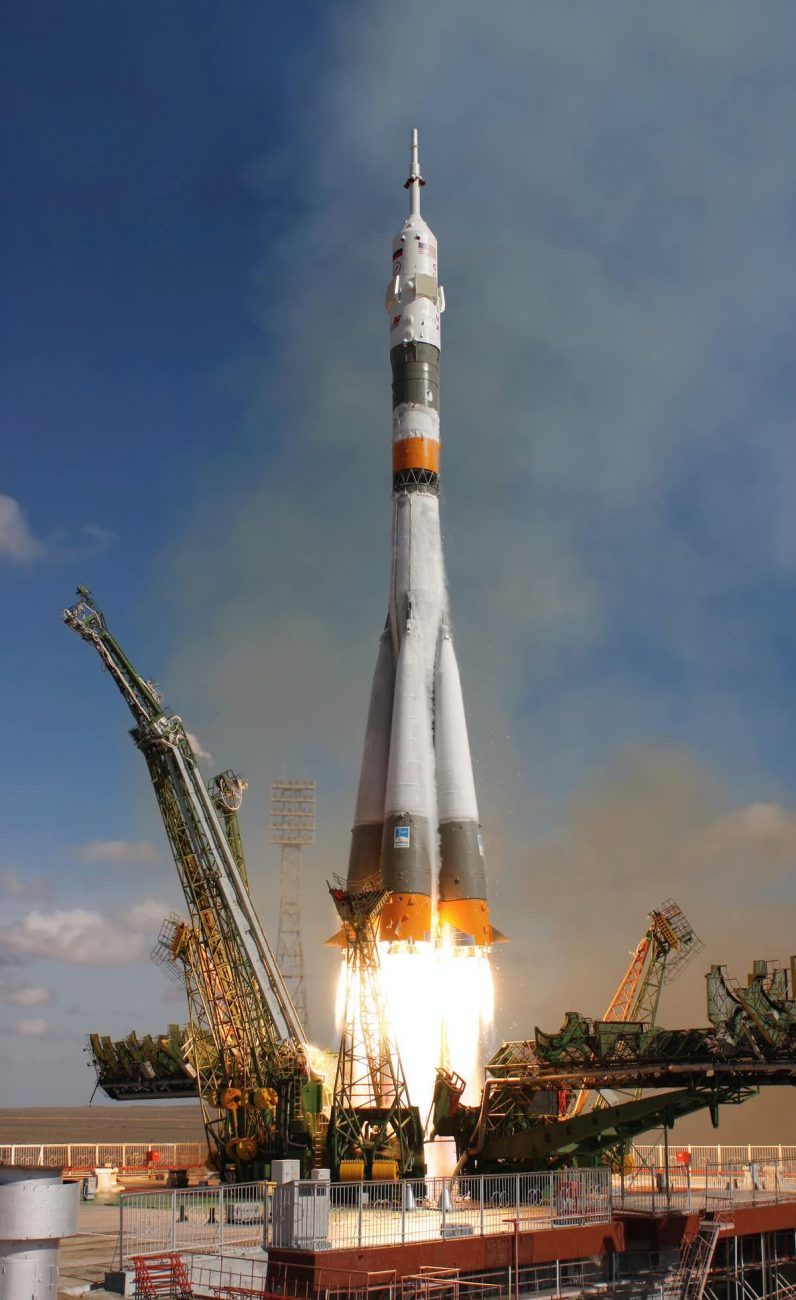
astronauts to and from the space station beginning in 2020.
The situation today is quite different.
The U.S. has been relying on private SpaceX rockets to transport astronauts to and from the ISS.

This makes potential Russian threats to launch access less meaningful.
But the invasion of Ukraine does seem to have upped the intensity of geopolitical maneuvering involving the ISS.
The new U.S. sanctions are designed to degrade their aerospace industry, including their space program.
But I am concerned about how the invasion will affect the remaining years of the space station.
In December 2021, theU.S.
announced its intention toextend operation of ISS operations from its planned end date of 2024 to 2030.
Without Russias support, the station and all of its scientific and cooperative achievements may face an early end.
