I can still remember the horror of discovering that everything I had worked on was wrong.
It’s free, every week, in your inbox.
What helped me develop as a researcher was reading stories aboutthose who came before me.

One of the oldest of these still to be read is the ancient Greek Illiad of Homer.
In the modern world, myths and stories still have an important role to play even in scientific research.
A positive research culture should prize curiosity and a view to the greater good.

Its unlikely the Trojan Horse really was a large-scale model of a horse that soldiers hid in.
The future of science
Its important to recognize that how we do research has changed.
Nowadays to succeed you must win big grants and build up a research team.

Often more than 20 authors will contribute to a research paper.
This industrialization of science is right and necessary.
It has accelerated the impact of research in society and allowed scientists to discover and develop new technologies.
There is probably nothing left that can be discovered using equipment made from biscuit tins.
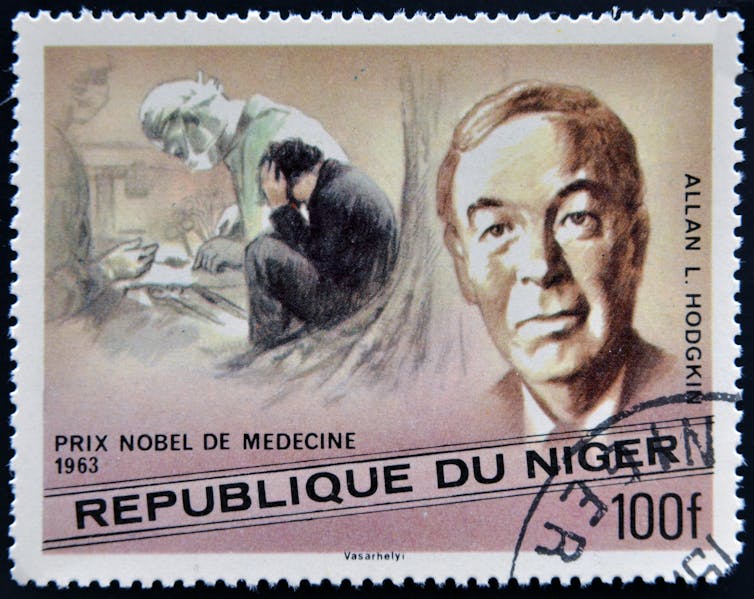
A stamp printed in Niger circa 1977 celebrates Alan Hodgkins Nobel Prize in Physiology.
Neftali/Shutterstock
When I was an undergraduate and PhD candidate, my supervisor worked on the lab bench.

We had coffee and tea together every day.
I learned from her, and colleagues, what it meant to be a scientist.
There is less time for the apprenticeship of research.
Of course, there is training in how to do research.
Graduate schools and doctoral training centers have raised standards in the education of PhD candidates.
But I doubt that many people develop their values and moral compass from PowerPoint presentations.
All cultures need their myths, and each lab needs its lore.
This article is republished fromThe ConversationbyAndrew George, Emeritus Professor,Brunel University Londonunder a Creative Commons license.
