For instance, what would happen if the world suddenlyturned into blueberries, as answered by physics recently.
Or what color isthat dress?
The debate has opened up some surprisingly deep questions like what actually makes a sense more or less valuable?
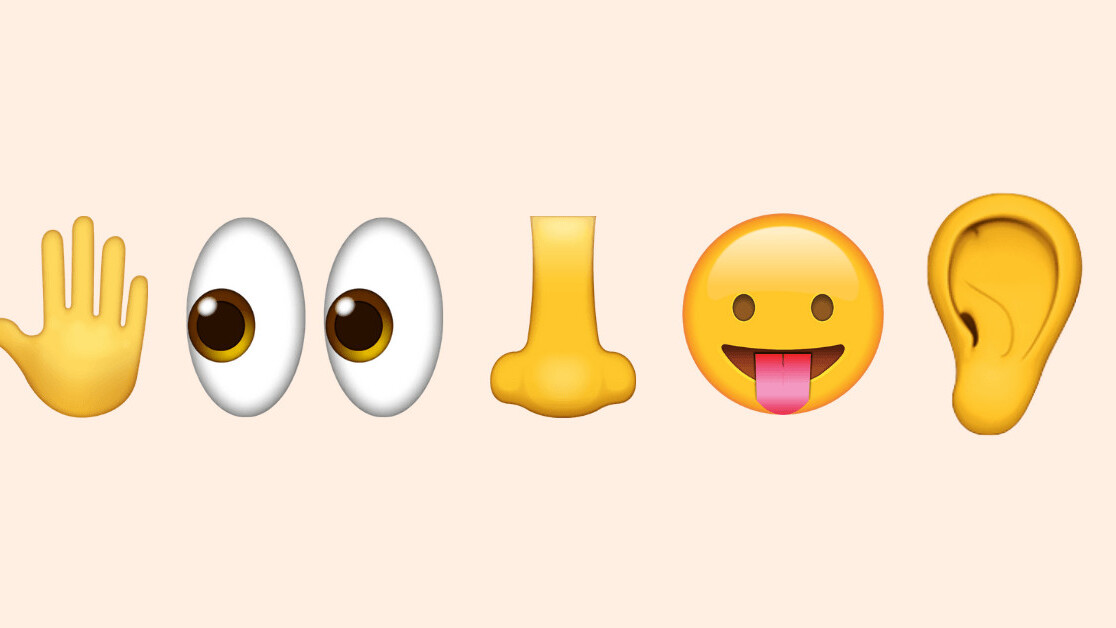
And, are some senses fundamentally more important in making us human?
The question was also put to a poll.
But does this vote hold up when you take a closer look at the scientific evidence?

Losing your body
We need somatosensation to move successfully seemingly more so than vision.
It’s free, every week, in your inbox.
Despite these barriers, one patient, dubbed IW, shocked medical experts by regaining the ability to walk.
This strategy is highly cognitively demanding, andnot at all the norm, with most patients bound to wheelchairs.
Many foodies might think that taste gets their vote for top sense.
Another subcomponent of somasensation is the vestibular system, which is critical inkeeping us upright.
Pain and temperature perception also get lumped in with somatosensation, failing to fit into any other category.
Being born without sensitivity to pain is rare (around45documented cases) and highly dangerous.
Patients mustself-checkmultiple times daily, to prevent infection from cuts they havent noticed.
Touch forms a core part of our humanity.
The touch of another can alsoreduce anxiety,influence our behavior, shapebrain developmentand reduce brainresponses to painin babies.
We even have adedicated set of nervesthat preferentially process social and emotional touch.
The brain seems to have a vision focus.
Similar things happen when youconflict hearingwith vision.
Vision also allows reading, writing and art.
you’re able to see the faces of your loved ones, or danger coming from far away.
And the rest…
So are the other senses really less important?
Our sense of smell is incredibly ancient and complex.
Smell is the only sense that bypasses our brains sensory relay system - goingstraight to the cortexfor processing.
Smell works together with taste tostop you eatingspoiled or poisonous foods.
And hearing is better than both touch and vision for detecting danger coming up behind you.
And it is certainly better than vision in the dark.
And no hearing, no music.
This article is republished fromThe ConversationbyHarriet Dempsey-Jones, Postdoctoral Researcher in Cognitive Neurosciences,UCLunder a Creative Commons license.
