The world is in the midst of aglobal superbug crisis.
Were on the cusp of apost-antibiotic era,where there are fewer treatment options for such antibiotic-resistant strains.
Strange as it might sound, viruses might be onepossible alternative to antibioticsfor treating bacterial infections.
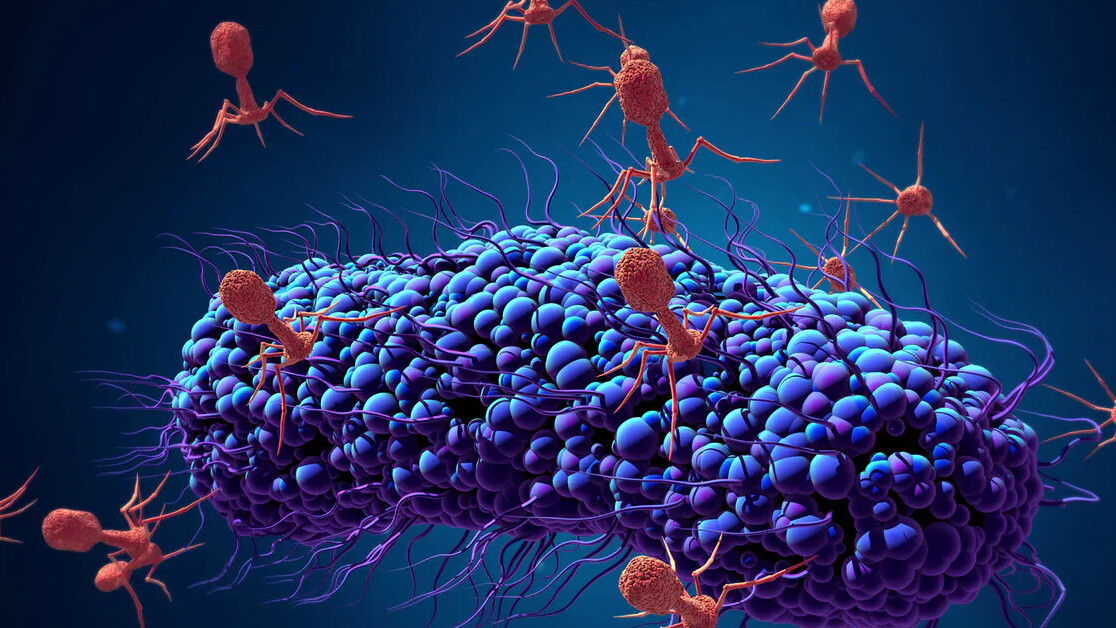
Bacteriophages (also known as phages) are viruses that infect bacteria.
Theyre estimated to be the most abundant organisms on Earth, with probably more than 1031bacteriophages on the planet.
They can survive in many environments, including deep-sea trenches and the human gut.
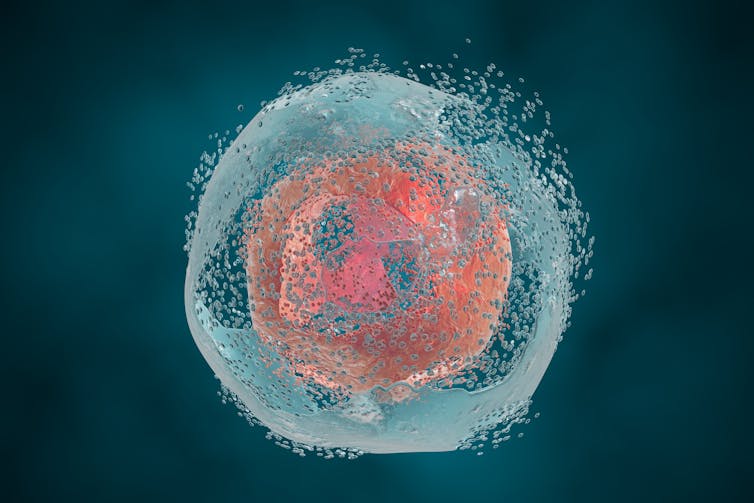
While phages are efficient killers of bacteria, they dont infect human cells and are harmless to humans.
Although phage therapy wasused in the 1930s, it has since become a forgotten cure in the west.
40% off TNW Conference!

This is the first step in the infection process.
After attaching to the bacterial cell, the phage then injects its DNA inside the bacteria.
This causes one of two things to happen.
This process is known as a lytic infection.
But its not always possible to develop lytic bacteriophages that can be used against all types of bacteria.
Engineered phages have even successfully treated a drug-resistantMycobacterium abscessusinfectionin a 15-year-old girl.
Antibiotics instead target a wide range of bacteria, including friendly bacteria not causing the infection.
But this also means that a single phage wont kill all strains of a disease-causing bacteria.
And because bacteria areconstantly evolving, they can develop mechanisms that prevent phage infection.
As part of this evolutionary process, bacteria canrapidly become resistantto a single bacteriophage.
This decreases the chances a bacteria becomes resistant to all phages used in treatment.
Bacteriophages can also be engineered toinfect more strainsof bacteria.
However, the presence of what are known asCRISPR systemsmight complicate the possibility of using bacteriophages in treatment.
Bacteria may be resistant to bacteriophages if they have previously encountered similar types and developed an immunity.
But bacteriophages have also developedanti-CRISPRproteins that can neutralize the host bacterias CRISPR systems.
This means a phage can still be effective, despite the presence of the bacterial CRISPR system.
Not all bacteriophages have genes that neutralize anti-CRISPR proteins.
Although phage therapy isnt routinely used in western medicine, phage cocktails are available treatments in Russia and Georgia.
With antibiotic-resistant infections becoming more common, bacteriophages offer the ability to treat such infections.
