The bacteria were found inside thin cracks in rocks recovered from under the ocean floor beneath the Pacific Ocean.
I am now almost over-expecting that I can find life on Mars.
I wanna rock!
Lava erupts from underwater volcanoes at temperatures reaching 1,200 degrees Celsius (2,200 Fahrenheit).
This material cools in the chilly water, forming rocks, filled with tiny cracks.
Bacteria soon find their way into the clay, where they can multiply, blooming into large colonies.
40% off TNW Conference!
The expedition team collected core samples from three locations between Tahiti and New Zealand.
The ancestral microbes probably entered with seawater flowing through the fractures in the basalt.
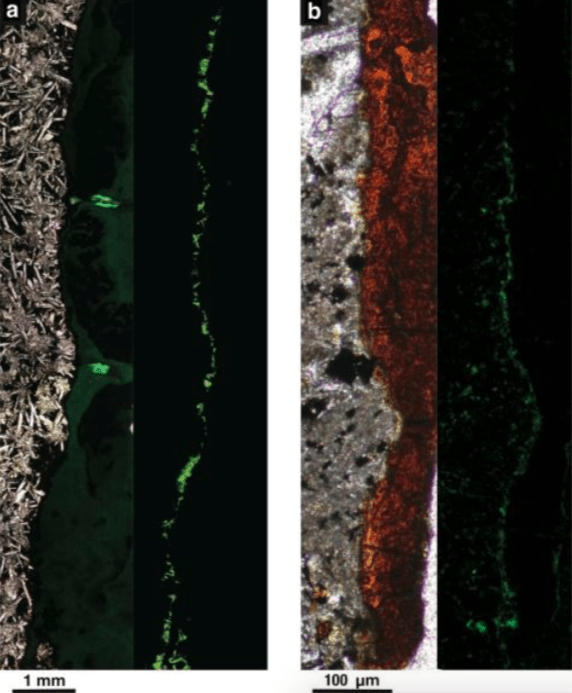
The clay formed in place, from alteration of the basalt.
Typical oceanic basalt is about 15% fracture when its young.
Seawater flows continuously through these fractures.
As secondary minerals (like clay) grow in the fractures, the fracture volume decreases.
The mission was equipped with a drill connected to a metal tube 5.7 kilometers (3.5 miles) long.
The drill cut through as much as 125 meters (410 feet) of material beneath theocean floor.
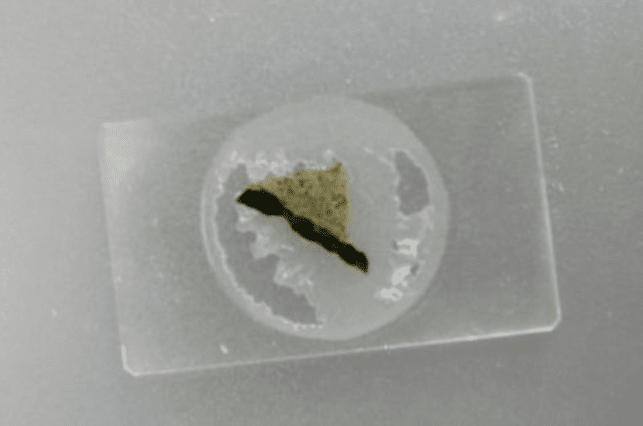
The upper oceanic crust is mainly composed of basaltic lava.
It has been continuously created on Earth for ~3.8 billion years.
Analysis revealed a wide range of ages for the trio of samples.
The oldest of the samples was shown to have formed 104 million years before our time.
Each core was collected from regions well spaced from hydrothermal vents or water channels beneath theseafloor.
This positioning would help ensure that bacteria found in clays within the samples formed naturally within the fissures.
These cracks are a very friendly place for life.
Cells within the crushed rock would then be counted.
Initial analysis of the samples did not reveal the presence of bacteria far beneath theoceanfloor.
Microbial cell counts are lower than at all sites previously drilled.
Geologists, chemists, and biologists spent more than a decade developing and refining new methods of testing.
The DNA of bacteria within the clay structures were also examined in detail.
Minerals are like a fingerprint for what conditions were present when the clay formed.
Now, we know to look inside tiny clay tunnels to find where extraterrestrial organisms might still be hiding.
Astronomy News with The Cosmic Companionis also available as a weekly podcast, carried on all major podcast providers.
